

Join Our Newsletter To Be Informed When New Videos Are Posted
Hebrew Text
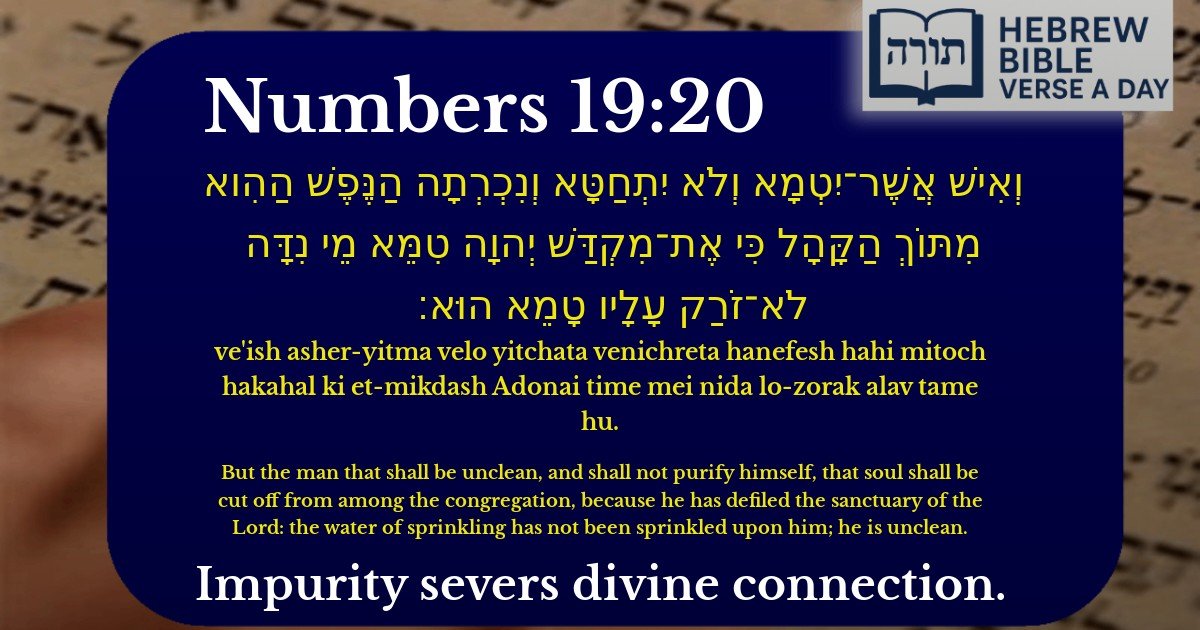
וְאִישׁ אֲשֶׁר־יִטְמָא וְלֹא יִתְחַטָּא וְנִכְרְתָה הַנֶּפֶשׁ הַהִוא מִתּוֹךְ הַקָּהָל כִּי אֶת־מִקְדַּשׁ יְהוָה טִמֵּא מֵי נִדָּה לֹא־זֹרַק עָלָיו טָמֵא הוּא׃
English Translation
But the man that shall be unclean, and shall not purify himself, that soul shall be cut off from among the congregation, because he has defiled the sanctuary of the Lord: the water of sprinkling has not been sprinkled upon him; he is unclean.
Transliteration
Ve'ish asher-yitma velo yitchata venichreta hanefesh hahi mitoch hakahal ki et-mikdash Adonai time mei nida lo-zorak alav tame hu.
Hebrew Leining Text
וְאִ֤ישׁ אֲשֶׁר־יִטְמָא֙ וְלֹ֣א יִתְחַטָּ֔א וְנִכְרְתָ֛ה הַנֶּ֥פֶשׁ הַהִ֖וא מִתּ֣וֹךְ הַקָּהָ֑ל כִּי֩ אֶת־מִקְדַּ֨שׁ יְהֹוָ֜ה טִמֵּ֗א מֵ֥י נִדָּ֛ה לֹא־זֹרַ֥ק עָלָ֖יו טָמֵ֥א הֽוּא׃
🎵 Listen to leining
Parasha Commentary
📚 Talmud Citations
This verse is quoted in the Talmud.
📖 Yoma 85b
The verse is referenced in the discussion about the severity of defiling the sanctuary and the consequences of not purifying oneself, emphasizing the importance of ritual purity.
📖 Keritot 2a
The verse is cited in the context of discussing the penalties for various transgressions, particularly those involving ritual impurity and the sanctuary.
Verse Context and Meaning
The verse (Bamidbar 19:20) discusses the severe consequences for an individual who becomes ritually impure (טמא) through contact with a corpse (טומאת מת) and neglects the purification process involving the ashes of the red heifer (פרה אדומה). The Torah emphasizes that failure to undergo purification results in being "cut off" (כרת) from the congregation and defiling the Sanctuary of Hashem.
Rashi's Explanation
Rashi (Bamidbar 19:20) clarifies that the phrase "כי את מקדש ה' טמא" ("because he has defiled the sanctuary of the Lord") refers to entering the Beit HaMikdash or consuming sacred offerings while in a state of impurity. Even if the person did not physically enter the Sanctuary, the mere presence of impurity in the camp (where the Shechinah dwells) constitutes a defilement of holiness.
Rambam's Halachic Perspective
In Hilchot Parah Adumah (11:1), the Rambam explains that the punishment of כרת applies only if the individual intentionally avoids purification. However, if one is unaware of their impurity or the requirement to purify themselves, they are exempt from כרת but still transgress a negative commandment (לאו).
Talmudic and Midrashic Insights
Concept of כרת (Spiritual Excision)
The severity of כרת (being "cut off") is discussed in the Talmud (Keritot 2a), which states that it may refer to premature death or the soul's excision from the World to Come. This underscores the gravity of defiling the Divine Presence through neglect of taharah (purity) laws.
Practical Implications
This verse serves as a reminder of the importance of maintaining ritual purity, especially in relation to the Beit HaMikdash. While today, in the absence of the Temple, we cannot fully observe these laws, the principle remains relevant in cultivating awareness of kedushah (holiness) and avoiding spiritual contamination.