

Join Our Newsletter To Be Informed When New Videos Are Posted
Hebrew Text
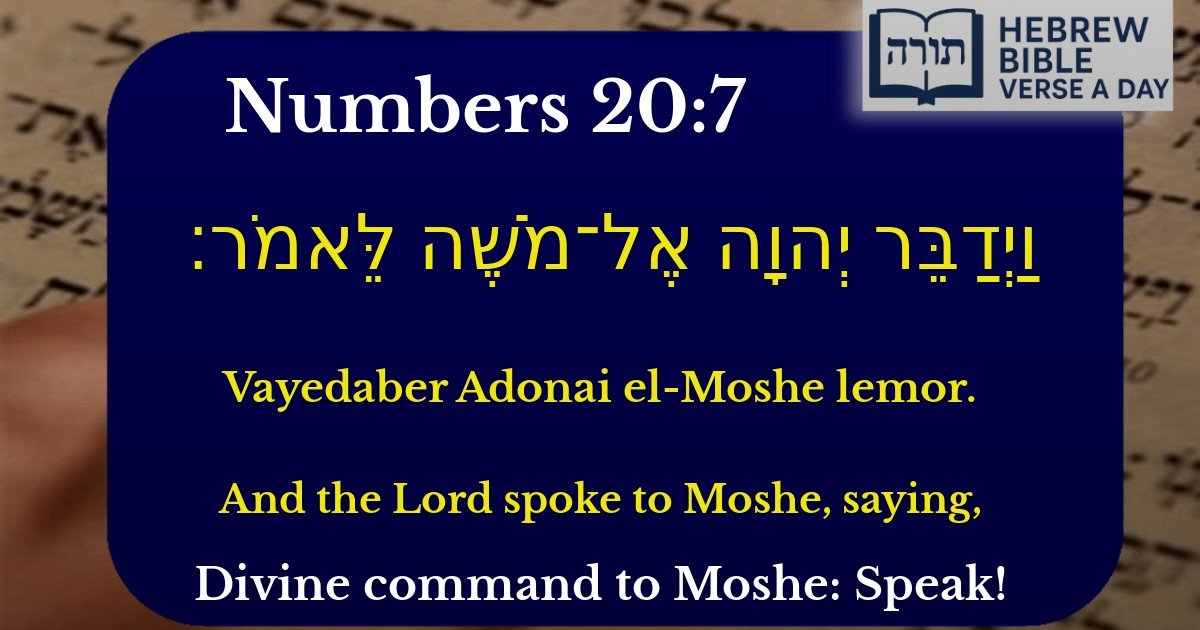
וַיְדַבֵּר יְהוָה אֶל־מֹשֶׁה לֵּאמֹר׃
English Translation
And the Lord spoke to Moshe, saying,
Transliteration
Vayedaber Adonai el-Moshe lemor.
Hebrew Leining Text
וַיְדַבֵּ֥ר יְהֹוָ֖ה אֶל־מֹשֶׁ֥ה לֵּאמֹֽר׃
🎵 Listen to leining
Parasha Commentary
📚 Talmud Citations
This verse is not quoted in the Talmud.
The Divine Communication to Moshe
The verse "וַיְדַבֵּר יְהוָה אֶל־מֹשֶׁה לֵּאמֹר" ("And the Lord spoke to Moshe, saying") appears frequently in the Torah, marking the transmission of divine commandments and teachings. Rashi (Shemot 6:2) notes that this phrase emphasizes the direct and unmediated communication between Hashem and Moshe, distinguishing Moshe's prophecy from that of other prophets. Unlike other nevi'im who received messages through dreams or visions (Bamidbar 12:6-8), Moshe spoke with Hashem "face to face," as it were, in clear and direct dialogue.
The Significance of "לֵּאמֹר" ("Saying")
The word "לֵּאמֹר" is often interpreted by commentators as an instruction for Moshe to relay the divine message to Bnei Yisrael. The Ramban (Bereishit 1:1) explains that this term underscores Moshe's role as the intermediary, tasked with conveying Hashem's words faithfully to the people. The Sforno adds that this establishes the principle of מסורת (transmission), ensuring the continuity of Torah teachings from generation to generation.
The Unique Prophetic Level of Moshe
Context in the Torah
This phrase often introduces mitzvot or pivotal instructions, reinforcing the divine origin of halacha. The Ohr HaChaim (Shemot 6:13) highlights that each instance of this phrasing serves as a reminder that the commandments are not of human origin but are the word of Hashem, given through Moshe Rabbeinu with precision and authority.