

Join Our Newsletter To Be Informed When New Videos Are Posted
Hebrew Text
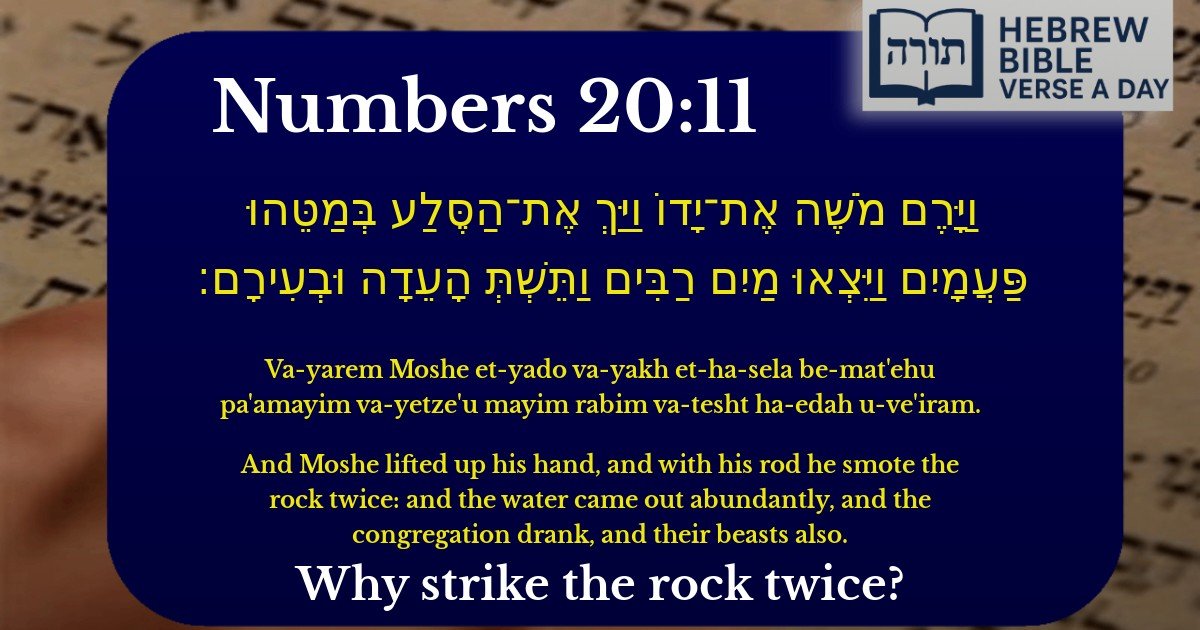
וַיָּרֶם מֹשֶׁה אֶת־יָדוֹ וַיַּךְ אֶת־הַסֶּלַע בְּמַטֵּהוּ פַּעֲמָיִם וַיֵּצְאוּ מַיִם רַבִּים וַתֵּשְׁתְּ הָעֵדָה וּבְעִירָם׃
English Translation
And Moshe lifted up his hand, and with his rod he smote the rock twice: and the water came out abundantly, and the congregation drank, and their beasts also.
Transliteration
Va-yarem Moshe et-yado va-yakh et-ha-sela be-mat'ehu pa'amayim va-yetze'u mayim rabim va-tesht ha-edah u-ve'iram.
Hebrew Leining Text
וַיָּ֨רֶם מֹשֶׁ֜ה אֶת־יָד֗וֹ וַיַּ֧ךְ אֶת־הַסֶּ֛לַע בְּמַטֵּ֖הוּ פַּעֲמָ֑יִם וַיֵּצְאוּ֙ מַ֣יִם רַבִּ֔ים וַתֵּ֥שְׁתְּ הָעֵדָ֖ה וּבְעִירָֽם׃ {ס}
🎵 Listen to leining
Parasha Commentary
📚 Talmud Citations
This verse is quoted in the Talmud.
📖 Ta'anit 9a
The verse is discussed in the context of the miracle of water coming from the rock, emphasizing the power of Moses' actions and God's providence.
📖 Sanhedrin 34a
The verse is referenced in a discussion about the interpretation of biblical narratives and the significance of Moses striking the rock twice.
The Incident at the Rock (Numbers 20:11)
The verse describes Moshe striking the rock to bring forth water for Bnei Yisrael in the wilderness. This event is significant in Jewish tradition, as it marks a turning point in Moshe's leadership and has been extensively analyzed by commentators.
Rashi's Explanation
Rashi (Rabbi Shlomo Yitzchaki) notes that Moshe was commanded to speak to the rock (Numbers 20:8), but instead he struck it. Though water emerged, this deviation from Hashem's command resulted in severe consequences. Rashi explains that striking the rock instead of speaking to it diminished the sanctification of Hashem's name, as speaking would have demonstrated that even an inanimate object obeys Hashem's will.
Rambam's Perspective
The Rambam (Maimonides) in Moreh Nevuchim (1:54) discusses this episode as an example of how even great leaders must adhere precisely to divine commands. Moshe's anger ("Listen now, you rebels" - Numbers 20:10) and the act of striking rather than speaking showed a momentary lapse in perfect faith and patience.
Talmudic Insights
Midrashic Interpretations
The Midrash Tanchuma (Chukat 10) elaborates that the rock was symbolic - the same rock that had provided water previously (Exodus 17:6). By striking it rather than speaking, Moshe failed to show that consistent divine providence comes through peaceful means rather than force.
Kabbalistic Dimensions
The Arizal (Rabbi Isaac Luria) explains that the two strikes represent a disruption in the proper flow of divine energy (shefa). The first strike was to open the rock's potential to give water, and the second was unnecessary, representing excessive use of the attribute of judgment (din) rather than mercy (chesed).