

Join Our Newsletter To Be Informed When New Videos Are Posted
Hebrew Text
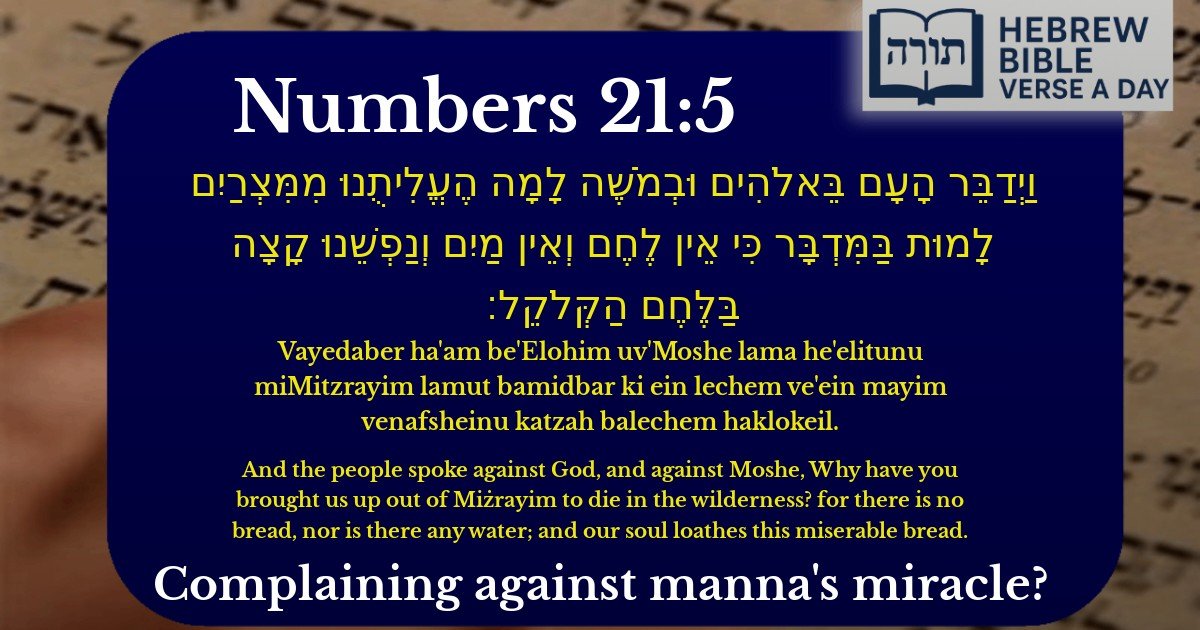
וַיְדַבֵּר הָעָם בֵּאלֹהִים וּבְמֹשֶׁה לָמָה הֶעֱלִיתֻנוּ מִמִּצְרַיִם לָמוּת בַּמִּדְבָּר כִּי אֵין לֶחֶם וְאֵין מַיִם וְנַפְשֵׁנוּ קָצָה בַּלֶּחֶם הַקְּלֹקֵל׃
English Translation
And the people spoke against God, and against Moshe, Why have you brought us up out of Miżrayim to die in the wilderness? for there is no bread, nor is there any water; and our soul loathes this miserable bread.
Transliteration
Vayedaber ha'am be'Elohim uv'Moshe lama he'elitunu miMitzrayim lamut bamidbar ki ein lechem ve'ein mayim venafsheinu katzah balechem haklokeil.
Hebrew Leining Text
וַיְדַבֵּ֣ר הָעָ֗ם בֵּֽאלֹהִים֮ וּבְמֹשֶׁה֒ לָמָ֤ה הֶֽעֱלִיתֻ֙נוּ֙ מִמִּצְרַ֔יִם לָמ֖וּת בַּמִּדְבָּ֑ר כִּ֣י אֵ֥ין לֶ֙חֶם֙ וְאֵ֣ין מַ֔יִם וְנַפְשֵׁ֣נוּ קָ֔צָה בַּלֶּ֖חֶם הַקְּלֹקֵֽל׃
🎵 Listen to leining
Parasha Commentary
📚 Talmud Citations
This verse is quoted in the Talmud.
📖 Yoma 75a
The verse is referenced in a discussion about the manna that the Israelites ate in the wilderness, highlighting their complaints and ingratitude.
📖 Sanhedrin 110b
The verse is cited in the context of discussing the rebellion of Korach and his followers, illustrating the broader theme of the Israelites' complaints against Moses and God.
Context of the Verse
The verse appears in Bamidbar (Numbers) 21:5, where Bnei Yisrael complain against Hashem and Moshe during their journey in the wilderness. This incident occurs after the episode of the fiery serpents, highlighting their recurring struggles with faith and gratitude.
Complaint Against Hashem and Moshe
The people's statement, "וַיְדַבֵּר הָעָם בֵּאלֹהִים וּבְמֹשֶׁה" ("And the people spoke against God and against Moshe"), is a severe transgression. Rashi (Bamidbar 21:5) explains that speaking against Moshe is tantamount to speaking against Hashem, as Moshe was His faithful emissary. The Midrash Tanchuma (Chukat 19) further elaborates that their ingratitude was inexcusable, given the miracles they had witnessed.
False Claims of Hardship
The people claim, "לָמָה הֶעֱלִיתֻנוּ מִמִּצְרַיִם לָמוּת בַּמִּדְבָּר" ("Why have you brought us up out of Egypt to die in the wilderness?"). Ramban (Nachmanides) notes that this complaint was baseless—Hashem had sustained them with manna and protected them throughout their journey. The Sforno adds that their words reflected a lack of trust in Hashem’s plan.
Rejection of the Manna
Their statement, "וְנַפְשֵׁנוּ קָצָה בַּלֶּחֶם הַקְּלֹקֵל" ("our soul loathes this miserable bread"), refers to the manna. Rashi explains that the word "הַקְּלֹקֵל" (miserable) stems from "קַל" (light), implying they disdained the manna because it was too easily obtained without effort. The Midrash Rabbah (Bamidbar 20:21) teaches that the manna could taste like any food, yet they still complained, demonstrating their spiritual deficiency.
Consequences and Lessons
This incident led to the punishment of the fiery serpents (Bamidbar 21:6). The Talmud (Berachot 32b) connects their ingratitude to a broader theme: when Bnei Yisrael rejected Hashem’s kindness, they invited suffering. The Rambam (Hilchot De'ot 2:4) derives from this episode the importance of cultivating gratitude and avoiding complaints, as they lead to further sin.
Key Takeaways