

Join Our Newsletter To Be Informed When New Videos Are Posted
Hebrew Text
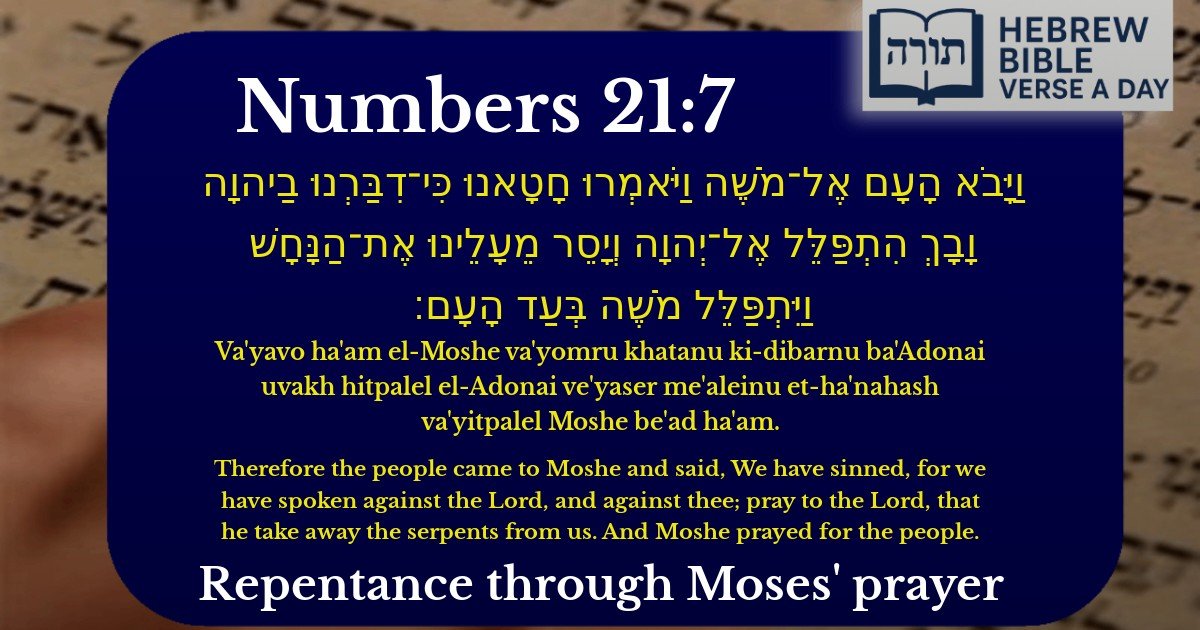
וַיָּבֹא הָעָם אֶל־מֹשֶׁה וַיֹּאמְרוּ חָטָאנוּ כִּי־דִבַּרְנוּ בַיהוָה וָבָךְ הִתְפַּלֵּל אֶל־יְהוָה וְיָסֵר מֵעָלֵינוּ אֶת־הַנָּחָשׁ וַיִּתְפַּלֵּל מֹשֶׁה בְּעַד הָעָם׃
English Translation
Therefore the people came to Moshe and said, We have sinned, for we have spoken against the Lord, and against thee; pray to the Lord, that he take away the serpents from us. And Moshe prayed for the people.
Transliteration
Va'yavo ha'am el-Moshe va'yomru khatanu ki-dibarnu ba'Adonai uvakh hitpalel el-Adonai ve'yaser me'aleinu et-ha'nahash va'yitpalel Moshe be'ad ha'am.
Hebrew Leining Text
וַיָּבֹא֩ הָעָ֨ם אֶל־מֹשֶׁ֜ה וַיֹּאמְר֣וּ חָטָ֗אנוּ כִּֽי־דִבַּ֤רְנוּ בַֽיהֹוָה֙ וָבָ֔ךְ הִתְפַּלֵּל֙ אֶל־יְהֹוָ֔ה וְיָסֵ֥ר מֵעָלֵ֖ינוּ אֶת־הַנָּחָ֑שׁ וַיִּתְפַּלֵּ֥ל מֹשֶׁ֖ה בְּעַ֥ד הָעָֽם׃
🎵 Listen to leining
Parasha Commentary
📚 Talmud Citations
This verse is quoted in the Talmud.
📖 Rosh Hashanah 29a
The verse is referenced in a discussion about the power of prayer and Moses' intercession for the people.
📖 Yoma 86b
The verse is cited in the context of repentance and the efficacy of confessing sins.
Context of the Verse
This verse (Bamidbar 21:7) appears in the Torah portion Chukat, where Bnei Yisrael complain against Hashem and Moshe after experiencing hardships in the wilderness. In response, Hashem sends fiery serpents (nechashim seraphim) to punish them. When the people recognize their sin, they approach Moshe to seek forgiveness and ask him to pray for the removal of the serpents.
Repentance and Teshuvah
Rashi (Bamidbar 21:7) emphasizes the sincerity of Bnei Yisrael's repentance. He notes that they openly admitted their wrongdoing by saying, "We have sinned" (חָטָאנוּ), demonstrating true teshuvah. The Rambam (Hilchot Teshuvah 2:1) teaches that verbal confession is an essential component of repentance, as seen here.
The Role of Moshe as Intercessor
The people specifically request Moshe to pray on their behalf, acknowledging his unique closeness to Hashem. The Midrash Tanchuma (Chukat 19) explains that Moshe's prayers were particularly effective because of his humility and selflessness. The Talmud (Berachot 32a) also highlights Moshe's role as a compassionate leader who consistently advocated for the people, even after their rebellions.
The Nature of Their Sin
Moshe's Immediate Response
The verse concludes with Moshe praying for the people without hesitation. The Ohr HaChaim (Bamidbar 21:7) points out that Moshe did not delay or rebuke them further, teaching a lesson in chesed (kindness) and the importance of responding to sincere repentance with compassion.