Frequently Asked Questions
Q: What is the meaning of Numbers 21:18 about the well dug by the princes?
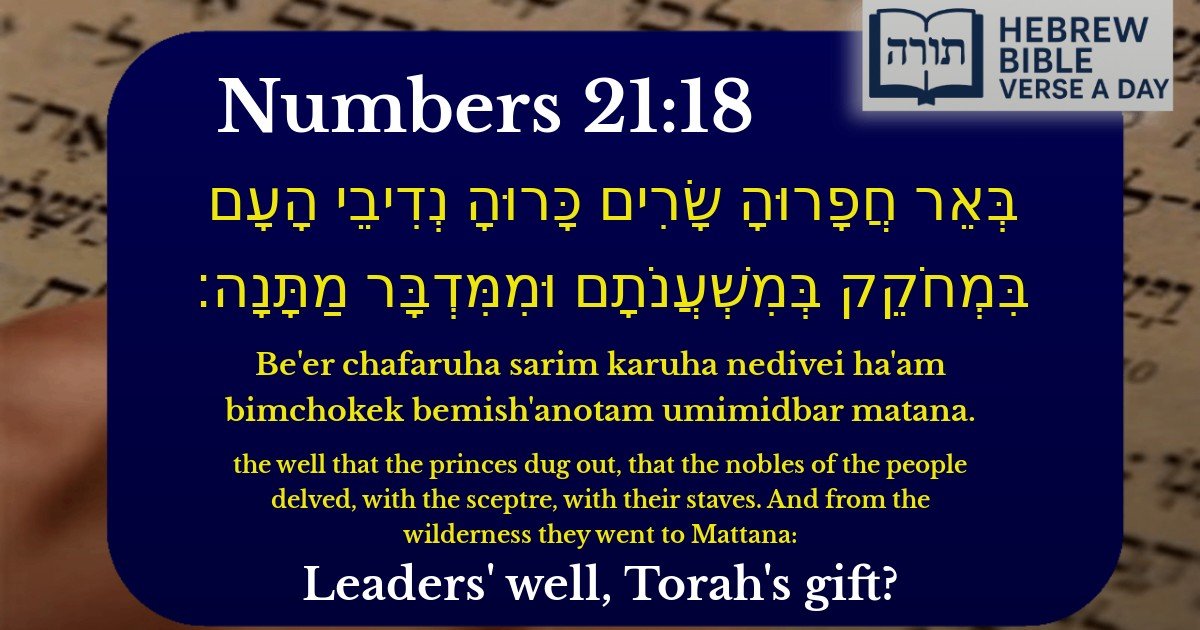
A: Numbers 21:18 refers to the miraculous well that provided water for the Israelites in the desert. According to Rashi and the Midrash (Taanit 9a), this well was a gift from Hashem that followed them throughout their journey. The 'princes' (שָׂרִים) and 'nobles' (נְדִיבֵי הָעָם) symbolize the leaders of Israel who, through their merit and Torah study, helped sustain the people spiritually and physically.
Q: Why is the well mentioned in Numbers 21:18 important in Jewish tradition?
A: The well in Numbers 21:18 is important because it represents Divine providence and the power of Torah. The Talmud (Shabbat 35a) teaches that the well existed in the merit of Miriam the prophetess and later reappeared due to the merit of Moshe and Aharon. It symbolizes that just as water sustains life, Torah sustains the Jewish people spiritually.
Q: What lesson can we learn from the well in Numbers 21:18?
A: The verse teaches that Hashem provides for our needs in unexpected ways. The Midrash (Bamidbar Rabbah 19:25) explains that the well was a hidden miracle, showing that even in the wilderness (מִדְבָּר), G-d guides us. It also highlights the importance of righteous leaders (like the 'princes' and 'nobles') who dedicate themselves to the community's welfare.
Q: How does the well in Numbers 21:18 connect to the journey from the wilderness to Mattana?
A: The verse describes the Israelites' journey 'from the wilderness to Mattana,' which Rashi explains as a progression from a place of desolation (מִדְבָּר) to a 'gift' (מַתָּנָה). The well sustained them through this transition, symbolizing that Torah and mitzvot transform challenges into spiritual growth. The Sages (see Mechilta Beshalach) connect this to the idea that hardship can lead to Divine blessings.
Q: What does 'with the sceptre, with their staves' mean in Numbers 21:18?
A: Rashi explains that 'with the sceptre' (בִּמְחֹקֵק) and 'with their staves' (בְּמִשְׁעֲנֹתָם) refer to the leaders using their authority and wisdom to 'draw' Torah and guidance for the people, just as one draws water from a well. The Talmud (Chagigah 12b) also associates the 'sceptre' with Torah scholars who uphold the law, showing that true leadership is rooted in Torah wisdom.


Context in the Torah
The verse (Bamidbar 21:18) is part of the "Song of the Well," a poetic passage recited by Bnei Yisrael in gratitude for the miraculous well that accompanied them in the wilderness. This well, provided through the merit of Miriam (Ta'anit 9a), sustained them during their travels.
Interpretation of the Princes and Nobles
Rashi explains that "the princes dug" refers to Moshe and Aharon, who initiated the well's flow through their leadership. The "nobles of the people" (נדיבי העם) are the righteous leaders who continued to draw from its waters with wisdom. Ramban adds that this highlights the partnership between leadership and the people in maintaining Divine blessings.
The Sceptre and Staves
The phrase "with the sceptre, with their staves" (במחוקק במשענותם) is interpreted in multiple ways:
From the Wilderness to Mattana
The conclusion of the verse describes their journey: "And from the wilderness they went to Mattana." The Sifrei notes that "Mattana" (מתנה, meaning "gift") symbolizes the transition from a place of desolation (the wilderness) to Divine generosity. The well was a continuous gift, reflecting Hashem's unwavering providence.
Spiritual Lessons
The Ohr HaChaim teaches that this verse underscores the importance of recognizing Divine miracles in daily life. Just as the well was sustained through merit and leadership, so too does communal righteousness bring blessings. The mention of "staves" also hints at the support of Torah scholars, who uphold the people spiritually (cf. Targum Yonatan).