
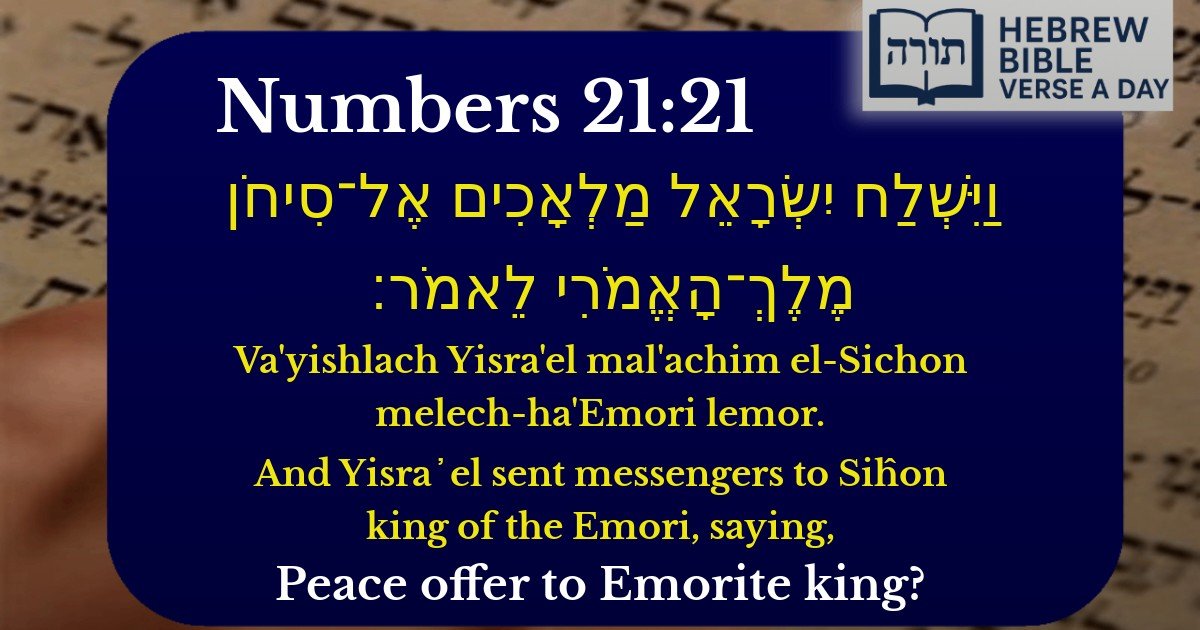

Numbers 21:21 - Peace offer to Emorite king?

Numbers 21:21 - במדבר 21:21

Hebrew Text

וַיִּשְׁלַח יִשְׂרָאֵל מַלְאָכִים אֶל־סִיחֹן מֶלֶךְ־הָאֱמֹרִי לֵאמֹר׃

English Translation

And Yisra᾽el sent messengers to Siĥon king of the Emori, saying,

Transliteration

Va'yishlach Yisra'el mal'achim el-Sichon melech-ha'Emori lemor.

Hebrew Leining Text

וַיִּשְׁלַ֤ח יִשְׂרָאֵל֙ מַלְאָכִ֔ים אֶל־סִיחֹ֥ן מֶֽלֶךְ־הָאֱמֹרִ֖י לֵאמֹֽר׃

🎵 Listen to leining

Parasha Commentary

Context in the Torah

The verse (Bamidbar 21:21) describes Bnei Yisrael's attempt to peacefully pass through the land of Sichon, king of the Emori, as they journey toward Eretz Yisrael. This occurs after their victory over Arad and before their confrontation with Og, king of Bashan.

Rashi's Commentary

Rashi explains that Bnei Yisrael followed the protocol established by the Torah (Devarim 20:10) of first offering peace before engaging in battle, even though they knew Sichon would refuse. This teaches the importance of derech eretz (proper conduct) and avoiding unnecessary warfare.

Malbim's Insight

The Malbim notes that the phrasing "Vayishlach Yisrael" (And Israel sent) rather than mentioning Moshe indicates this was a national decision, showing unity among Bnei Yisrael in following Torah protocol for dealing with neighboring nations.

Midrashic Perspective

The Midrash (Bamidbar Rabbah 19:25) connects this episode to Mishlei 21:22 - "A wise man scales the city of the mighty," teaching that Bnei Yisrael demonstrated wisdom by first attempting peaceful negotiation before resorting to military action.

Halachic Implications

  • Rambam (Hilchot Melachim 6:1) derives from this episode that we must always first offer peace before waging war, even in milchemet mitzvah (obligatory wars).
  • The Chatam Sofer emphasizes that this applies even when victory is assured, as Bnei Yisrael knew Hashem had promised them the land.

Spiritual Lessons

The Sfat Emet teaches that approaching Sichon with peaceful words before battle represents the need to first attempt to conquer our internal "Sichon" (negative inclinations) through peaceful self-reflection before engaging in full spiritual warfare.

📚 Talmud Citations

This verse is not quoted in the Talmud.

Frequently Asked Questions

Q: Why did Israel send messengers to King Sihon?
A: According to Rashi and the Midrash, Israel sent messengers to King Sihon to request peaceful passage through his land, as they were traveling toward the Land of Canaan. This follows the Torah's principle of seeking peace before engaging in conflict (Devarim 20:10).
Q: Who was King Sihon in the Torah?
A: King Sihon was the ruler of the Amorites (Emori), a powerful nation east of the Jordan River. The Talmud (Berachot 54b) describes him as a mighty king, and his defeat by Israel was a significant event showing Divine assistance in conquering the land.
Q: What is the significance of this verse in the Torah's narrative?
A: This verse marks a turning point where Israel transitions from wandering in the wilderness to actively engaging with neighboring nations before entering Eretz Yisrael. Ramban explains that this encounter demonstrated Israel's growing military capability with Hashem's help.
Q: Why does the Torah specify that they sent 'messengers'?
A: The term 'malachim' (messengers) teaches that Israel followed proper diplomatic protocol, as explained by Sforno. Even when dealing with hostile nations, the Torah emphasizes civilized conduct and the importance of clear communication.
Q: How does this event relate to Jewish history today?
A: The Ohr HaChaim highlights that this episode teaches the Jewish approach to conflict - always attempting peaceful resolution first. This principle remains relevant in Jewish law and ethics regarding interactions between nations and individuals.