

Join Our Newsletter To Be Informed When New Videos Are Posted
Hebrew Text
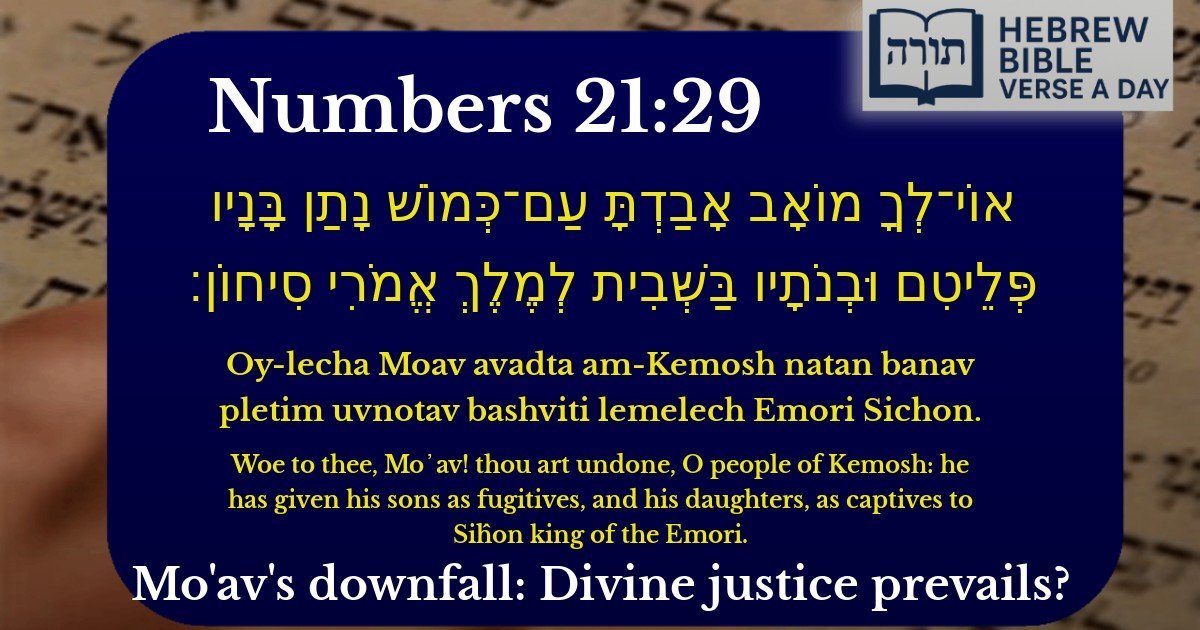
אוֹי־לְךָ מוֹאָב אָבַדְתָּ עַם־כְּמוֹשׁ נָתַן בָּנָיו פְּלֵיטִם וּבְנֹתָיו בַּשְּׁבִית לְמֶלֶךְ אֱמֹרִי סִיחוֹן׃
English Translation
Woe to thee, Mo᾽av! thou art undone, O people of Kemosh: he has given his sons as fugitives, and his daughters, as captives to Siĥon king of the Emori.
Transliteration
Oy-lecha Moav avadta am-Kemosh natan banav pletim uvnotav bashviti lemelech Emori Sichon.
Hebrew Leining Text
אוֹי־לְךָ֣ מוֹאָ֔ב אָבַ֖דְתָּ עַם־כְּמ֑וֹשׁ נָתַ֨ן בָּנָ֤יו פְּלֵיטִם֙ וּבְנֹתָ֣יו בַּשְּׁבִ֔ית לְמֶ֥לֶךְ אֱמֹרִ֖י סִיחֽוֹן׃
🎵 Listen to leining
Parasha Commentary
📚 Talmud Citations
This verse is not quoted in the Talmud.
Context of the Verse
This verse (Numbers 21:29) is part of a poetic lamentation over the downfall of Moab, delivered by the Israelites after their victory over Sihon, king of the Amorites. The verse reflects the consequences of Moab's defeat and the capture of its people by Sihon.
Explanation of Key Phrases
Theological Implications
This verse serves as a reminder of the transient power of nations that oppose Hashem's will. The Malbim explains that Moab's reliance on Kemosh was futile, as only Hashem controls the fate of nations. The lament also foreshadows future judgments against Moab (e.g., in Isaiah 15-16 and Jeremiah 48).
Connection to Jewish History
According to the Sforno, this lament was preserved in Scripture to teach that even nations hostile to Israel are subject to divine justice. The downfall of Moab serves as a lesson in humility and the consequences of opposing the Jewish people, as later seen in the story of Ruth (a Moabite who embraced Judaism).