

Join Our Newsletter To Be Informed When New Videos Are Posted
Hebrew Text
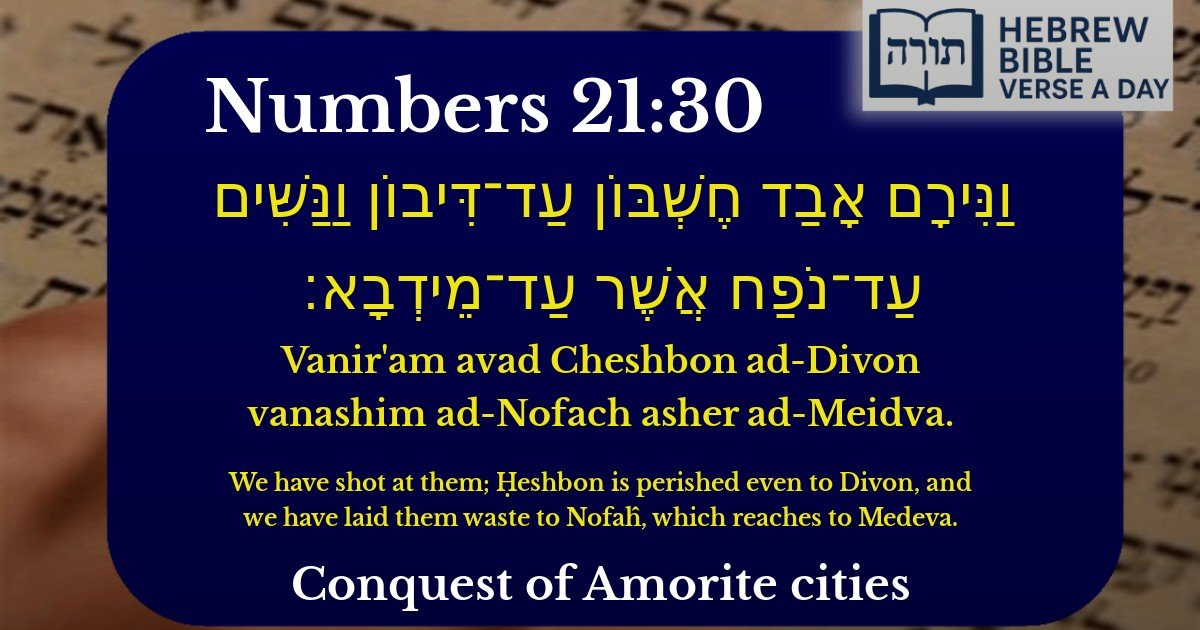
וַנִּירָם אָבַד חֶשְׁבּוֹן עַד־דִּיבוֹן וַנַּשִּׁים עַד־נֹפַח אֲשֶׁר עַד־מֵידְבָא׃
English Translation
We have shot at them; Ḥeshbon is perished even to Divon, and we have laid them waste to Nofaĥ, which reaches to Medeva.
Transliteration
Vanir'am avad Cheshbon ad-Divon vanashim ad-Nofach asher ad-Meidva.
Hebrew Leining Text
וַנִּירָ֛ם אָבַ֥ד חֶשְׁבּ֖וֹן עַד־דִּיבֹ֑ן וַנַּשִּׁ֣ים עַד־נֹ֔פַח אֲשֶׁ֖רׄ עַד־מֵֽידְבָֽא׃
🎵 Listen to leining
Parasha Commentary
📚 Talmud Citations
This verse is not quoted in the Talmud.
Context in the Torah
This verse appears in Bamidbar (Numbers) 21:30, as part of the "Song of the Well" (Shirat HaBe'er), which recounts the victories of the Israelites over the Amorites. The verse describes the conquest of several cities in the region of Moav, including Cheshbon, Divon, Nofach, and Medeva.
Rashi's Explanation
Rashi (Rabbi Shlomo Yitzchaki) explains that this verse is part of a poetic taunt song sung by the Israelites after their victory over Sichon, king of the Amorites. The phrase "וַנִּירָם אָבַד חֶשְׁבּוֹן" ("We have shot at them; Cheshbon is perished") is interpreted metaphorically: the "shooting" refers to the Israelites' arrows of war, which led to the downfall of Cheshbon, the capital of Sichon's kingdom. Rashi notes that the conquest extended from Cheshbon to Divon and beyond, emphasizing the completeness of their victory.
Midrashic Interpretation
The Midrash (Bamidbar Rabbah 19:26) elaborates on the significance of these cities. Cheshbon (חֶשְׁבּוֹן) is connected to the root חָשַׁב ("to calculate"), suggesting that the Amorites had calculated their strength and defenses but were ultimately defeated by divine intervention. The progression from Cheshbon to Divon and Medeva symbolizes the unraveling of their plans, as their strategic strongholds fell one after another.
Rambam's Perspective
Rambam (Maimonides), in his Mishneh Torah (Hilchot Melachim 5:1), discusses the laws of warfare and the ethical conduct of Israel in battle. This verse illustrates the principle that when Israel fights a justified war (milchemet mitzvah), their victories are a fulfillment of divine will. The mention of these cities serves as a historical record of G-d's deliverance and the righteousness of Israel's cause.
Symbolism of the Cities
Halachic Implications
The Talmud (Gittin 38a) references this verse in discussions about the boundaries of Eretz Yisrael and the laws of conquest. The cities listed here were part of the territory east of the Jordan River, which was allocated to the tribes of Reuven and Gad. Their capture demonstrated the fulfillment of G-d's promise to give the land to Israel.