

Join Our Newsletter To Be Informed When New Videos Are Posted
Hebrew Text
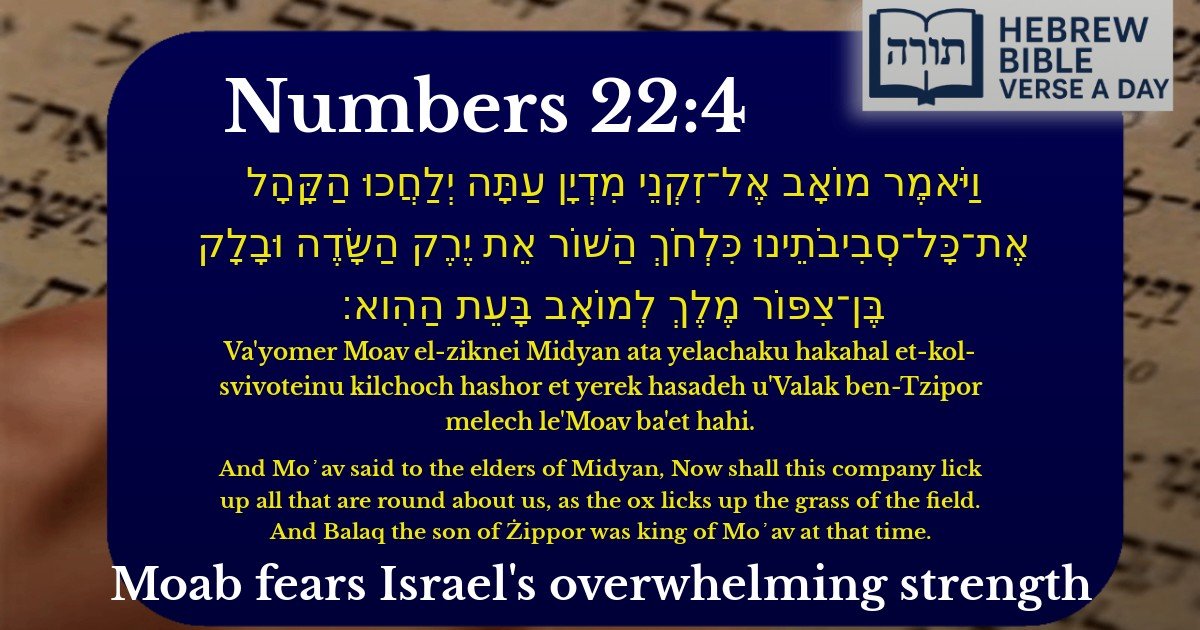
וַיֹּאמֶר מוֹאָב אֶל־זִקְנֵי מִדְיָן עַתָּה יְלַחֲכוּ הַקָּהָל אֶת־כָּל־סְבִיבֹתֵינוּ כִּלְחֹךְ הַשּׁוֹר אֵת יֶרֶק הַשָּׂדֶה וּבָלָק בֶּן־צִפּוֹר מֶלֶךְ לְמוֹאָב בָּעֵת הַהִוא׃
English Translation
And Mo᾽av said to the elders of Midyan, Now shall this company lick up all that are round about us, as the ox licks up the grass of the field. And Balaq the son of Żippor was king of Mo᾽av at that time.
Transliteration
Va'yomer Moav el-ziknei Midyan ata yelachaku hakahal et-kol-svivoteinu kilchoch hashor et yerek hasadeh u'Valak ben-Tzipor melech le'Moav ba'et hahi.
Hebrew Leining Text
וַיֹּ֨אמֶר מוֹאָ֜ב אֶל־זִקְנֵ֣י מִדְיָ֗ן עַתָּ֞ה יְלַחֲכ֤וּ הַקָּהָל֙ אֶת־כׇּל־סְבִ֣יבֹתֵ֔ינוּ כִּלְחֹ֣ךְ הַשּׁ֔וֹר אֵ֖ת יֶ֣רֶק הַשָּׂדֶ֑ה וּבָלָ֧ק בֶּן־צִפּ֛וֹר מֶ֥לֶךְ לְמוֹאָ֖ב בָּעֵ֥ת הַהִֽוא׃
🎵 Listen to leining
Parasha Commentary
📚 Talmud Citations
This verse is not quoted in the Talmud.
Context of the Verse
This verse appears in Bamidbar (Numbers) 22:4, where Moab expresses fear of Bnei Yisrael after witnessing their military victories over neighboring nations. The imagery of an ox licking up grass illustrates their concern that Israel will consume all resources in the region.
Moab’s Fear and Strategy
Rashi explains that Moab feared Bnei Yisrael would conquer their land just as they had conquered the lands of Sichon and Og. The comparison to an ox licking grass ("kilchoch hashor es yerek hasadeh") emphasizes their dread of total devastation. The Midrash (Bamidbar Rabbah 20:4) adds that Moab sought an alliance with Midian, despite historical enmity between them, showing how threatened they felt.
Balak’s Leadership
The verse introduces Balak ben Tzippor as the king of Moab at that time. The Malbim notes that Balak’s name ("devastator") and his father’s name, Tzippor ("bird"), symbolize his destructive intentions and fleeting nature. The Ibn Ezra suggests that mentioning Balak here sets the stage for his subsequent actions—hiring Balaam to curse Israel.
Symbolism of the Ox
Historical and Theological Implications
The Kli Yakar highlights that Moab’s fear was misplaced—Bnei Yisrael had no divine command to attack Moab (as later seen in Devarim 2:9). Their panic stemmed from ignorance of Hashem’s specific directives. This teaches that nations often misunderstand Israel’s role in the divine plan, leading to unnecessary hostility.