
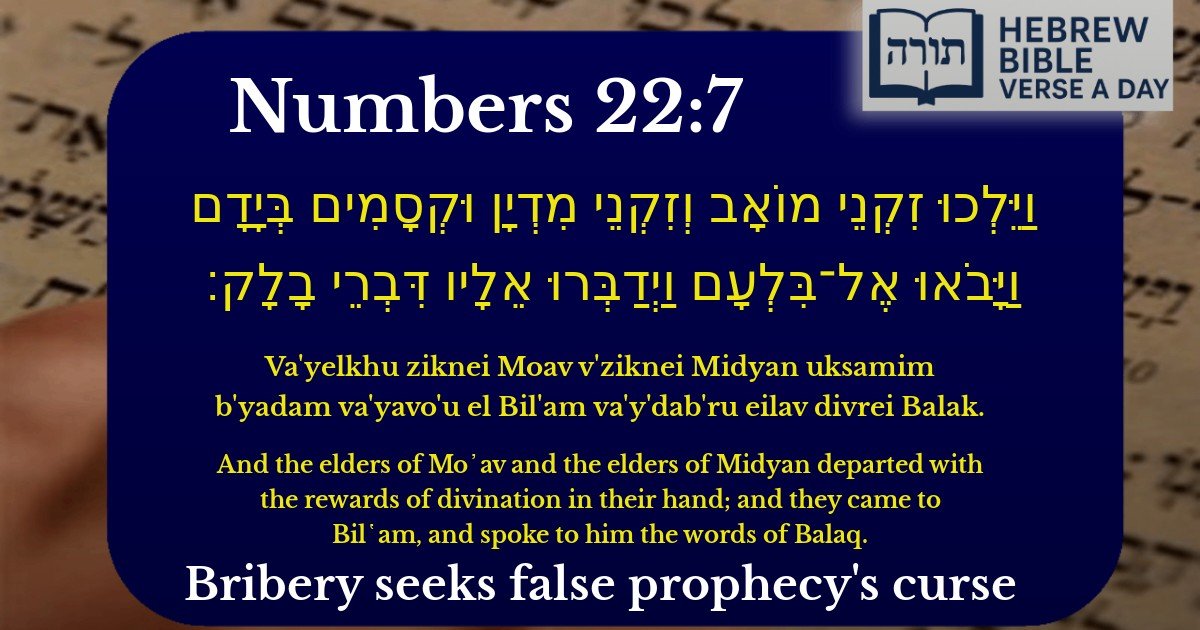

Numbers 22:7 - Bribery seeks false prophecy's curse

Numbers 22:7 - במדבר 22:7

Hebrew Text

וַיֵּלְכוּ זִקְנֵי מוֹאָב וְזִקְנֵי מִדְיָן וּקְסָמִים בְּיָדָם וַיָּבֹאוּ אֶל־בִּלְעָם וַיְדַבְּרוּ אֵלָיו דִּבְרֵי בָלָק׃

English Translation

And the elders of Mo᾽av and the elders of Midyan departed with the rewards of divination in their hand; and they came to Bil῾am, and spoke to him the words of Balaq.

Transliteration

Va'yelkhu ziknei Moav v'ziknei Midyan uksamim b'yadam va'yavo'u el Bil'am va'y'dab'ru eilav divrei Balak.

Hebrew Leining Text

וַיֵּ֨לְכ֜וּ זִקְנֵ֤י מוֹאָב֙ וְזִקְנֵ֣י מִדְיָ֔ן וּקְסָמִ֖ים בְּיָדָ֑ם וַיָּבֹ֙אוּ֙ אֶל־בִּלְעָ֔ם וַיְדַבְּר֥וּ אֵלָ֖יו דִּבְרֵ֥י בָלָֽק׃

🎵 Listen to leining

Parasha Commentary

Context of the Verse

This verse (Bamidbar 22:7) describes the delegation sent by Balak, king of Moav, to Balaam, seeking his assistance in cursing Bnei Yisrael. The elders of Moav and Midyan bring "rewards of divination" (ksamim) to entice Balaam, indicating their reliance on occult practices.

Analysis of the Delegation

Rashi explains that the inclusion of both Moavite and Midyanite elders highlights their shared fear of Bnei Yisrael. Moav feared military defeat, while Midyan feared spiritual corruption (as they were idol worshippers). The joint delegation suggests a temporary alliance against a common threat.

The Meaning of "Ksamim" (Rewards of Divination)

  • Rashi: Interprets ksamim literally as payment for divination, indicating Balak's belief in Balaam's supernatural abilities.
  • Ramban: Suggests that the term may also imply tools of sorcery, as Balaam was known for his expertise in occult arts.
  • Midrash Tanchuma: Notes that the word ksamim is related to kesem (divination), emphasizing the pagan nature of their mission.

Balaam's Reputation

The Talmud (Sanhedrin 105b) describes Balaam as one of the greatest non-Jewish prophets, possessing a level of divine communication comparable to Moshe Rabbeinu. However, his moral corruption led him to misuse his gifts for personal gain, as seen in his willingness to curse a nation for payment.

Balak's Strategy

Malbim explains that Balak chose Balaam specifically because he believed Balaam's curses had real power. The "words of Balak" were not merely a request but a carefully crafted appeal to Balaam's pride and greed, offering both honor and material reward.

Spiritual Implications

The Ohr HaChaim highlights the irony: Balak sought supernatural means to harm Bnei Yisrael, unaware that their true protection came from Hashem. This episode underscores the futility of opposing divine will through sorcery or human schemes.

📚 Talmud Citations

This verse is not quoted in the Talmud.

Frequently Asked Questions

Q: What does Numbers 22:7 mean when it mentions 'rewards of divination'?
A: The phrase 'rewards of divination' (וּקְסָמִים בְּיָדָם) refers to payment or gifts that Balak, king of Moav, sent to Bil'am to persuade him to curse the Jewish people. Rashi explains that these were payments for Bil'am's occult practices, as he was known as a sorcerer and prophet-for-hire (Bamidbar Rabbah 20:7).
Q: Why did Balak send elders from both Moav and Midyan to Bil'am?
A: Balak sent elders from both Moav and Midyan because both nations feared the Israelites after seeing their victories in battle (Rashi on Numbers 22:4). Midrash Tanchuma (Balak 2) adds that they hoped combining their delegations would increase their chances of convincing Bil'am to curse the Israelites.
Q: What can we learn from Bil'am accepting Balak's offer?
A: Bil'am's willingness to accept Balak's offer despite knowing it was against Hashem's will teaches the danger of greed and misplaced ambition. The Talmud (Avot 5:19) contrasts Bil'am's evil traits with Avraham's virtues, showing how desire for honor and wealth can lead one astray.
Q: How does this verse relate to the Jewish view of sorcery?
A: This verse highlights the Torah's strong prohibition against sorcery and divination (Devarim 18:10-12). Though Bil'am had prophetic abilities, his association with occult practices (קְסָמִים) shows the Torah's disapproval of such methods, even when used by someone with spiritual gifts (Rambam, Hilchot Avodah Zarah 11:16).
Q: Why is this story important in the Torah narrative?
A: This story is important because it demonstrates Hashem's protection of the Jewish people - even when enemies try to use spiritual means against them. The Midrash (Bamidbar Rabbah 20:1) explains that Balak's attempt to curse Israel ultimately led to Bil'am blessing them instead, showing that no one can curse whom Hashem has blessed.