

Join Our Newsletter To Be Informed When New Videos Are Posted
Hebrew Text
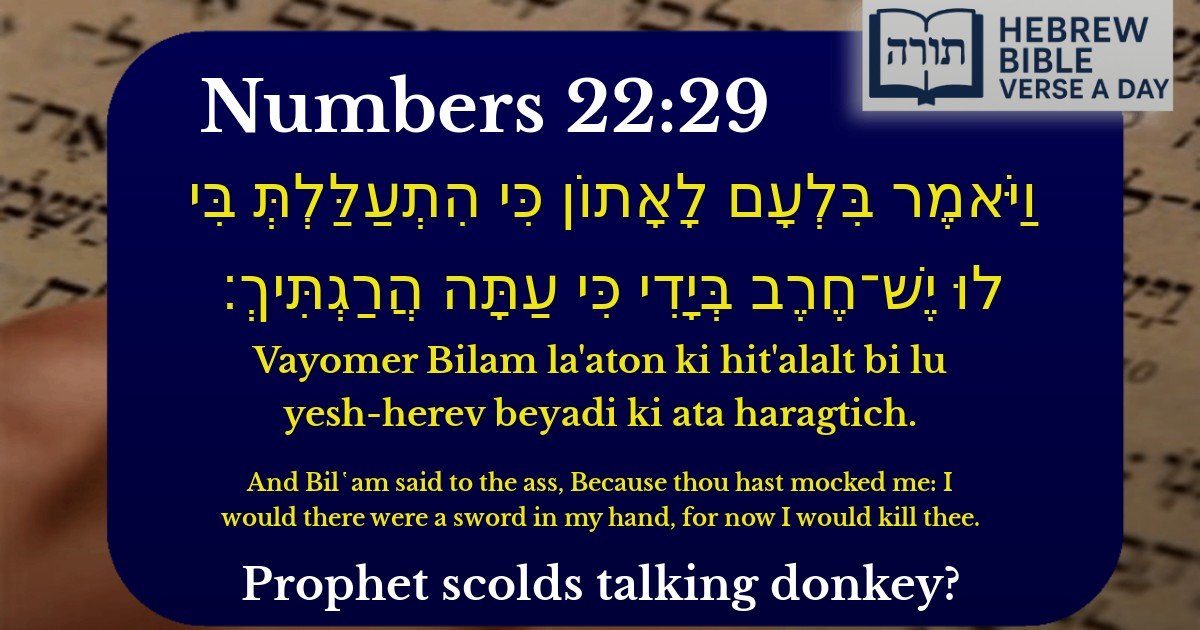
וַיֹּאמֶר בִּלְעָם לָאָתוֹן כִּי הִתְעַלַּלְתְּ בִּי לוּ יֶשׁ־חֶרֶב בְּיָדִי כִּי עַתָּה הֲרַגְתִּיךְ׃
English Translation
And Bil῾am said to the ass, Because thou hast mocked me: I would there were a sword in my hand, for now I would kill thee.
Transliteration
Vayomer Bilam la'aton ki hit'alalt bi lu yesh-herev beyadi ki ata haragtich.
Hebrew Leining Text
וַיֹּ֤אמֶר בִּלְעָם֙ לָֽאָת֔וֹן כִּ֥י הִתְעַלַּ֖לְתְּ בִּ֑י ל֤וּ יֶשׁ־חֶ֙רֶב֙ בְּיָדִ֔י כִּ֥י עַתָּ֖ה הֲרַגְתִּֽיךְ׃
🎵 Listen to leining
Parasha Commentary
📚 Talmud Citations
This verse is quoted in the Talmud.
📖 Avodah Zarah 4b
The verse is referenced in a discussion about the nature of Balaam's character and his interactions with his donkey, illustrating his cruelty and impatience.
📖 Sanhedrin 105a
The verse is cited in a broader discussion about Balaam's prophetic abilities and his moral failings, highlighting his violent tendencies even toward his own animal.
Bil'am's Anger at the Donkey
The verse (Bamidbar 22:29) describes Bil'am's furious reaction when his donkey refuses to move, ultimately speaking to him. Bil'am exclaims, "כִּי הִתְעַלַּלְתְּ בִּי" ("because you have mocked me"), expressing his outrage at what he perceives as the donkey's insolence.
Rashi's Explanation
Rashi explains that "הִתְעַלַּלְתְּ" implies mockery or jesting, suggesting that Bil'am felt humiliated by his donkey's behavior. Rashi further notes that Bil'am's threat, "לוּ יֶשׁ־חֶרֶב בְּיָדִי" ("if only there were a sword in my hand"), reveals his violent nature and readiness to kill even over a perceived slight.
Midrashic Insights
The Midrash (Bamidbar Rabbah 20:14) highlights the irony of Bil'am's statement. Despite being a renowned prophet, he fails to recognize the divine intervention (the angel blocking his path) and instead blames his donkey. This underscores his spiritual blindness and arrogance.
Rambam's Perspective
Rambam (Moreh Nevuchim 1:6) discusses this episode as an example of divine providence intervening to prevent evil. Bil'am's donkey serves as an instrument of Hashem's will, thwarting his harmful intentions.
Moral Lesson
The episode teaches that arrogance blinds a person to truth, while humility—exemplified by the donkey's obedience to Hashem—leads to clarity. Bil'am's misplaced anger serves as a warning against letting pride override reason.