

Join Our Newsletter To Be Informed When New Videos Are Posted
Hebrew Text
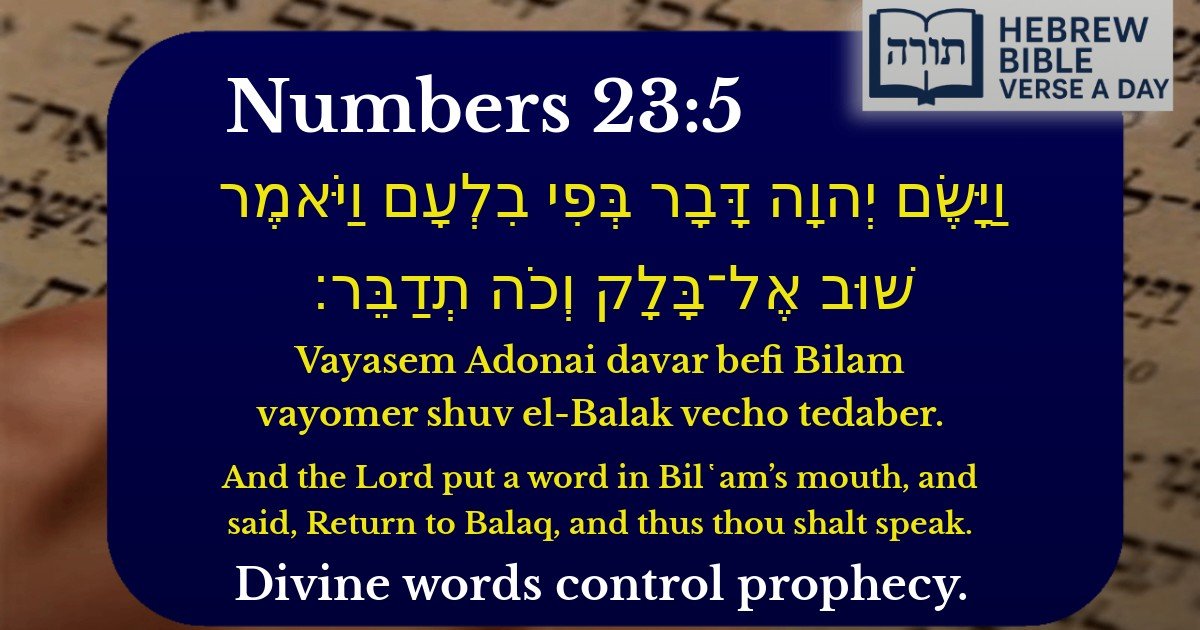
וַיָּשֶׂם יְהוָה דָּבָר בְּפִי בִלְעָם וַיֹּאמֶר שׁוּב אֶל־בָּלָק וְכֹה תְדַבֵּר׃
English Translation
And the Lord put a word in Bil῾am’s mouth, and said, Return to Balaq, and thus thou shalt speak.
Transliteration
Vayasem Adonai davar befi Bilam vayomer shuv el-Balak vecho tedaber.
Hebrew Leining Text
וַיָּ֧שֶׂם יְהֹוָ֛ה דָּבָ֖ר בְּפִ֣י בִלְעָ֑ם וַיֹּ֛אמֶר שׁ֥וּב אֶל־בָּלָ֖ק וְכֹ֥ה תְדַבֵּֽר׃
🎵 Listen to leining
Parasha Commentary
📚 Talmud Citations
This verse is quoted in the Talmud.
📖 Sanhedrin 105b
The verse is referenced in the discussion about Balaam's prophecy and his inability to curse the Israelites, highlighting God's control over Balaam's words.
📖 Avodah Zarah 4b
The verse is mentioned in the context of discussing the nature of Balaam's prophecies and his relationship with God.
Divine Control Over Bil'am's Speech
The verse (Bamidbar 23:5) states: "וַיָּשֶׂם יְהוָה דָּבָר בְּפִי בִלְעָם" ("And the Lord put a word in Bil'am's mouth"). Rashi explains that Hashem exerted complete control over Bil'am's prophecy, forcing him to bless Bnei Yisrael against his will. This demonstrates that even a wicked prophet like Bil'am could not deviate from the divine word when Hashem chose to speak through him.
The Nature of Bil'am's Prophecy
Rambam (Hilchos Yesodei HaTorah 7:7) discusses how Bil'am's prophecy was unique—unlike the nevi'im of Israel, who actively sought divine connection, Bil'am was merely a vessel for Hashem's message in this instance. The Talmud (Sanhedrin 105b) emphasizes that Bil'am's ability to prophesy was granted solely for the sake of blessing Israel, not due to his own merit.
Returning to Balak
The phrase "שׁוּב אֶל־בָּלָק וְכֹה תְדַבֵּר" ("Return to Balak and thus thou shalt speak") indicates that Bil'am was not free to deliver his own message. The Midrash (Bamidbar Rabbah 20:12) teaches that this was a rebuke—Bil'am, who sought to curse Israel, was now compelled to return to Balak empty-handed, forced to transmit only the words Hashem placed in his mouth.
Key Lessons from the Verse