

Join Our Newsletter To Be Informed When New Videos Are Posted
Hebrew Text
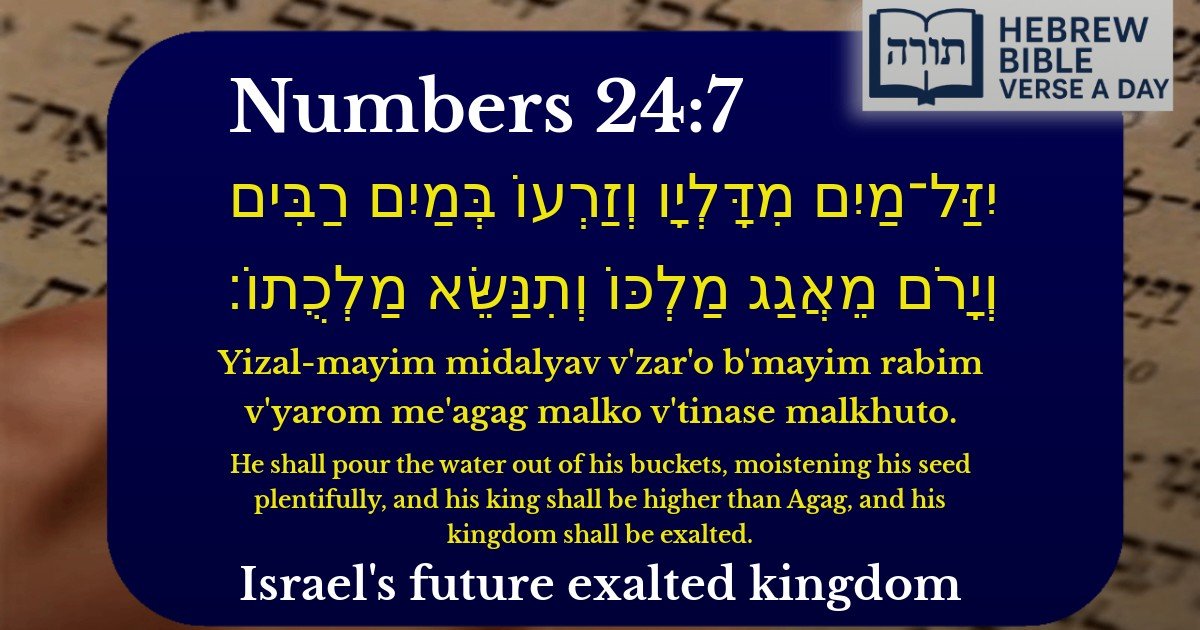
יִזַּל־מַיִם מִדָּלְיָו וְזַרְעוֹ בְּמַיִם רַבִּים וְיָרֹם מֵאֲגַג מַלְכּוֹ וְתִנַּשֵּׂא מַלְכֻתוֹ׃
English Translation
He shall pour the water out of his buckets, moistening his seed plentifully, and his king shall be higher than Agag, and his kingdom shall be exalted.
Transliteration
Yizal-mayim midalyav v'zar'o b'mayim rabim v'yarom me'agag malko v'tinase malkhuto.
Hebrew Leining Text
יִֽזַּל־מַ֙יִם֙ מִדָּ֣לְיָ֔ו וְזַרְע֖וֹ בְּמַ֣יִם רַבִּ֑ים וְיָרֹ֤ם מֵֽאֲגַג֙ מַלְכּ֔וֹ וְתִנַּשֵּׂ֖א מַלְכֻתֽוֹ׃
🎵 Listen to leining
Parasha Commentary
📚 Talmud Citations
This verse is not quoted in the Talmud.
Context of the Verse
This verse (Numbers 24:7) is part of the prophecy of Balaam, who was compelled by Hashem to bless the Jewish people instead of cursing them. The verse speaks of the future greatness and prosperity of Israel, using agricultural and royal imagery to convey abundance and dominance.
Explanation of the Verse
The phrase "יִזַּל־מַיִם מִדָּלְיָו" ("He shall pour the water out of his buckets") is interpreted by Rashi as a metaphor for the Torah, which is often compared to water (as in Isaiah 55:1, "Ho, everyone who thirsts, come for water"). The "buckets" symbolize the scholars and teachers who disseminate Torah wisdom to the masses. The abundance of water signifies the widespread knowledge and influence of Torah among the Jewish people.
The continuation, "וְזַרְעוֹ בְּמַיִם רַבִּים" ("moistening his seed plentifully"), refers to the spiritual and physical prosperity of the Jewish nation. Ramban (Nachmanides) explains that this alludes to both the fertility of the land of Israel and the spiritual growth of the people, nourished by the Torah's teachings.
Victory Over Agag and Exaltation of Kingship
The phrase "וְיָרֹם מֵאֲגַג מַלְכּוֹ" ("and his king shall be higher than Agag") is understood by the Midrash (Bamidbar Rabbah 20:20) as a reference to King Saul's victory over Agag, the king of Amalek (1 Samuel 15). This symbolizes the ultimate triumph of the Jewish people over their enemies, particularly Amalek, who represents the archetype of evil and opposition to Hashem's will.
The final clause, "וְתִנַּשֵּׂא מַלְכֻתוֹ" ("and his kingdom shall be exalted"), is interpreted by the Talmud (Sanhedrin 20b) as a prophecy of the future Messianic era, when the kingdom of Israel will be fully restored and elevated above all nations, fulfilling the divine promise of Jewish sovereignty in the land of Israel.
Key Themes in Orthodox Jewish Interpretation