

Join Our Newsletter To Be Informed When New Videos Are Posted
Hebrew Text
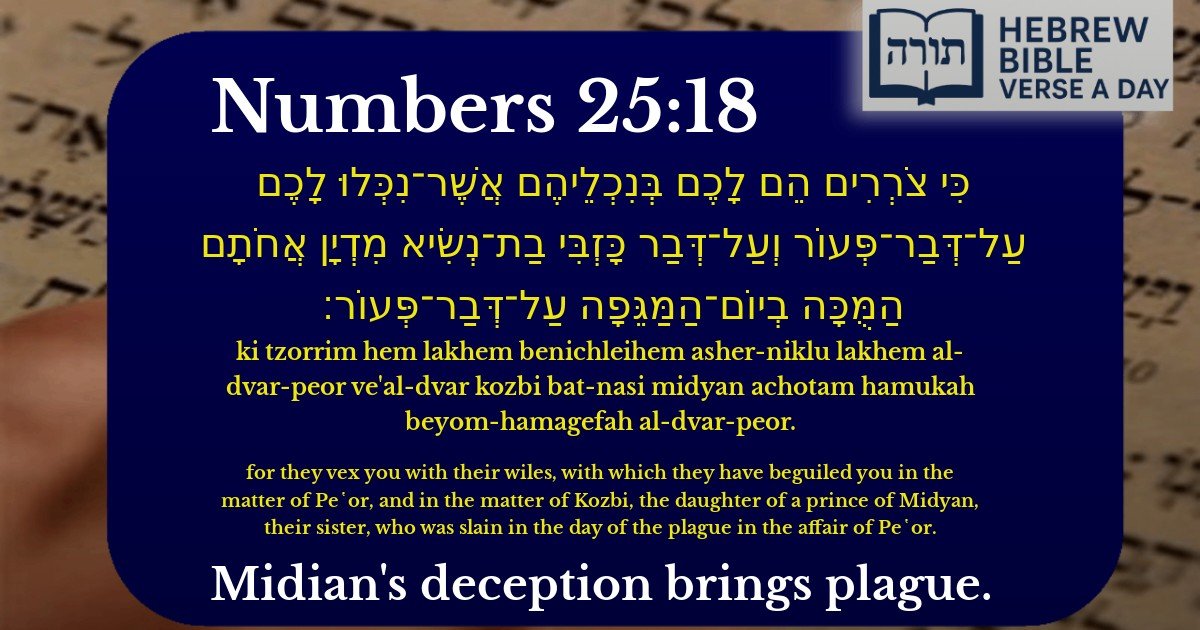
כִּי צֹרְרִים הֵם לָכֶם בְּנִכְלֵיהֶם אֲשֶׁר־נִכְּלוּ לָכֶם עַל־דְּבַר־פְּעוֹר וְעַל־דְּבַר כָּזְבִּי בַת־נְשִׂיא מִדְיָן אֲחֹתָם הַמֻּכָּה בְיוֹם־הַמַּגֵּפָה עַל־דְּבַר־פְּעוֹר׃
English Translation
for they vex you with their wiles, with which they have beguiled you in the matter of Pe῾or, and in the matter of Kozbi, the daughter of a prince of Midyan, their sister, who was slain in the day of the plague in the affair of Pe῾or.
Transliteration
Ki tzorrim hem lakhem benichleihem asher-niklu lakhem al-dvar-peor ve'al-dvar kozbi bat-nasi midyan achotam hamukah beyom-hamagefah al-dvar-peor.
Hebrew Leining Text
כִּ֣י צֹרְרִ֥ים הֵם֙ לָכֶ֔ם בְּנִכְלֵיהֶ֛ם אֲשֶׁר־נִכְּל֥וּ לָכֶ֖ם עַל־דְּבַר־פְּע֑וֹר וְעַל־דְּבַ֞ר כׇּזְבִּ֨י בַת־נְשִׂ֤יא מִדְיָן֙ אֲחֹתָ֔ם הַמֻּכָּ֥ה בְיוֹם־הַמַּגֵּפָ֖ה עַל־דְּבַר־פְּעֽוֹר׃
🎵 Listen to leining
Parasha Commentary
📚 Talmud Citations
This verse is not quoted in the Talmud.
Context of the Verse
This verse (Bamidbar 25:18) appears in the context of Hashem's command to Moshe to wage war against Midyan as retribution for their role in leading Bnei Yisrael astray through the sin of Pe'or and the incident with Kozbi bas Tzur. The verse emphasizes that the Midyanim were adversaries who employed cunning strategies to entice Bnei Yisrael into idolatry and immorality.
Explanation of "Their Wiles" (בְּנִכְלֵיהֶם)
Rashi explains that the term נִכְלֵיהֶם refers to the deceptive tactics employed by the Midyanim. They did not confront Bnei Yisrael in battle but instead used trickery, sending their women to seduce the men into idol worship (Avodah Zarah). The Midrash (Bamidbar Rabbah 20:23) elaborates that they set up marketplaces where their women sold goods, enticing the Israelites into sin.
The Sin of Pe'or (עַל־דְּבַר־פְּעוֹר)
The incident of Pe'or (Bamidbar 25:1-9) involved the worship of the Moabite deity Ba'al Pe'or, which included degrading acts of idolatry. Rambam (Hilchos Avodah Zarah 6:3) describes this as one of the most abominable forms of idol worship, requiring public lewdness as part of its ritual. The Midyanim, allied with Moav, played a key role in this spiritual downfall.
The Role of Kozbi bas Tzur (כָּזְבִּי בַת־נְשִׂיא מִדְיָן)
Kozbi was the daughter of Tzur, a Midyanite chieftain (Bamidbar 31:8). The Talmud (Sanhedrin 106a) states that her name reflects her deceptive nature ("כָּזְבִּי" from "sheker," falsehood). She was sent deliberately to entice Zimri ben Salu, a leader of Shevet Shimon, into public immorality, provoking divine wrath. Pinchas's zealous act of killing them stopped the plague.
Connection to the Plague (הַמֻּכָּה בְיוֹם־הַמַּגֵּפָה)
The plague (Bamidbar 25:9) killed 24,000 Israelites as punishment for their involvement in the sin. The verse here emphasizes that Kozbi's death coincided with the plague's cessation, highlighting the direct link between her actions and the divine retribution. The Ohr HaChaim notes that her death served as atonement, symbolizing the eradication of the evil influence.
Lessons from the Verse