

Join Our Newsletter To Be Informed When New Videos Are Posted
Hebrew Text
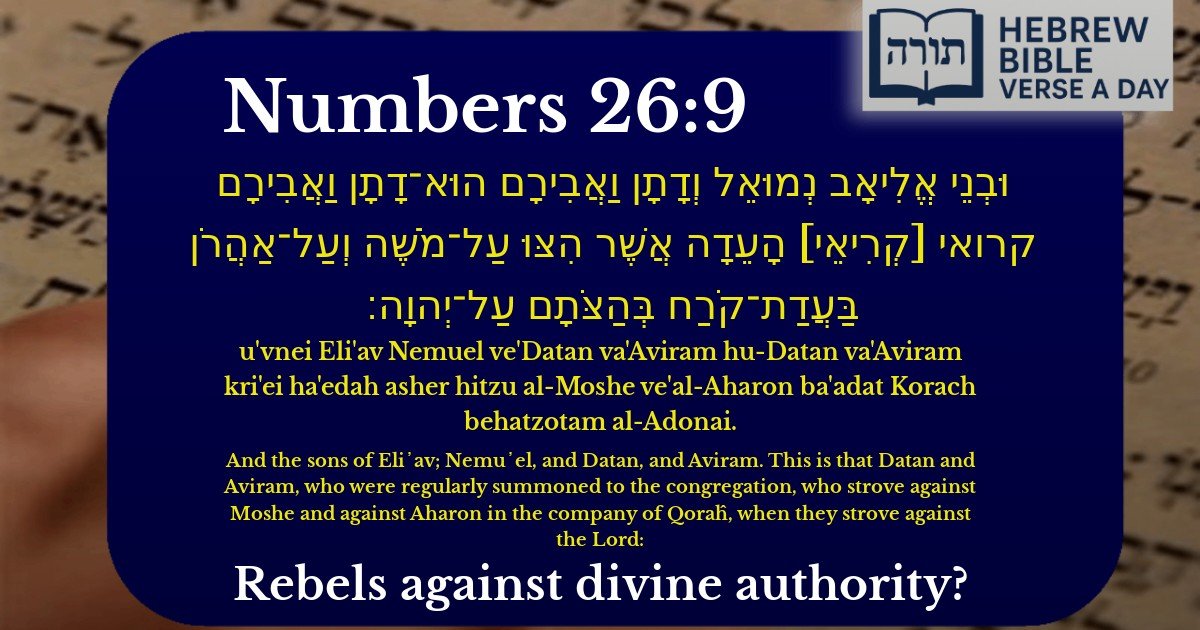
וּבְנֵי אֱלִיאָב נְמוּאֵל וְדָתָן וַאֲבִירָם הוּא־דָתָן וַאֲבִירָם קרואי [קְרִיאֵי] הָעֵדָה אֲשֶׁר הִצּוּ עַל־מֹשֶׁה וְעַל־אַהֲרֹן בַּעֲדַת־קֹרַח בְּהַצֹּתָם עַל־יְהוָה׃
English Translation
And the sons of Eli᾽av; Nemu᾽el, and Datan, and Aviram. This is that Datan and Aviram, who were regularly summoned to the congregation, who strove against Moshe and against Aharon in the company of Qoraĥ, when they strove against the Lord:
Transliteration
U'vnei Eli'av Nemuel ve'Datan va'Aviram hu-Datan va'Aviram kri'ei ha'edah asher hitzu al-Moshe ve'al-Aharon ba'adat Korach behatzotam al-Adonai.
Hebrew Leining Text
וּבְנֵ֣י אֱלִיאָ֔ב נְמוּאֵ֖ל וְדָתָ֣ן וַאֲבִירָ֑ם הֽוּא־דָתָ֨ן וַאֲבִירָ֜ם (קרואי) [קְרִיאֵ֣י] הָעֵדָ֗ה אֲשֶׁ֨ר הִצּ֜וּ עַל־מֹשֶׁ֤ה וְעַֽל־אַהֲרֹן֙ בַּעֲדַת־קֹ֔רַח בְּהַצֹּתָ֖ם עַל־יְהֹוָֽה׃
🎵 Listen to leining
Parasha Commentary
📚 Talmud Citations
This verse is quoted in the Talmud.
📖 Sanhedrin 110a
The verse is referenced in the discussion about the rebellion of Korach and his followers, particularly focusing on Datan and Aviram's role in the conflict against Moses and Aaron.
The Context of Datan and Aviram's Rebellion
The verse (Bamidbar 26:9) recounts the lineage of Eli'av and identifies his sons, Datan and Aviram, as key instigators in Korach's rebellion against Moshe and Aharon. Rashi explains that their names are singled out here to emphasize their persistent defiance—they had previously challenged Moshe's authority in Egypt (Shemot 2:13-14) and later joined Korach's mutiny. Their repeated opposition marks them as archetypes of rebellion against divinely appointed leadership.
The Phrase "קְרִיאֵי הָעֵדָה" (Summoned to the Congregation)
Ramban notes that the term "קְרִיאֵי הָעֵדָה" ("summoned to the congregation") suggests Datan and Aviram held prominent roles, possibly as tribal representatives (Midrash Tanchuma, Korach 5). Despite their status, they abused their positions to incite dissent. The Talmud (Sanhedrin 110a) highlights their arrogance, interpreting their summons as a self-aggrandizing claim to authority rather than genuine communal service.
Their Sin: Striving Against Hashem
The verse explicitly states they "strove against Hashem"—not merely against Moshe and Aharon. The Sforno explains that rejecting divinely chosen leaders equates to rejecting Hashem Himself, as Moshe and Aharon acted as His agents. This aligns with the Talmudic principle (Berachos 5a) that persecution of Torah scholars is akin to opposing the Divine Presence.
Lessons from Their Downfall
The Midrash (Bamidbar Rabbah 18:10) contrasts Datan and Aviram's fate—being swallowed by the earth—with Korach's punishment (consumed by fire). This distinction underscores that their sin was uniquely severe due to their unrepentant defiance. The Maharal (Gur Aryeh) adds that their earthly burial symbolizes how their rebellion uprooted their very connection to Klal Yisrael, serving as a warning against divisiveness.