

Join Our Newsletter To Be Informed When New Videos Are Posted
Hebrew Text
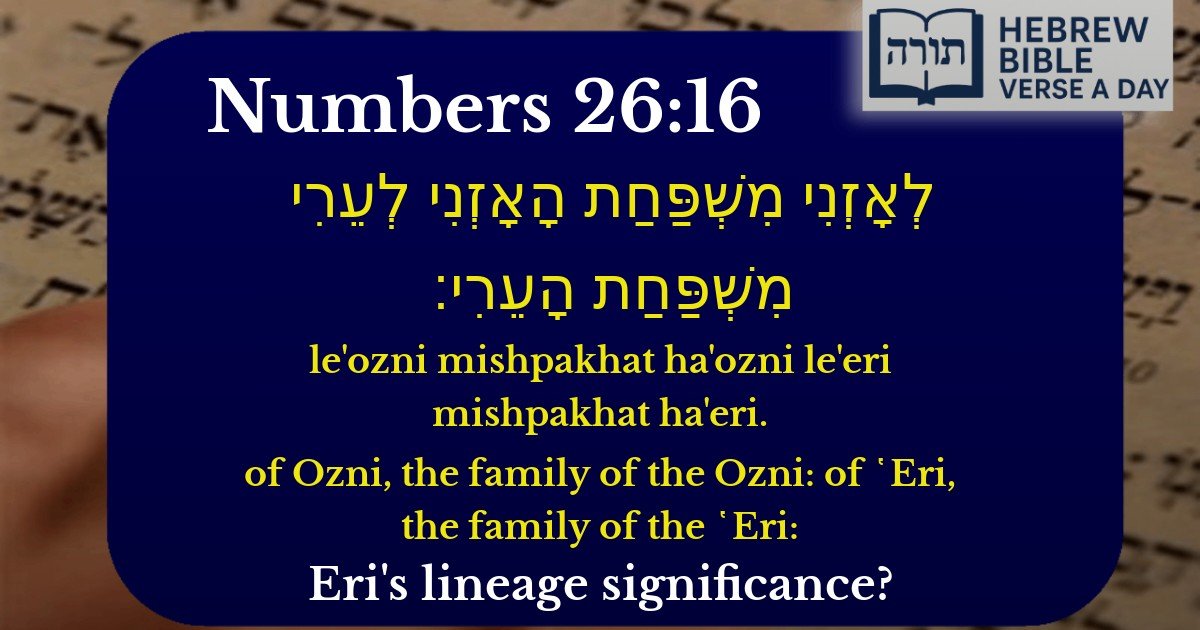
לְאָזְנִי מִשְׁפַּחַת הָאָזְנִי לְעֵרִי מִשְׁפַּחַת הָעֵרִי׃
English Translation
of Ozni, the family of the Ozni: of ῾Eri, the family of the ῾Eri:
Transliteration
Le'ozni mishpakhat ha'ozni le'eri mishpakhat ha'eri.
Hebrew Leining Text
לְאׇזְנִ֕י מִשְׁפַּ֖חַת הָאׇזְנִ֑י לְעֵרִ֕י מִשְׁפַּ֖חַת הָעֵרִֽי׃
🎵 Listen to leining
Parasha Commentary
📚 Talmud Citations
This verse is not quoted in the Talmud.
Context in the Torah
The verse (Bamidbar 26:16) appears in the census of the tribes of Israel, specifically listing the families of the tribe of Gad. The names "Ozni" and "Eri" refer to descendants of Gad, forming distinct family groups within the tribe.
Rashi's Commentary
Rashi (Rabbi Shlomo Yitzchaki) explains that "Ozni" is another name for Etzbon, mentioned earlier in the genealogy (Bereishit 46:16). He notes that it was common for individuals to have multiple names, as seen elsewhere in Tanach. The repetition ("of Ozni, the family of the Ozni") emphasizes that the family was called by his name.
Ibn Ezra's Insight
Ibn Ezra suggests that the double mention ("the family of the Ozni") serves to clarify that this was indeed the formal name of the family, distinguishing it from any other possible interpretations or similar-sounding names.
Midrashic Interpretation
The Midrash (Bamidbar Rabbah) connects the name "Ozni" (from "ozen," meaning ear) to the idea of attentive listening to Torah. It teaches that these families were distinguished by their willingness to hear and internalize divine wisdom.
Significance in Tribal Structure
Halachic Implications
Rambam (Mishneh Torah, Hilchot Nachalot 1:6) derives from such verses the importance of maintaining clear family lineages, particularly for matters of inheritance and tribal affiliation in Eretz Yisrael.