

Join Our Newsletter To Be Informed When New Videos Are Posted
Hebrew Text
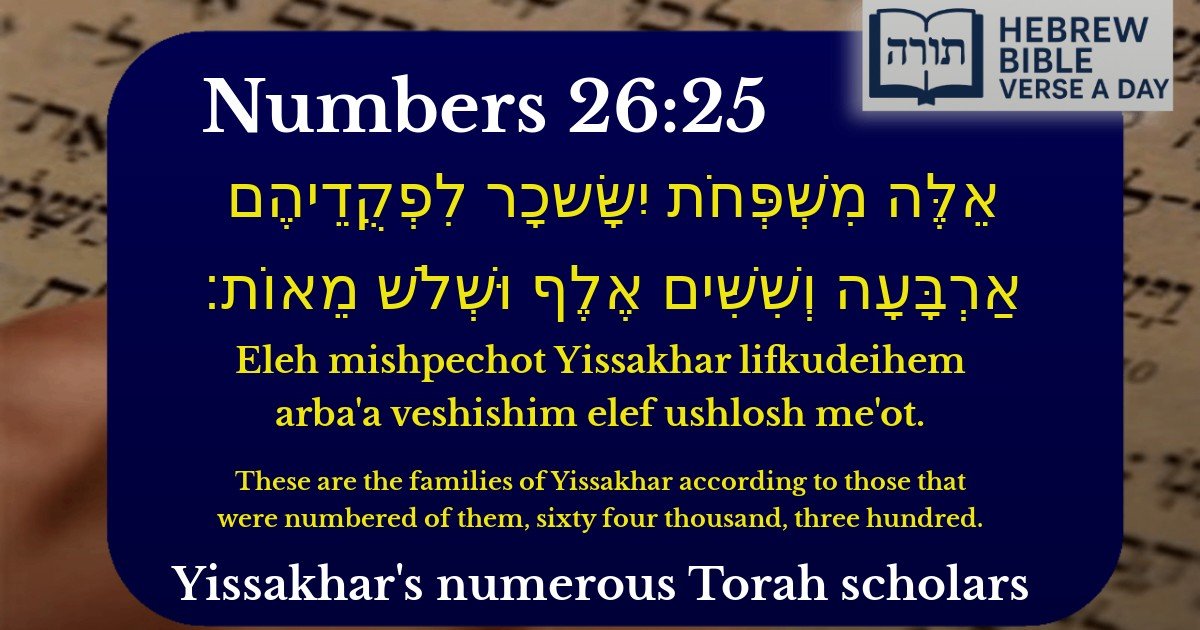
אֵלֶּה מִשְׁפְּחֹת יִשָּׂשכָר לִפְקֻדֵיהֶם אַרְבָּעָה וְשִׁשִּׁים אֶלֶף וּשְׁלֹשׁ מֵאוֹת׃
English Translation
These are the families of Yissakhar according to those that were numbered of them, sixty four thousand, three hundred.
Transliteration
Eleh mishpechot Yissakhar lifkudeihem arba'a veshishim elef ushlosh me'ot.
Hebrew Leining Text
אֵ֛לֶּה מִשְׁפְּחֹ֥ת יִשָּׂשכָ֖ר לִפְקֻדֵיהֶ֑ם אַרְבָּעָ֧ה וְשִׁשִּׁ֛ים אֶ֖לֶף וּשְׁלֹ֥שׁ מֵאֽוֹת׃ {ס}
🎵 Listen to leining
Parasha Commentary
📚 Talmud Citations
This verse is not quoted in the Talmud.
Overview of the Verse
The verse (Bamidbar 26:23) enumerates the descendants of Yissakhar, one of the twelve tribes of Israel, during the census taken in the wilderness. The total count of Yissakhar's male population above the age of twenty was 64,300. This census was conducted before the Israelites entered the Land of Israel, as commanded by Hashem.
Rashi's Commentary
Rashi (Rabbi Shlomo Yitzchaki) notes that the phrase "אֵלֶּה מִשְׁפְּחֹת יִשָּׂשכָר" ("These are the families of Yissakhar") emphasizes the distinct lineages within the tribe. He explains that the Torah lists the families of Yissakhar to highlight their unique contributions to the nation, particularly their dedication to Torah study. Rashi further points out that the numerical count of 64,300 reflects a significant increase from the previous census (Bamidbar 1:29), where Yissakhar was counted at 54,400. This growth demonstrates the tribe's blessing and vitality.
Midrashic Insights
The Midrash (Bamidbar Rabbah) elaborates on the spiritual qualities of the tribe of Yissakhar. It describes them as "יודעי בינה לעתים" ("those who understand the times"), referring to their wisdom in Torah and their ability to determine the proper times for mitzvot and festivals. The Midrash connects their numerical blessing to their devotion to Torah study, as the verse in Divrei Hayamim I (12:33) states: "ומבני יששכר יודעי בינה לעתים" ("And of the children of Yissakhar, men who had understanding of the times").
Rambam's Perspective
While Rambam (Maimonides) does not comment directly on this verse, his teachings in Hilchot Talmud Torah (Laws of Torah Study) align with the Midrashic portrayal of Yissakhar. He emphasizes that Torah study is the foundation of Jewish life and that those who dedicate themselves to it, like the tribe of Yissakhar, merit both spiritual and physical blessings.
Significance of the Number
The number 64,300 is noteworthy because it represents a substantial portion of the Israelite population. The Talmud (Sanhedrin 17a) discusses the importance of Torah scholars in sustaining the world, suggesting that Yissakhar's large numbers reflect their role in supporting the spiritual infrastructure of the nation. Their growth from the first census to the second also signifies divine favor and the fulfillment of Hashem's promise to multiply the descendants of Avraham.