

Join Our Newsletter To Be Informed When New Videos Are Posted
Hebrew Text
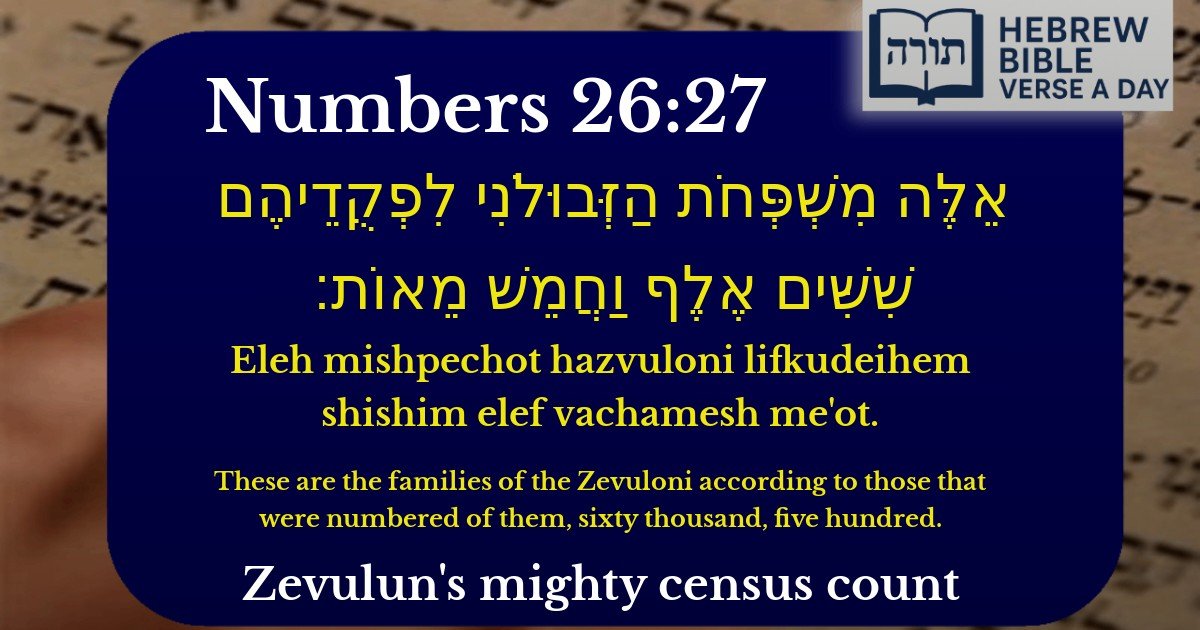
אֵלֶּה מִשְׁפְּחֹת הַזְּבוּלֹנִי לִפְקֻדֵיהֶם שִׁשִּׁים אֶלֶף וַחֲמֵשׁ מֵאוֹת׃
English Translation
These are the families of the Zevuloni according to those that were numbered of them, sixty thousand, five hundred.
Transliteration
Eleh mishpechot hazvuloni lifkudeihem shishim elef vachamesh me'ot.
Hebrew Leining Text
אֵ֛לֶּה מִשְׁפְּחֹ֥ת הַזְּבוּלֹנִ֖י לִפְקֻדֵיהֶ֑ם שִׁשִּׁ֥ים אֶ֖לֶף וַחֲמֵ֥שׁ מֵאֽוֹת׃ {ס}
🎵 Listen to leining
Parasha Commentary
📚 Talmud Citations
This verse is not quoted in the Talmud.
Context in the Torah
The verse (Bamidbar 26:27) appears in the census of Bnei Yisrael taken in the wilderness, specifically listing the families and numbers of the tribe of Zevulun. This census occurs before entering Eretz Yisrael, emphasizing the importance of each tribe's role in the nation.
Rashi's Explanation
Rashi notes that the phrase "אֵלֶּה מִשְׁפְּחֹת הַזְּבוּלֹנִי" ("These are the families of the Zevuloni") highlights the division of Zevulun into distinct family groups. He explains that the Torah lists the families to show their unique identities within the tribe, each contributing to the collective strength of Zevulun.
Significance of the Number
The count of 60,500 men aged 20 and older reflects Zevulun's size compared to other tribes. The Midrash (Bamidbar Rabbah) teaches that Zevulun's partnership with Yissachar—where Zevulun supported Torah scholars through commerce—brought them blessing, as seen in their substantial numbers.
Zevulun's Role in Klal Yisrael
Lessons from the Verse
The inclusion of Zevulun's census teaches that every tribe—even those not primarily engaged in Torah study—has a vital role in Am Yisrael. Their partnership with Yissachar exemplifies the ideal of כל ישראל ערבים זה לזה ("All Jews are responsible for one another").