

Join Our Newsletter To Be Informed When New Videos Are Posted
Hebrew Text
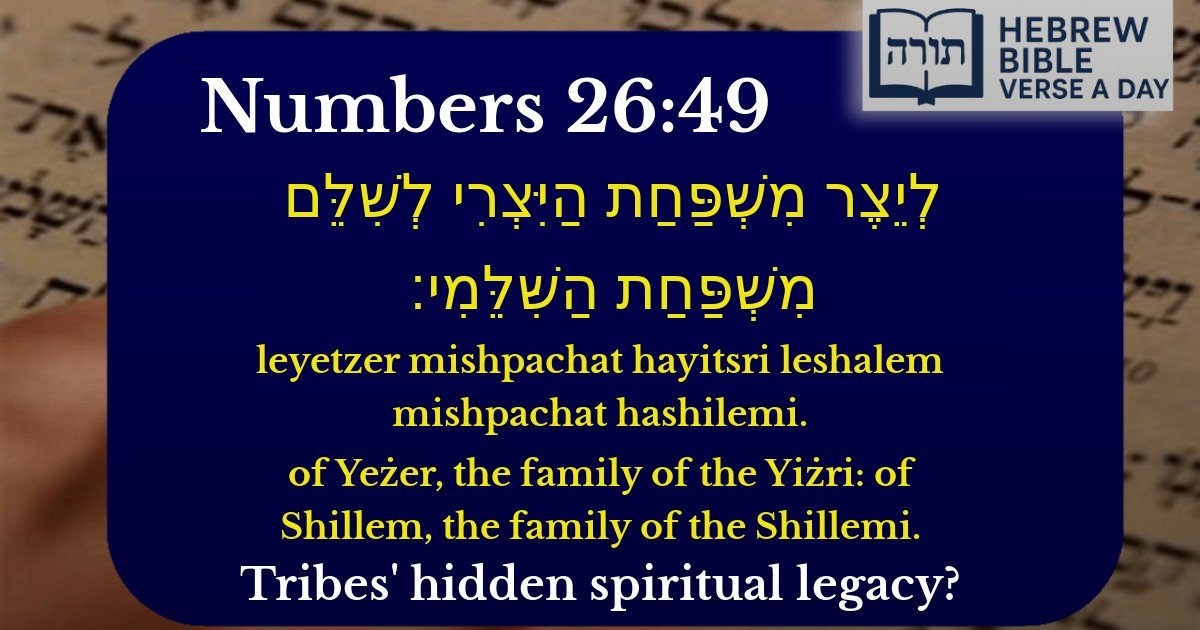
לְיֵצֶר מִשְׁפַּחַת הַיִּצְרִי לְשִׁלֵּם מִשְׁפַּחַת הַשִּׁלֵּמִי׃
English Translation
of Yeżer, the family of the Yiżri: of Shillem, the family of the Shillemi.
Transliteration
Leyetzer mishpachat hayitsri leshalem mishpachat hashilemi.
Hebrew Leining Text
לְיֵ֕צֶר מִשְׁפַּ֖חַת הַיִּצְרִ֑י לְשִׁלֵּ֕ם מִשְׁפַּ֖חַת הַשִּׁלֵּמִֽי׃
🎵 Listen to leining
Parasha Commentary
📚 Talmud Citations
This verse is not quoted in the Talmud.
Context in the Torah
The verse (Bamidbar 26:49) appears in the census of Bnei Yisrael in the wilderness, listing the families of the tribe of Naftali. The names "Yitzer" and "Shillem" refer to descendants of Naftali, and their respective families are recorded as part of the tribal lineage.
Rashi's Explanation
Rashi (Bamidbar 26:49) notes that these names—Yitzer and Shillem—are the same individuals mentioned earlier in Bereishit 46:24 as Yitzvi and Shillem, sons of Naftali. The slight variation in spelling (e.g., Yitzvi vs. Yitzer) does not indicate different people but reflects the flexibility of names in biblical usage. Rashi emphasizes that the Torah maintains consistency in genealogical records.
Midrashic Insights
The Midrash (Bereishit Rabbah 94:16) connects the name "Yitzer" (יצר) to the root "yatzar" (יצר), meaning "to form" or "to create," suggesting a divine aspect in the formation of this family. Similarly, "Shillem" (שלם) is linked to "shalom" (שלום), implying completeness or peace. These names may hint at the spiritual qualities or destinies of these families.
Rambam's Perspective on Genealogy
Rambam (Hilchot Issurei Biah 12:22-23) discusses the importance of maintaining accurate family records, especially for tribal lineage. The meticulous listing of families like the Yitzeri and Shillemi underscores the Torah's emphasis on preserving the purity and identity of each shevet (tribe).
Symbolism in Names
Practical Halachic Implications
The Gemara (Pesachim 4a) derives from such verses the importance of precise language in Torah transmission. Even minor name variations carry significance, teaching that every detail in the Torah is intentional and worthy of study.