

Join Our Newsletter To Be Informed When New Videos Are Posted
Hebrew Text
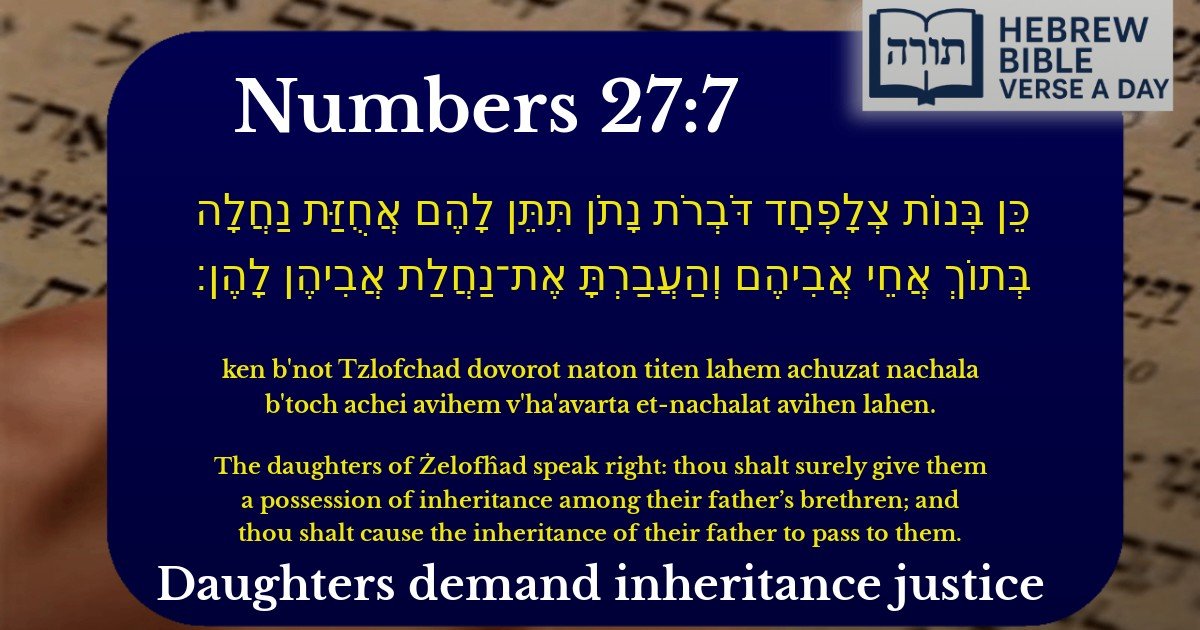
כֵּן בְּנוֹת צְלָפְחָד דֹּבְרֹת נָתֹן תִּתֵּן לָהֶם אֲחֻזַּת נַחֲלָה בְּתוֹךְ אֲחֵי אֲבִיהֶם וְהַעֲבַרְתָּ אֶת־נַחֲלַת אֲבִיהֶן לָהֶן׃
English Translation
The daughters of Żelofĥad speak right: thou shalt surely give them a possession of inheritance among their father’s brethren; and thou shalt cause the inheritance of their father to pass to them.
Transliteration
Ken b'not Tzlofchad dovorot naton titen lahem achuzat nachala b'toch achei avihem v'ha'avarta et-nachalat avihen lahen.
Hebrew Leining Text
כֵּ֗ן בְּנ֣וֹת צְלׇפְחָד֮ דֹּבְרֹת֒ נָתֹ֨ן תִּתֵּ֤ן לָהֶם֙ אֲחֻזַּ֣ת נַחֲלָ֔ה בְּת֖וֹךְ אֲחֵ֣י אֲבִיהֶ֑ם וְהַֽעֲבַרְתָּ֛ אֶת־נַחֲלַ֥ת אֲבִיהֶ֖ן לָהֶֽן׃
🎵 Listen to leining
Parasha Commentary
📚 Talmud Citations
This verse is quoted in the Talmud.
📖 Bava Batra 119b
The verse is discussed in the context of the daughters of Zelophehad and their right to inherit their father's portion in the land of Israel, highlighting the legal principles of inheritance.
📖 Sanhedrin 8a
The verse is referenced in a discussion about the righteousness of the daughters of Zelophehad and their role in establishing laws of inheritance for women.
The Case of the Daughters of Tzelofchad
The verse (Bamidbar 27:7) recounts Hashem's ruling in response to the petition of the daughters of Tzelofchad, who sought to inherit their father's portion in Eretz Yisrael since he had no sons. This became a foundational case in Jewish inheritance law.
Rashi's Explanation
Rashi explains that the phrase "כֵּן בְּנוֹת צְלָפְחָד דֹּבְרֹת" ("The daughters of Tzelofchad speak right") indicates that their claim was correct both in its legal reasoning and in the timing of their request. They demonstrated wisdom by approaching Moshe during his teaching of inheritance laws (Bamidbar Rabbah 21:11).
Halachic Implications
This ruling established several key principles in Jewish law:
Spiritual Significance
The Kli Yakar emphasizes that the daughters' love for Eretz Yisrael was exceptional - they didn't want just material inheritance, but a spiritual connection to the Land. This explains why the Torah stresses "אֲחֻזַּת נַחֲלָה" - a permanent hereditary possession.
Grammatical Insight
The double language "נָתֹן תִּתֵּן" ("thou shalt surely give") teaches, according to the Sifri, that their inheritance rights applied both in the immediate division of land and for all future generations.