
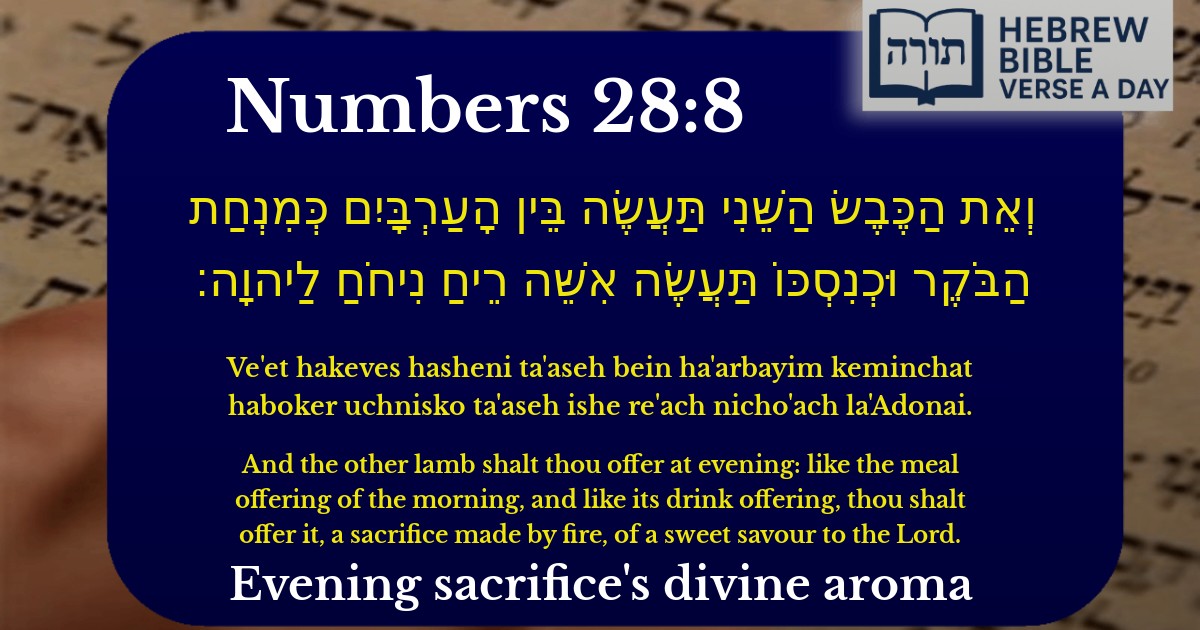

Numbers 28:8 - Evening sacrifice's divine aroma

Numbers 28:8 - במדבר 28:8

Hebrew Text

וְאֵת הַכֶּבֶשׂ הַשֵּׁנִי תַּעֲשֶׂה בֵּין הָעַרְבָּיִם כְּמִנְחַת הַבֹּקֶר וּכְנִסְכּוֹ תַּעֲשֶׂה אִשֵּׁה רֵיחַ נִיחֹחַ לַיהוָה׃

English Translation

And the other lamb shalt thou offer at evening: like the meal offering of the morning, and like its drink offering, thou shalt offer it, a sacrifice made by fire, of a sweet savour to the Lord.

Transliteration

Ve'et hakeves hasheni ta'aseh bein ha'arbayim keminchat haboker uchnisko ta'aseh ishe re'ach nicho'ach la'Adonai.

Hebrew Leining Text

וְאֵת֙ הַכֶּ֣בֶשׂ הַשֵּׁנִ֔י תַּעֲשֶׂ֖ה בֵּ֣ין הָֽעַרְבָּ֑יִם כְּמִנְחַ֨ת הַבֹּ֤קֶר וּכְנִסְכּוֹ֙ תַּעֲשֶׂ֔ה אִשֵּׁ֛ה רֵ֥יחַ נִיחֹ֖חַ לַיהֹוָֽה׃ {פ}

🎵 Listen to leining

Parasha Commentary

The Daily Tamid Offering

The verse (Shemot 29:39) describes the second lamb of the daily Tamid offering, which was brought in the afternoon (bein ha'arbayim). Rashi explains that this parallels the morning Tamid in both its meal offering (mincha) and drink offering (nesech), emphasizing the consistency of divine service. The Rambam (Hilchot Temidin uMusafin 1:3) elaborates that this dual daily sacrifice represents the perpetual connection between Klal Yisrael and Hashem.

Symbolism of the Afternoon Offering

The Talmud (Berachot 26b) teaches that the afternoon Tamid corresponds to the time when Yitzchak Avinu was bound on the altar during Akeidat Yitzchak. The Midrash (Tanchuma Tetzaveh 14) further connects this to the concept of teshuva, as the afternoon hours symbolize introspection and spiritual return.

The "Sweet Savor" Aspect

The phrase rei'ach nichoach ("sweet savor") is interpreted by the Sforno as representing the complete devotion of those bringing the offering. The Kli Yakar emphasizes that the repetition of this phrase for both morning and afternoon offerings teaches that equal spiritual weight is given to both times of day in divine service.

Halachic Details

  • The Mishnah (Pesachim 58a) establishes that the afternoon Tamid could be slaughtered from 12:30pm until nightfall
  • Rambam (Hilchot Temidin uMusafin 1:9) rules that the meal offering accompanying this sacrifice consisted of 1/10 ephah of fine flour mixed with oil
  • The Talmud (Menachot 89b) discusses the precise measurements of the wine libation that accompanied the offering

📚 Talmud Citations

This verse is quoted in the Talmud.

📖 Menachot 49b
The verse is discussed in the context of the daily offerings, specifically comparing the evening offering to the morning offering.
📖 Yoma 33a
The verse is referenced in the discussion of the order of the daily sacrifices and the timing of the evening offering.

Frequently Asked Questions

Q: What does Numbers 28:8 mean?
A: Numbers 28:8 describes the daily afternoon sacrifice (Korban Tamid) offered in the Temple. Just as a morning sacrifice was brought, an identical lamb offering was brought in the evening with its accompanying meal and drink offerings. This verse emphasizes the consistency and importance of daily worship to Hashem.
Q: Why is the afternoon sacrifice important in Judaism?
A: The afternoon sacrifice (Mincha) is important because it represents our continual devotion to Hashem. The Talmud (Berachot 26b) teaches that the Patriarchs established the three daily prayers, and the afternoon prayer corresponds to Yitzchak (Isaac), who prayed in the field 'before evening' (Genesis 24:63). The Mincha offering reminds us to connect with Hashem consistently throughout the day.
Q: What can we learn from the 'sweet savour' mentioned in this verse?
A: The phrase 'sweet savour to the Lord' teaches that our service to Hashem should be pleasing and heartfelt. Rashi explains that this means the offering is acceptable and satisfying to Hashem. Today, when we don't have the Temple, our prayers and good deeds serve as substitutes for sacrifices (Hoshea 14:3, Talmud Berachot 26a).
Q: How does this verse apply to Jewish practice today?
A: Although we no longer bring physical sacrifices, the Mincha prayer (afternoon service) corresponds to this afternoon offering. The Rambam (Hilchot Tefillah 1:5) explains that we maintain the structure of daily prayers to parallel the Temple service. This verse reminds us to maintain regular times for prayer and spiritual connection.
Q: Why were both morning and evening sacrifices identical?
A: The identical morning and evening sacrifices teach us about consistency in serving Hashem. Just as the sun rises and sets with perfect regularity, our commitment to Torah and mitzvot should be unwavering. The Midrash (Bamidbar Rabbah 21:7) notes that these daily offerings atoned for sins and maintained the bond between Israel and Hashem.