

Join Our Newsletter To Be Informed When New Videos Are Posted
Hebrew Text
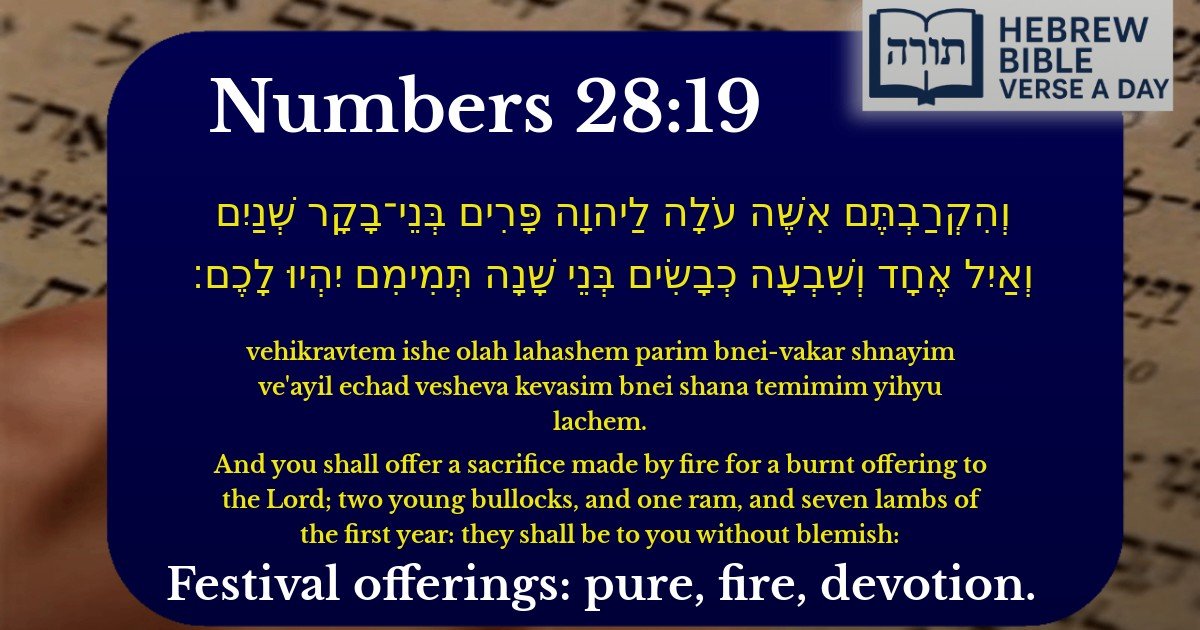
וְהִקְרַבְתֶּם אִשֶּׁה עֹלָה לַיהוָה פָּרִים בְּנֵי־בָקָר שְׁנַיִם וְאַיִל אֶחָד וְשִׁבְעָה כְבָשִׂים בְּנֵי שָׁנָה תְּמִימִם יִהְיוּ לָכֶם׃
English Translation
And you shall offer a sacrifice made by fire for a burnt offering to the Lord; two young bullocks, and one ram, and seven lambs of the first year: they shall be to you without blemish:
Transliteration
Vehikravtem ishe olah lahashem parim bnei-vakar shnayim ve'ayil echad vesheva kevasim bnei shana temimim yihyu lachem.
Hebrew Leining Text
וְהִקְרַבְתֶּ֨ם אִשֶּׁ֤ה עֹלָה֙ לַֽיהֹוָ֔ה פָּרִ֧ים בְּנֵי־בָקָ֛ר שְׁנַ֖יִם וְאַ֣יִל אֶחָ֑ד וְשִׁבְעָ֤ה כְבָשִׂים֙ בְּנֵ֣י שָׁנָ֔ה תְּמִימִ֖ם יִהְי֥וּ לָכֶֽם׃
🎵 Listen to leining
Parasha Commentary
📚 Talmud Citations
This verse is quoted in the Talmud.
📖 Menachot 45a
The verse is discussed in the context of the requirements for sacrificial offerings, specifically the types and numbers of animals to be offered.
📖 Chullin 60b
The verse is referenced in a discussion about the characteristics of animals that are fit for sacrifice, emphasizing the requirement for them to be without blemish.
Overview of the Verse
The verse (Bamidbar 28:19) details the korbanot (sacrifices) to be brought on the second day of Pesach (Passover). These offerings consist of two young bulls, one ram, and seven unblemished lambs in their first year, all to be offered as an olah (burnt offering) to Hashem.
Rashi's Commentary
Rashi explains that the phrase "וְהִקְרַבְתֶּם אִשֶּׁה עֹלָה" ("And you shall offer a sacrifice made by fire for a burnt offering") emphasizes that these offerings are entirely consumed by fire on the altar, unlike other sacrifices where parts may be eaten. The two bulls represent the two tablets of the Torah, while the single ram recalls the binding of Yitzchak (Akeidat Yitzchak), demonstrating the Jewish people's devotion to Hashem.
Rambam's Perspective
In Moreh Nevuchim (Guide for the Perplexed 3:46), Rambam suggests that the multiple offerings—particularly the seven lambs—symbolize completeness (as seven is a number representing wholeness in Jewish tradition). The unblemished requirement ("תְּמִימִם") teaches that offerings to Hashem must be of the highest quality, reflecting the ideal of dedicating one's finest possessions to divine service.
Midrashic Interpretation
The Midrash (Bamidbar Rabbah 21:10) connects these sacrifices to the Exodus: the two bulls correspond to Moshe and Aharon, who led the people out of Egypt; the ram recalls the ram sacrificed in place of Yitzchak; and the seven lambs allude to the seven days of Pesach, reinforcing the holiday's themes of redemption and divine mercy.
Halachic Significance
This verse establishes key halachic requirements for the Pesach offerings: