

Join Our Newsletter To Be Informed When New Videos Are Posted
Hebrew Text
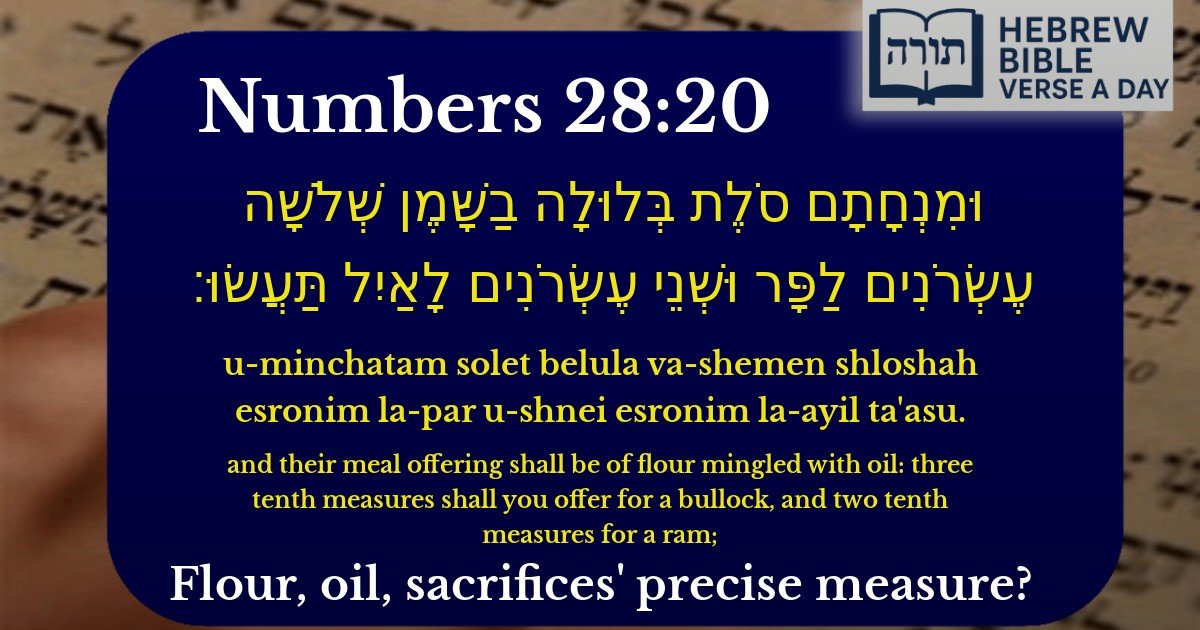
וּמִנְחָתָם סֹלֶת בְּלוּלָה בַשָּׁמֶן שְׁלֹשָׁה עֶשְׂרֹנִים לַפָּר וּשְׁנֵי עֶשְׂרֹנִים לָאַיִל תַּעֲשׂוּ׃
English Translation
and their meal offering shall be of flour mingled with oil: three tenth measures shall you offer for a bullock, and two tenth measures for a ram;
Transliteration
U-minchatam solet belula va-shemen shloshah esronim la-par u-shnei esronim la-ayil ta'asu.
Hebrew Leining Text
וּמִ֨נְחָתָ֔ם סֹ֖לֶת בְּלוּלָ֣ה בַשָּׁ֑מֶן שְׁלֹשָׁ֨ה עֶשְׂרֹנִ֜ים לַפָּ֗ר וּשְׁנֵ֧י עֶשְׂרֹנִ֛ים לָאַ֖יִל תַּעֲשֽׂוּ׃
🎵 Listen to leining
Parasha Commentary
📚 Talmud Citations
This verse is quoted in the Talmud.
📖 Menachot 89a
The verse is discussed in the context of the meal offerings and the specific measurements required for different sacrifices.
📖 Keritot 6a
Referenced in a discussion about the quantities of meal offerings for various sacrifices, comparing the requirements for bulls and rams.
Understanding the Verse in Context
The verse (Numbers 15:9) discusses the meal offering (mincha) accompanying animal sacrifices, specifying the quantities of fine flour (solet) mixed with oil for a bull (par) and a ram (ayil). This is part of the broader discussion of voluntary offerings (nedavah) in the Torah.
Rashi's Explanation
Rashi (Rabbi Shlomo Yitzchaki) comments on this verse by noting that the measurements are given in esronim (tenths of an ephah). He explains that the three-tenth measure for the bull and two-tenths for the ram correspond to the hierarchy of the sacrifices, reflecting the greater significance of the bull offering.
Rambam's Perspective
In Hilchot Maaseh HaKorbanot (Laws of Sacrificial Procedure), the Rambam (Maimonides) elaborates on the precise measurements and preparation of meal offerings. He emphasizes that the flour must be of the finest quality (solet) and thoroughly mixed with oil, as the verse states, to ensure the offering meets halachic standards.
Symbolism in the Meal Offering
Halachic Details from the Talmud
The Talmud (Menachot 104a) discusses the precise method of mixing the flour and oil, ensuring no lumps remain. It also notes that the oil must be evenly distributed, reflecting the care required in divine service. The Shulchan Aruch (Yoreh De'ah 324) later codifies these requirements for proper sacrificial procedure.
Midrashic Insights
The Sifrei (a halachic midrash on Numbers) connects this verse to the broader theme of gratitude, teaching that the meal offering accompanies voluntary sacrifices as an expression of thankfulness to Hashem. The specific measurements remind us that our offerings must be given with precision and sincerity.