

Join Our Newsletter To Be Informed When New Videos Are Posted
Hebrew Text
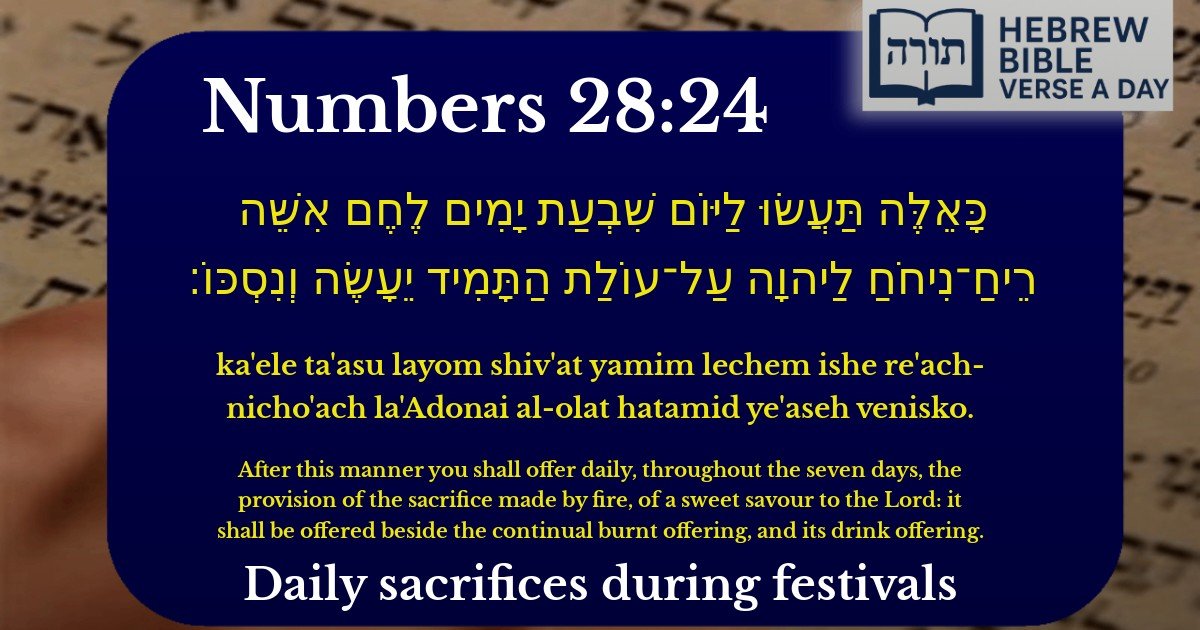
כָּאֵלֶּה תַּעֲשׂוּ לַיּוֹם שִׁבְעַת יָמִים לֶחֶם אִשֵּׁה רֵיחַ־נִיחֹחַ לַיהוָה עַל־עוֹלַת הַתָּמִיד יֵעָשֶׂה וְנִסְכּוֹ׃
English Translation
After this manner you shall offer daily, throughout the seven days, the provision of the sacrifice made by fire, of a sweet savour to the Lord: it shall be offered beside the continual burnt offering, and its drink offering.
Transliteration
Ka'ele ta'asu layom shiv'at yamim lechem ishe re'ach-nicho'ach la'Adonai al-olat hatamid ye'aseh venisko.
Hebrew Leining Text
כָּאֵ֜לֶּה תַּעֲשׂ֤וּ לַיּוֹם֙ שִׁבְעַ֣ת יָמִ֔ים לֶ֛חֶם אִשֵּׁ֥ה רֵֽיחַ־נִיחֹ֖חַ לַיהֹוָ֑ה עַל־עוֹלַ֧ת הַתָּמִ֛יד יֵעָשֶׂ֖ה וְנִסְכּֽוֹ׃
🎵 Listen to leining
Parasha Commentary
📚 Talmud Citations
This verse is quoted in the Talmud.
📖 Menachot 45b
The verse is discussed in the context of the daily offerings and the additional offerings for festivals, particularly focusing on the details of the sacrifices and their requirements.
📖 Sukkah 55a
The verse is referenced in a discussion about the number of offerings brought during the festival of Sukkot, emphasizing the continuity and additional nature of these sacrifices alongside the daily offerings.
Context in the Torah
The verse (Numbers 28:24) appears in the context of the additional offerings (מוּסָפִין) brought during the festival of Sukkot. These offerings are in addition to the daily Tamid offering (עוֹלַת הַתָּמִיד), which is brought every morning and afternoon in the Beit HaMikdash.
Rashi's Explanation
Rashi explains that the phrase "כָּאֵלֶּה תַּעֲשׂוּ" ("After this manner you shall offer") refers to the specific quantities and types of offerings detailed earlier in the chapter. He emphasizes that these additional offerings must be brought "לַיּוֹם שִׁבְעַת יָמִים" ("daily, throughout the seven days") of Sukkot, indicating that the same procedure applies each day without variation.
Purpose of the Offerings
The verse describes the offerings as "לֶחֶם אִשֵּׁה רֵיחַ־נִיחֹחַ לַיהוָה" ("the provision of the sacrifice made by fire, of a sweet savour to the Lord"). The Rambam (Hilchot Ma'aseh HaKorbanot 3:12) teaches that the term "רֵיחַ נִיחֹחַ" signifies Divine acceptance, representing the Jewish people's devotion and submission to Hashem's will through sacrificial service.
Relationship to the Tamid Offering
The verse specifies that these offerings are brought "עַל־עוֹלַת הַתָּמִיד" ("beside the continual burnt offering"). The Talmud (Menachot 91a) derives from this that the additional offerings do not replace the Tamid but are supplementary. This teaches that even during festivals, the consistent daily service remains foundational.
Symbolism of the Seven Days
The Drink Offering
The mention of "וְנִסְכּוֹ" ("and its drink offering") refers to the wine libations that accompanied certain sacrifices. The Talmud (Sukkah 55a) famously states that the seventy bulls offered during Sukkot correspond to the seventy nations, symbolizing prayers for universal peace and prosperity.