

Join Our Newsletter To Be Informed When New Videos Are Posted
Hebrew Text
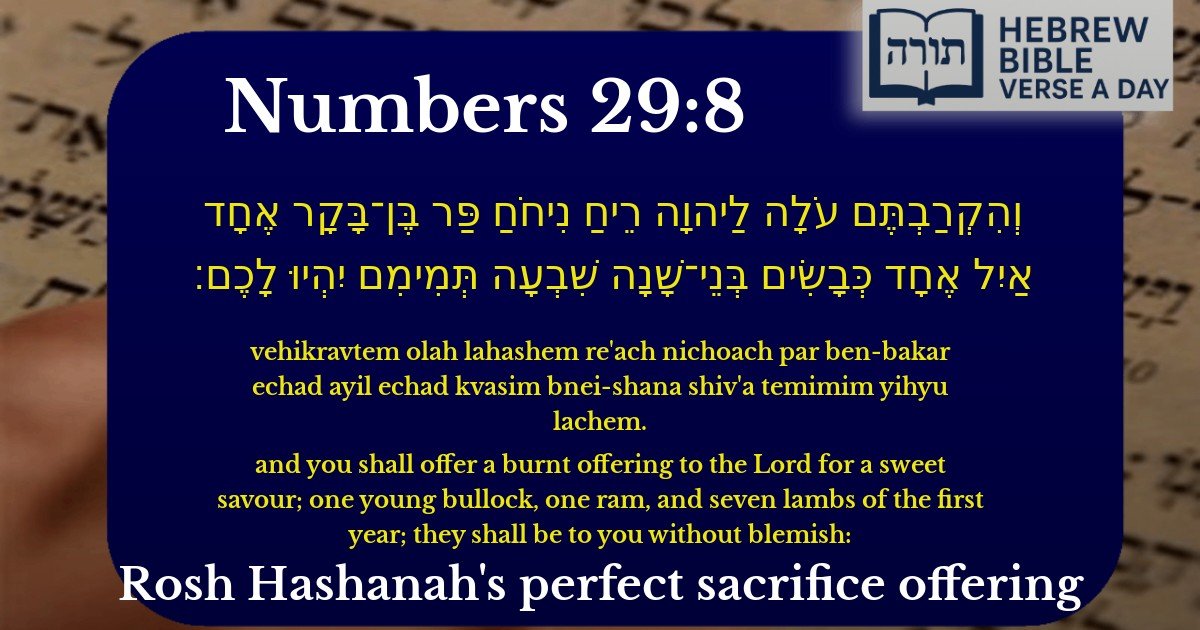
וְהִקְרַבְתֶּם עֹלָה לַיהוָה רֵיחַ נִיחֹחַ פַּר בֶּן־בָּקָר אֶחָד אַיִל אֶחָד כְּבָשִׂים בְּנֵי־שָׁנָה שִׁבְעָה תְּמִימִם יִהְיוּ לָכֶם׃
English Translation
and you shall offer a burnt offering to the Lord for a sweet savour; one young bullock, one ram, and seven lambs of the first year; they shall be to you without blemish:
Transliteration
Vehikravtem olah lahashem re'ach nichoach par ben-bakar echad ayil echad kvasim bnei-shana shiv'a temimim yihyu lachem.
Hebrew Leining Text
וְהִקְרַבְתֶּ֨ם עֹלָ֤ה לַֽיהֹוָה֙ רֵ֣יחַ נִיחֹ֔חַ פַּ֧ר בֶּן־בָּקָ֛ר אֶחָ֖ד אַ֣יִל אֶחָ֑ד כְּבָשִׂ֤ים בְּנֵֽי־שָׁנָה֙ שִׁבְעָ֔ה תְּמִימִ֖ם יִהְי֥וּ לָכֶֽם׃
🎵 Listen to leining
Parasha Commentary
📚 Talmud Citations
This verse is quoted in the Talmud.
📖 Menachot 110a
The verse is referenced in the discussion about the requirements for sacrifices, particularly the burnt offerings, and their significance in the Temple service.
📖 Zevachim 6a
The verse is cited in the context of discussing the laws pertaining to the offering of sacrifices, emphasizing the need for the animals to be without blemish.
Overview of the Verse
The verse (Numbers 28:19) describes the korban olah (burnt offering) brought on the second day of Pesach (Passover). This offering is referred to as a "sweet savour" (rei'ach nicho'ach) to Hashem, signifying its acceptability and spiritual significance. The animals specified—a young bullock, a ram, and seven lambs—must be unblemished (temimim), reflecting the requirement for physical perfection in sacrificial offerings.
Rashi's Commentary
Rashi (Rabbi Shlomo Yitzchaki) explains that the phrase "rei'ach nicho'ach" indicates that the offering is pleasing to Hashem, as if He derives satisfaction from His children fulfilling His commandments. The term "temimim" (without blemish) underscores that the animals must be free of any physical defects, as any imperfection would render them unfit for the altar.
Rambam's Perspective
Rambam (Maimonides) in Moreh Nevuchim (Guide for the Perplexed 3:46) discusses the deeper symbolism of sacrifices. He suggests that the korban olah, being entirely consumed by fire, represents total devotion to Hashem. The specific animals—bull, ram, and lambs—may correspond to different levels of spiritual refinement, with the seven lambs symbolizing completeness (as seven is a number of wholeness in Jewish tradition).
Midrashic Insights
The Midrash (Bamidbar Rabbah 21:10) connects this offering to the merit of the Avot (Patriarchs):
Halachic Implications
The Talmud (Chullin 11a) elaborates on the requirement of temimut (perfection) in sacrificial animals, teaching that even minor blemishes disqualify them. This standard reflects the principle that offerings to Hashem must be of the highest quality, mirroring the ideal of striving for spiritual wholeness in divine service.
Symbolism of the Numbers
The Sefer HaChinuch (Mitzvah 380) explains that the numerical details—one bull, one ram, and seven lambs—teach balance in worship. The singular animals (bull and ram) may represent individual commitment, while the seven lambs signify communal unity, as seven often corresponds to the natural order (e.g., days of the week).