
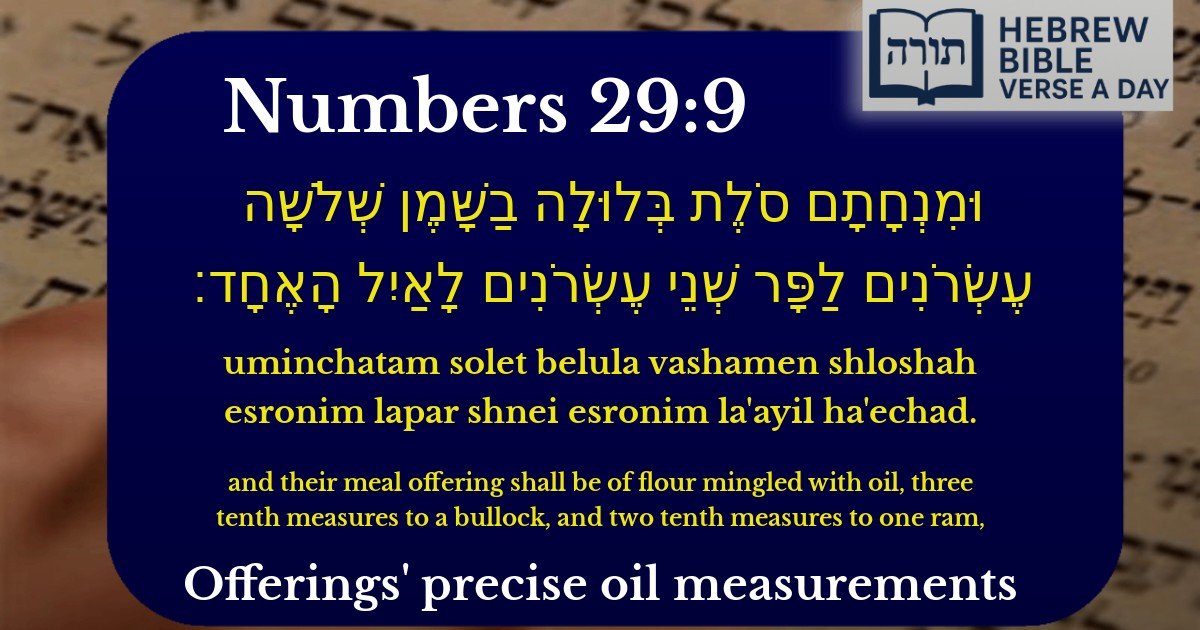

Numbers 29:9 - Offerings' precise oil measurements

Numbers 29:9 - במדבר 29:9

Hebrew Text

וּמִנְחָתָם סֹלֶת בְּלוּלָה בַשָּׁמֶן שְׁלֹשָׁה עֶשְׂרֹנִים לַפָּר שְׁנֵי עֶשְׂרֹנִים לָאַיִל הָאֶחָד׃

English Translation

and their meal offering shall be of flour mingled with oil, three tenth measures to a bullock, and two tenth measures to one ram,

Transliteration

Uminchatam solet belula vashamen shloshah esronim lapar shnei esronim la'ayil ha'echad.

Hebrew Leining Text

וּמִ֨נְחָתָ֔ם סֹ֖לֶת בְּלוּלָ֣ה בַשָּׁ֑מֶן שְׁלֹשָׁ֤ה עֶשְׂרֹנִים֙ לַפָּ֔ר שְׁנֵי֙ עֶשְׂרֹנִ֔ים לָאַ֖יִל הָאֶחָֽד׃

🎵 Listen to leining

Parasha Commentary

Explanation of the Verse

The verse (Numbers 28:12) details the meal offering (mincha) accompanying the sacrifices brought on Rosh Chodesh (the New Moon). The offering consists of fine flour (solet) mixed with oil, with specific quantities for the bull (par) and the ram (ayil).

Quantity and Symbolism

Rashi (Rabbi Shlomo Yitzchaki) explains that the measurements—three tenths of an ephah for the bull and two tenths for the ram—correspond to the different sizes of the animals. The larger animal (the bull) requires a larger meal offering, reflecting the principle that greater sanctity demands greater dedication.

Flour and Oil: Spiritual Significance

The Midrash (Bamidbar Rabbah 21:21) teaches that the fine flour (solet) symbolizes refinement in character, while the oil represents wisdom and enlightenment. The blending of the two signifies that proper service of Hashem requires both moral purity and intellectual clarity.

Halachic Details

  • Three Tenths for the Bull: The Rambam (Maimonides, Hilchos Temidin uMusafin 7:3) notes that the precise measurement ensures consistency in the mitzvah, preventing any deviation from the Torah’s command.
  • Two Tenths for the Ram: The Talmud (Menachos 89a) discusses that the differing amounts teach that each sacrifice has its own unique requirements, emphasizing the importance of precision in divine service.

Contemporary Lesson

The Kli Yakar (Rabbi Shlomo Ephraim Luntschitz) suggests that the meal offering’s details remind us that our spiritual commitments must be measured and deliberate—neither excessive nor deficient. Just as the flour and oil were carefully portioned, our avodas Hashem (service of G-d) should be balanced and thoughtful.

📚 Talmud Citations

This verse is quoted in the Talmud.

📖 Menachot 89a
The verse is discussed in the context of the meal offerings and the measurements required for different sacrifices.
📖 Keritot 6a
Referenced in a discussion about the specific quantities of flour and oil used in various offerings.

Frequently Asked Questions

Q: What does Numbers 29:9 mean?
A: Numbers 29:9 describes the meal offering (mincha) brought with sacrifices during the festival of Rosh Hashanah. It specifies the amounts of fine flour mixed with oil required for the bullock (three-tenths of an ephah) and the ram (two-tenths of an ephah). This follows the Torah's detailed instructions for offerings.
Q: Why is the meal offering important in this verse?
A: The meal offering (mincha) represents gratitude and dedication to Hashem. Rashi explains that the precise measurements teach us the importance of serving G-d with exactness and care. The oil mixed with flour symbolizes refinement and the desire to elevate our physical actions for spiritual purposes.
Q: What can we learn from the specific measurements in this verse?
A: The Torah specifies exact amounts (three-tenths for the bull, two-tenths for the ram) to teach that serving Hashem requires attention to detail. The Rambam (Hilchos Maaseh HaKorbanos) explains that these measurements reflect the importance of consistency and order in divine service, even in seemingly small matters.
Q: How does this verse apply to us today without the Temple?
A: While we no longer bring physical offerings, the Talmud (Menachos 110a) teaches that Torah study and prayer serve in place of sacrifices. The meal offering reminds us to approach Hashem with sincerity and precision in our mitzvos, just as the kohanim carefully prepared the flour and oil offerings.
Q: Why is oil mixed with the flour in the meal offering?
A: Oil represents wisdom and richness (as seen in anointing kings and kohanim). The Midrash (Vayikra Rabbah 3:5) explains that the mixture of oil and flour teaches that our service to Hashem should combine physical actions (flour) with spiritual intention (oil), creating a complete offering.