

Join Our Newsletter To Be Informed When New Videos Are Posted
Hebrew Text
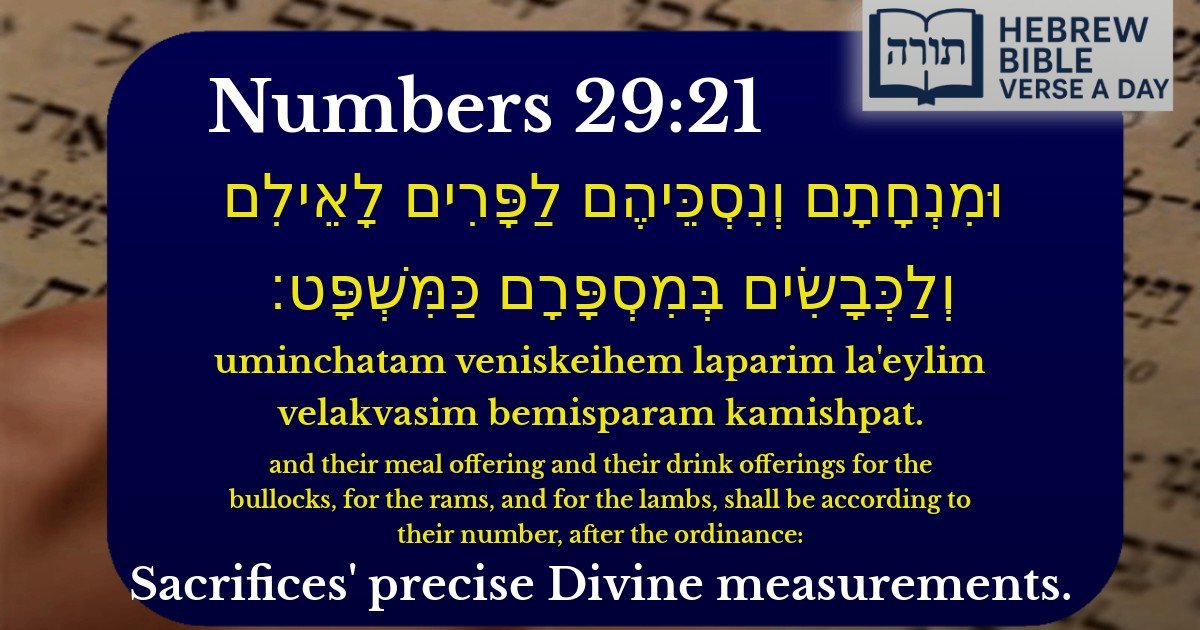
וּמִנְחָתָם וְנִסְכֵּיהֶם לַפָּרִים לָאֵילִם וְלַכְּבָשִׂים בְּמִסְפָּרָם כַּמִּשְׁפָּט׃
English Translation
and their meal offering and their drink offerings for the bullocks, for the rams, and for the lambs, shall be according to their number, after the ordinance:
Transliteration
Uminchatam veniskeihem laparim la'eylim velakvasim bemisparam kamishpat.
Hebrew Leining Text
וּמִנְחָתָ֣ם וְנִסְכֵּיהֶ֡ם לַ֠פָּרִ֠ים לָאֵילִ֧ם וְלַכְּבָשִׂ֛ים בְּמִסְפָּרָ֖ם כַּמִּשְׁפָּֽט׃
🎵 Listen to leining
Parasha Commentary
📚 Talmud Citations
This verse is not quoted in the Talmud.
Context in the Torah
The verse (Numbers 29:18) appears in the section detailing the additional offerings (musafim) brought during the festival of Sukkot. It specifies the meal offerings (mincha) and drink offerings (nesachim) accompanying the animal sacrifices—bullocks, rams, and lambs—according to their prescribed quantities.
Rashi's Explanation
Rashi (Rabbi Shlomo Yitzchaki) comments that the phrase "כַּמִּשְׁפָּט" ("after the ordinance") refers to the established laws given earlier in the Torah (Numbers 15:1-16), which detail the fixed amounts of flour, oil, and wine required for each type of offering. For example:
Rambam's Legal Perspective
In Hilchos Temidin u'Musafin (Laws of Daily and Additional Offerings 10:1), the Rambam (Maimonides) codifies this verse as part of the halachic requirements for Sukkot offerings. He emphasizes that these measurements are non-negotiable and must adhere strictly to the Torah's specifications, as deviation would invalidate the sacrifice.
Midrashic Insight
The Midrash Tanchuma (Pinchas 16) connects the precise measurements of the offerings to the idea of order and discipline in divine service. Just as the physical offerings follow a set structure, so too must one's spiritual devotion be methodical and intentional, reflecting the harmony of Hashem's commandments.
Symbolism of the Offerings
The Talmud (Sukkah 55b) teaches that the seventy bullocks offered during Sukkot correspond to the seventy nations of the world, symbolizing prayers for universal peace and prosperity. The meal and drink offerings, though smaller in scale, are integral to this process, representing the sustenance and gratitude underlying all divine service.