Frequently Asked Questions
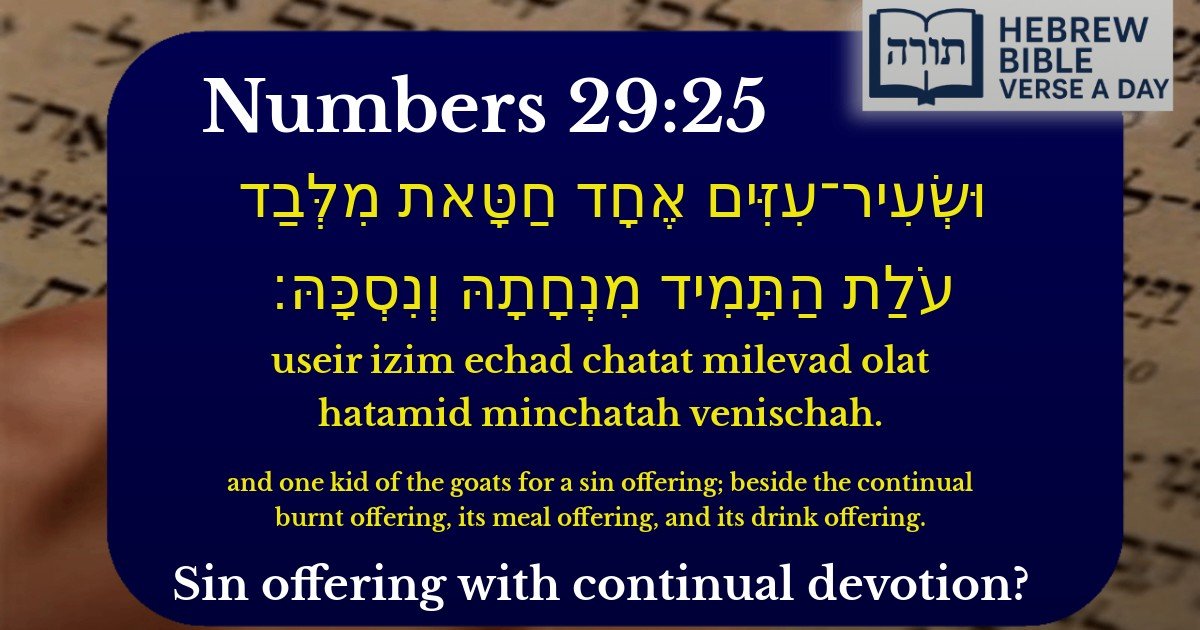
Q: What is the purpose of the sin offering mentioned in Numbers 29:25?
A: The sin offering (חַטָּאת) mentioned here is brought to atone for unintentional sins. According to Rashi and the Talmud (Zevachim 7a), this offering helps purify the individual or community from transgressions committed by mistake. The goat is specifically chosen as a sin offering in many cases, as taught in the Torah.
Q: Why does the verse mention the 'continual burnt offering' alongside the sin offering?
A: The continual burnt offering (עֹלַת הַתָּמִיד) refers to the daily sacrifices brought in the Temple morning and evening (Rambam, Hilchot Temidin uMusafin 1:1). This verse teaches that even on special occasions when additional offerings are brought, the daily sacrifices must not be neglected—emphasizing the importance of consistency in serving Hashem.
Q: What do the meal offering and drink offering represent in this verse?
A: The meal offering (מִנְחָה) and drink offering (נֶסֶךְ) accompany many sacrifices. The Talmud (Menachot 104b) explains that these represent our devotion to Hashem through both physical sustenance (flour) and joy (wine). They complete the sacrificial service, showing that we dedicate all aspects of life to holiness.
Q: How does this verse apply to us today without the Temple?
A: While we cannot bring sacrifices today, the Talmud (Berachot 17a) teaches that prayer, Torah study, and acts of kindness serve in place of offerings. The Rambam (Hilchot Teshuvah 1:4) explains that sincere repentance is also crucial for atonement. This verse reminds us to maintain regular spiritual service even during special times.
Q: Why is a goat specifically chosen for the sin offering here?
A: The Midrash (Vayikra Rabbah 5:6) explains that the goat atones for the sin of the brothers who sold Yosef (using a goat's blood). Additionally, the goat is commonly used for sin offerings because it is a distinct and recognizable animal, symbolizing that sins must be clearly acknowledged and repented for (Rashi on Vayikra 4:23).


Explanation of the Verse
The verse (Numbers 28:15) discusses the additional offerings brought on Rosh Chodesh (the new month), specifying a goat as a sin offering alongside the daily Tamid offering, its meal offering, and its libation. This reflects the importance of atonement and divine service even on days of minor sanctity like Rosh Chodesh.
Rashi's Commentary
Rashi (Bamidbar 28:15) explains that the sin offering of the goat atones for cases where one may have inadvertently entered the Temple or eaten sanctified food while in a state of impurity (tum'ah). This aligns with the principle that even unintentional sins require atonement, emphasizing the need for spiritual vigilance.
Rambam's Perspective
In Hilchot Temidin uMusafin (1:3), the Rambam (Maimonides) elaborates that the Rosh Chodesh offerings, including the goat for a sin offering, are part of the Musaf (additional) sacrifices. These offerings elevate the day beyond the standard daily service, reinforcing the sanctity of time and the importance of repentance.
Midrashic Insight
The Midrash (Bamidbar Rabbah 21:8) connects this verse to the broader theme of atonement, teaching that the goat offering serves as a reminder of the need for constant spiritual refinement. Just as the moon renews itself each month, so too must individuals seek renewal through repentance and divine service.
Key Teachings from the Talmud