

Join Our Newsletter To Be Informed When New Videos Are Posted
Hebrew Text
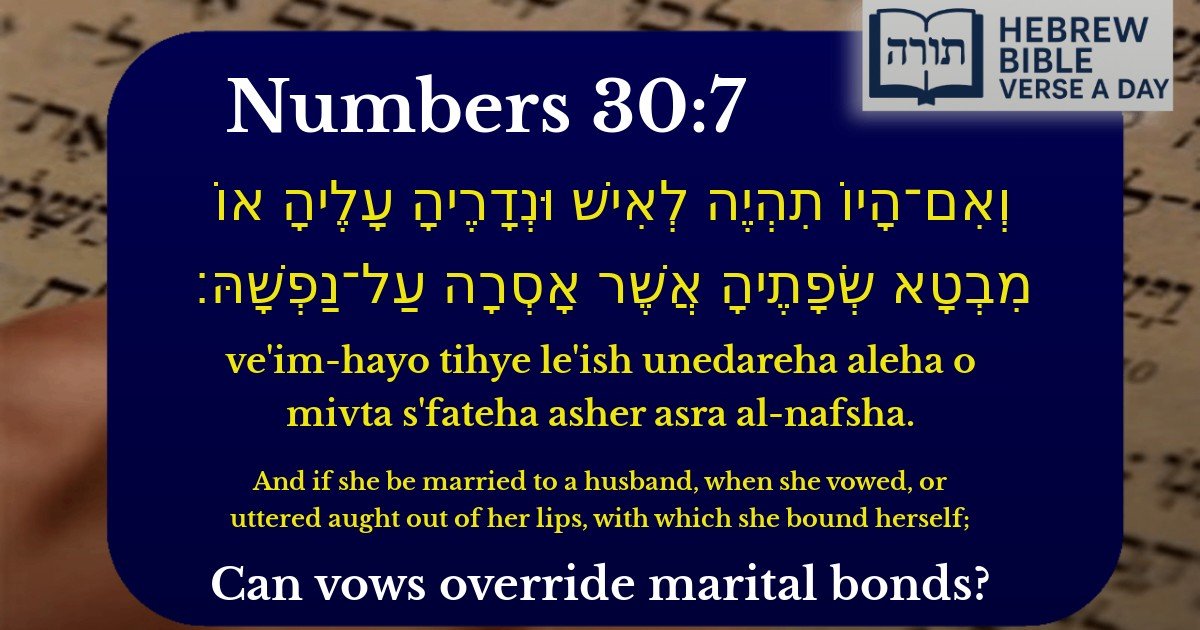
וְאִם־הָיוֹ תִהְיֶה לְאִישׁ וּנְדָרֶיהָ עָלֶיהָ אוֹ מִבְטָא שְׂפָתֶיהָ אֲשֶׁר אָסְרָה עַל־נַפְשָׁהּ׃
English Translation
And if she be married to a husband, when she vowed, or uttered aught out of her lips, with which she bound herself;
Transliteration
Ve'im-hayo tihye le'ish unedareha aleha o mivta s'fateha asher asra al-nafsha.
Hebrew Leining Text
וְאִם־הָי֤וֹ תִֽהְיֶה֙ לְאִ֔ישׁ וּנְדָרֶ֖יהָ עָלֶ֑יהָ א֚וֹ מִבְטָ֣א שְׂפָתֶ֔יהָ אֲשֶׁ֥ר אָסְרָ֖ה עַל־נַפְשָֽׁהּ׃
🎵 Listen to leining
Parasha Commentary
📚 Talmud Citations
This verse is quoted in the Talmud.
📖 Nedarim 66b
The verse is discussed in the context of vows made by a married woman and the husband's authority to annul them.
📖 Kiddushin 2b
Referenced in discussions about the legal status of women's vows and the role of husbands in validating or annulling them.
Context in the Torah
The verse (Bamidbar 30:7) discusses the laws of a woman's vows (nedarim) after she is married. This is part of a larger section (Bamidbar 30:3-16) detailing the circumstances under which a father or husband may annul a woman's vows, reflecting the Torah's nuanced approach to familial authority and personal commitments.
Rashi's Explanation
Rashi (Bamidbar 30:7) explains that this verse refers to a woman who was single when she made a vow (neder) or oath (shevuah) and then subsequently married. The phrase "אִם־הָיוֹ תִהְיֶה לְאִישׁ" ("if she be married to a husband") indicates that her husband now has the authority to affirm or nullify her prior vows on the day he hears of them, as derived from the continuation of the passage.
Rambam's Legal Perspective
In Hilchot Nedarim (11:1), the Rambam codifies that a husband may only annul his wife's vows if he does so on the same day he becomes aware of them ("ביום שמוע"). If he delays, the vow remains binding. This emphasizes the importance of timely communication and decision-making in marital relationships regarding spiritual commitments.
Talmudic Discussion (Nedarim 70b-71a)
The Talmud explores the scope of a husband's ability to nullify vows:
Midrashic Insight (Sifrei Bamidbar 153)
The Sifrei notes that the phrase "מִבְטָא שְׂפָתֶיהָ" ("utterance of her lips") includes not only formal vows but any verbal expression that creates a binding obligation. This teaches the power of speech and the need for carefulness in one's words.
Halachic Implications
Later poskim, including the Shulchan Aruch (Yoreh De'ah 234), rule that: