

Join Our Newsletter To Be Informed When New Videos Are Posted
Hebrew Text
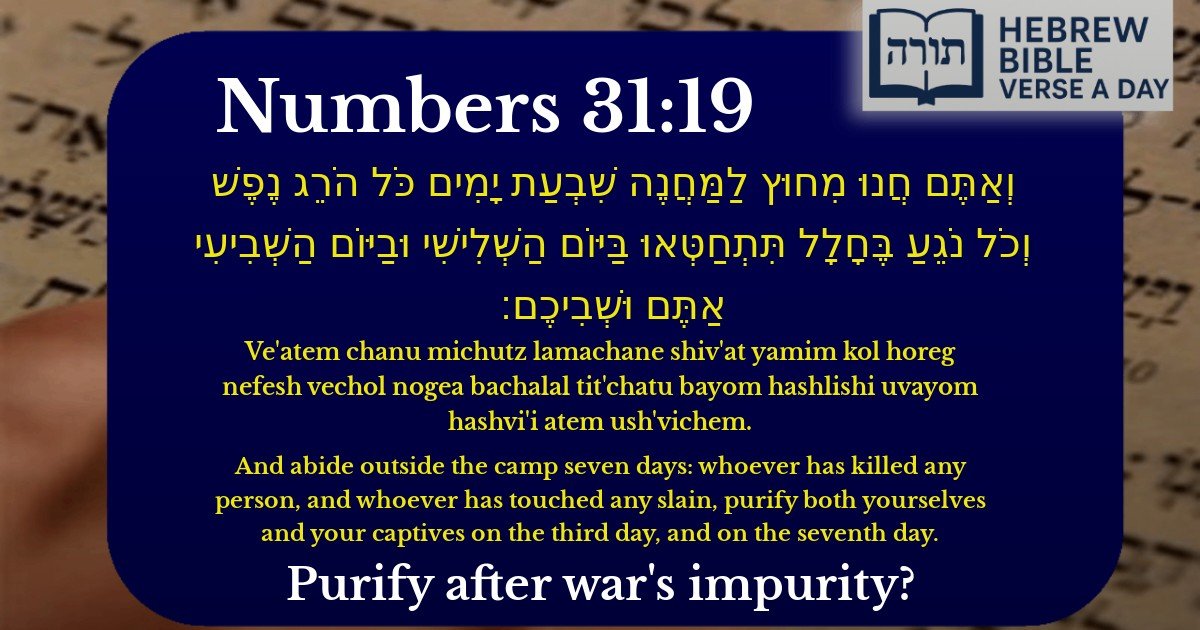
וְאַתֶּם חֲנוּ מִחוּץ לַמַּחֲנֶה שִׁבְעַת יָמִים כֹּל הֹרֵג נֶפֶשׁ וְכֹל נֹגֵעַ בֶּחָלָל תִּתְחַטְּאוּ בַּיּוֹם הַשְּׁלִישִׁי וּבַיּוֹם הַשְּׁבִיעִי אַתֶּם וּשְׁבִיכֶם׃
English Translation
And abide outside the camp seven days: whoever has killed any person, and whoever has touched any slain, purify both yourselves and your captives on the third day, and on the seventh day.
Transliteration
Ve'atem chanu michutz lamachane shiv'at yamim kol horeg nefesh vechol nogea bachalal tit'chatu bayom hashlishi uvayom hashvi'i atem ush'vichem.
Hebrew Leining Text
וְאַתֶּ֗ם חֲנ֛וּ מִח֥וּץ לַֽמַּחֲנֶ֖ה שִׁבְעַ֣ת יָמִ֑ים כֹּל֩ הֹרֵ֨ג נֶ֜פֶשׁ וְכֹ֣ל ׀ נֹגֵ֣עַ בֶּֽחָלָ֗ל תִּֽתְחַטְּא֞וּ בַּיּ֤וֹם הַשְּׁלִישִׁי֙ וּבַיּ֣וֹם הַשְּׁבִיעִ֔י אַתֶּ֖ם וּשְׁבִיכֶֽם׃
🎵 Listen to leining
Parasha Commentary
📚 Talmud Citations
This verse is quoted in the Talmud.
📖 Yoma 73b
The verse is referenced in the discussion about the purification process for those who have come into contact with the dead, highlighting the requirement to purify on the third and seventh days.
📖 Niddah 31a
The verse is cited in the context of discussing the laws of ritual impurity and the periods of purification, particularly focusing on the seven-day purification process.
Context of the Verse
This verse appears in Bamidbar (Numbers) 31:19, following the battle against Midian. The Torah commands those who have come into contact with the dead—whether through killing in battle or touching a corpse—to undergo a purification process before reentering the camp. This reflects the sanctity of the Israelite camp and the need to maintain ritual purity.
Explanation of the Command
Rashi explains that the seven-day separation outside the camp is analogous to the laws of tum'at meit (impurity from a corpse), as detailed in Bamidbar 19:11-16. Those who become impure through contact with the dead must undergo a purification process involving sprinkling with the ashes of the parah adumah (red heifer) on the third and seventh days.
Application to Soldiers and Captives
The verse specifies that both the warriors and their captives must undergo purification. The Kli Yakar explains that this teaches an ethical lesson: even in war, one must not neglect the spiritual status of others, including prisoners. The captives, though not originally part of Israel, must be purified before entering the camp, ensuring the entire community remains holy.
Spiritual Lessons
The Midrash Tanchuma (Matot 7) highlights that this law reminds soldiers to reflect on the gravity of taking life, even in a justified war. The purification process serves as a transition from the brutality of battle back to a state of holiness, reinforcing the idea that warfare must not desensitize a person to the sanctity of life.