

Join Our Newsletter To Be Informed When New Videos Are Posted
Hebrew Text
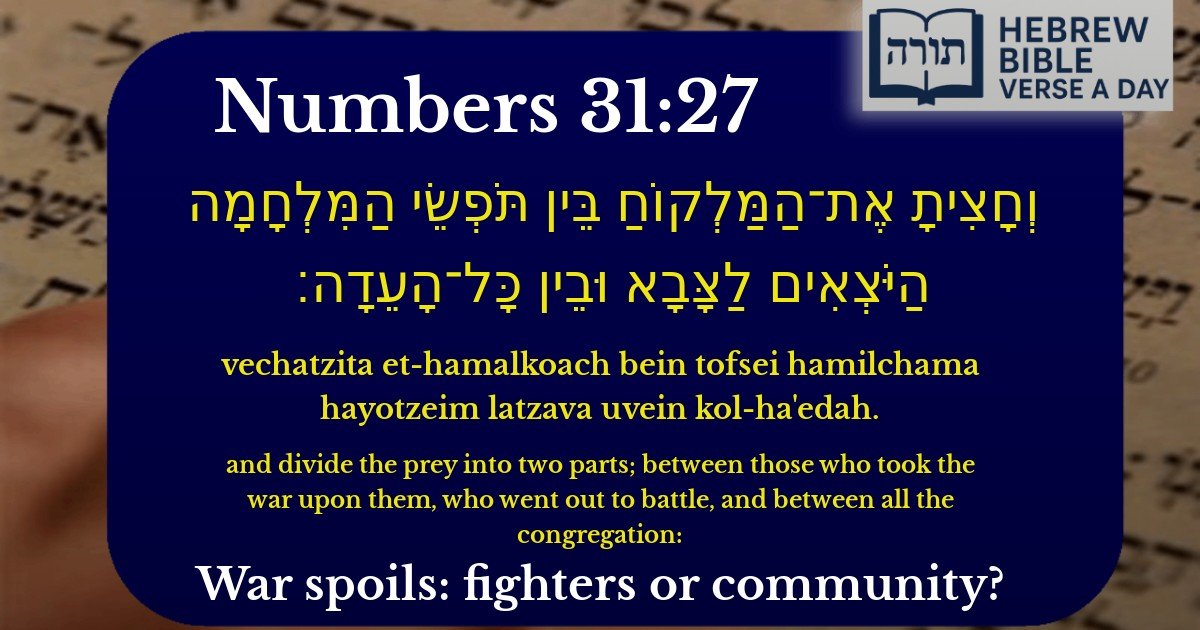
וְחָצִיתָ אֶת־הַמַּלְקוֹחַ בֵּין תֹּפְשֵׂי הַמִּלְחָמָה הַיֹּצְאִים לַצָּבָא וּבֵין כָּל־הָעֵדָה׃
English Translation
and divide the prey into two parts; between those who took the war upon them, who went out to battle, and between all the congregation:
Transliteration
Vechatzita et-hamalkoach bein tofsei hamilchama hayotzeim latzava uvein kol-ha'edah.
Hebrew Leining Text
וְחָצִ֙יתָ֙ אֶת־הַמַּלְק֔וֹחַ בֵּ֚ין תֹּפְשֵׂ֣י הַמִּלְחָמָ֔ה הַיֹּצְאִ֖ים לַצָּבָ֑א וּבֵ֖ין כׇּל־הָעֵדָֽה׃
🎵 Listen to leining
Parasha Commentary
📚 Talmud Citations
This verse is not quoted in the Talmud.
Division of the Spoils in War
The verse (Numbers 31:27) commands the division of war spoils into two equal portions—one for the soldiers who fought in battle and one for the rest of the congregation. This law establishes a principle of fairness and communal responsibility in warfare.
Rashi's Explanation
Rashi (Rabbi Shlomo Yitzchaki) comments that this division applies specifically to the spoils taken from the Midianites. He notes that the Torah mandates an equal split, teaching that those who remained in camp—supporting the war effort through prayer and other means—also merit a share in the victory. This reflects the idea that kol Yisrael areivim zeh lazeh ("all Jews are responsible for one another").
Halachic Perspective (Rambam)
Rambam (Maimonides) discusses this law in Hilchot Melachim (Laws of Kings 8:4), stating that this division applies only to voluntary wars (milchemet reshut), not obligatory wars (milchemet mitzvah). In obligatory wars, all spoils belong to the fighters, as the entire nation is already spiritually invested in the war's success.
Midrashic Insight
The Midrash (Bamidbar Rabbah 22:4) elaborates that this division teaches the importance of unity. Even those who did not physically fight contributed to the war effort in other ways—whether through Torah study, prayer, or logistical support. Thus, they too deserve a portion of the spoils.
Practical Implications