

Join Our Newsletter To Be Informed When New Videos Are Posted
Hebrew Text
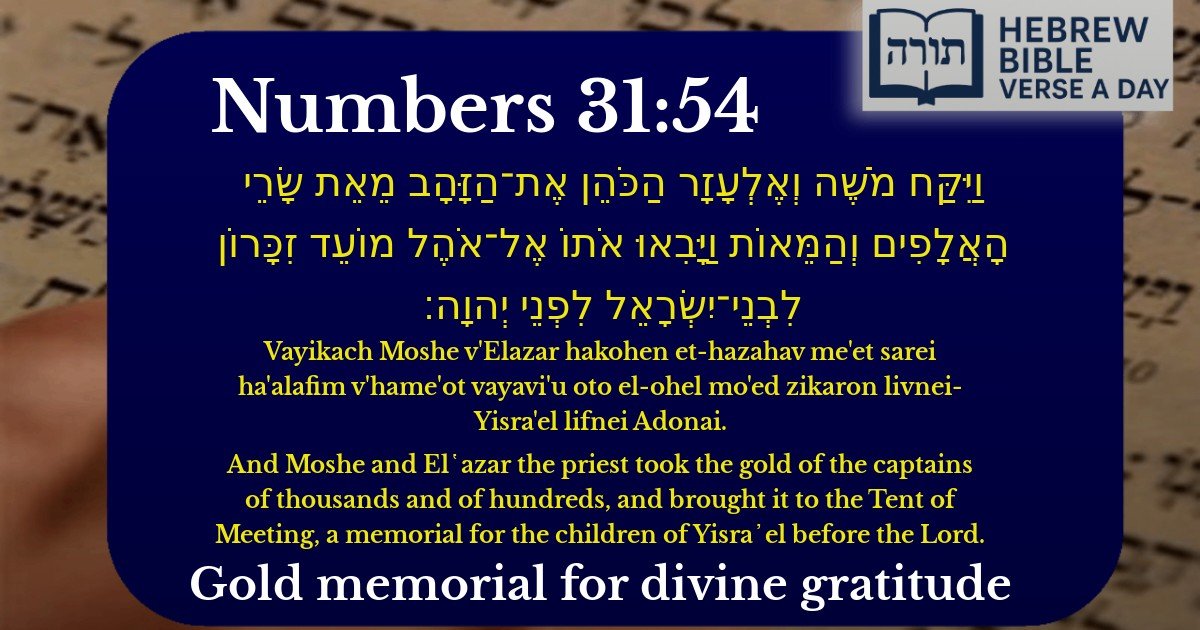
וַיִּקַּח מֹשֶׁה וְאֶלְעָזָר הַכֹּהֵן אֶת־הַזָּהָב מֵאֵת שָׂרֵי הָאֲלָפִים וְהַמֵּאוֹת וַיָּבִאוּ אֹתוֹ אֶל־אֹהֶל מוֹעֵד זִכָּרוֹן לִבְנֵי־יִשְׂרָאֵל לִפְנֵי יְהוָה׃
English Translation
And Moshe and El῾azar the priest took the gold of the captains of thousands and of hundreds, and brought it to the Tent of Meeting, a memorial for the children of Yisra᾽el before the Lord.
Transliteration
Vayikach Moshe v'Elazar hakohen et-hazahav me'et sarei ha'alafim v'hame'ot vayavi'u oto el-ohel mo'ed zikaron livnei-Yisra'el lifnei Adonai.
Hebrew Leining Text
וַיִּקַּ֨ח מֹשֶׁ֜ה וְאֶלְעָזָ֤ר הַכֹּהֵן֙ אֶת־הַזָּהָ֔ב מֵאֵ֛ת שָׂרֵ֥י הָאֲלָפִ֖ים וְהַמֵּא֑וֹת וַיָּבִ֤אוּ אֹתוֹ֙ אֶל־אֹ֣הֶל מוֹעֵ֔ד זִכָּר֥וֹן לִבְנֵֽי־יִשְׂרָאֵ֖ל לִפְנֵ֥י יְהֹוָֽה׃ {פ}
🎵 Listen to leining
Parasha Commentary
📚 Talmud Citations
This verse is not quoted in the Talmud.
Context of the Verse
This verse (Bamidbar 31:54) appears at the conclusion of the war against Midian, where Bnei Yisrael, under Moshe's command, defeated the Midianites and took spoils of war. The officers of the army voluntarily donated gold jewelry and other valuables as an offering to Hashem in gratitude for their safe return from battle without casualties.
Explanation of the Donation
Rashi explains that the officers brought this gold as a voluntary offering (terumah) out of a sense of gratitude (hakarat hatov). They recognized that their victory and survival were miracles, as going to war inherently carries risks. The Midrash Tanchuma (Matot 7) adds that their generosity stemmed from a desire to atone for any improper thoughts they may have had during the war.
The Purpose of the Memorial
The phrase "zikaron lifnei Hashem" (a memorial before the Lord) is interpreted by Ramban as a lasting testimony to Bnei Yisrael's recognition of Hashem's role in their victory. The gold was brought to the Ohel Moed (Tent of Meeting) to serve as a perpetual reminder of this event, much like the terumat hakesef (silver donation) in Shemot 30:16 served as a remembrance for atonement.
Halachic Insights
The Kli Yakar notes that Moshe and Elazar took the gold rather than it being given directly, teaching that leaders must oversee communal donations to ensure proper use. Additionally, the Sifrei emphasizes that this act established a precedent for voluntary offerings in the Mishkan (and later the Beit Hamikdash).
Spiritual Lessons