

Join Our Newsletter To Be Informed When New Videos Are Posted
Hebrew Text
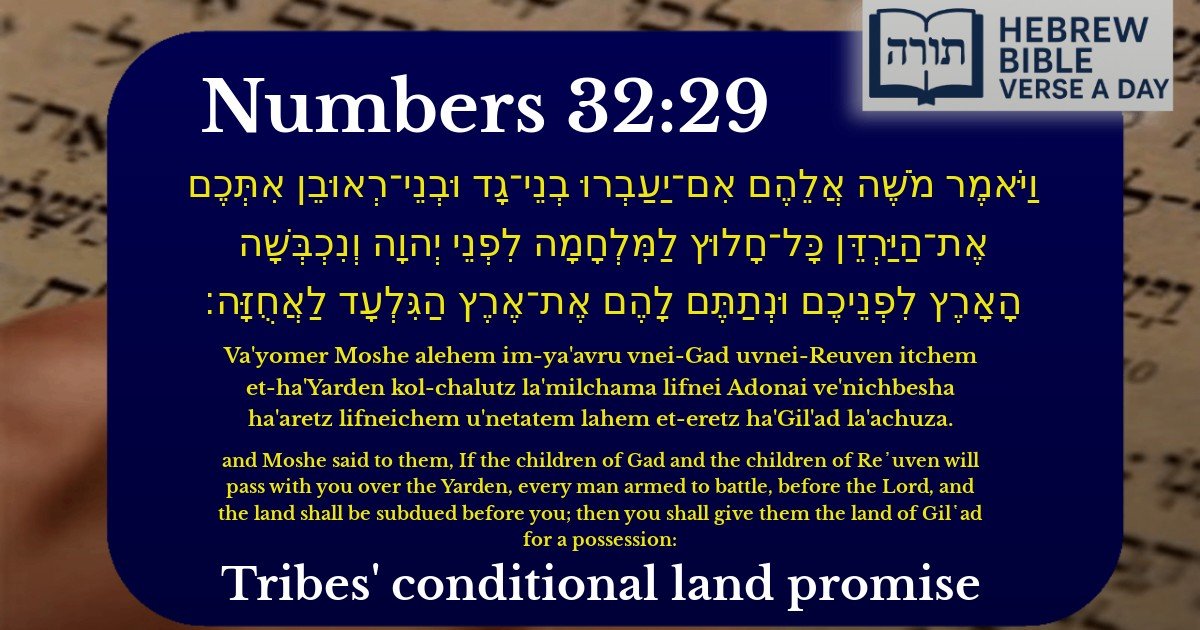
וַיֹּאמֶר מֹשֶׁה אֲלֵהֶם אִם־יַעַבְרוּ בְנֵי־גָד וּבְנֵי־רְאוּבֵן אִתְּכֶם אֶת־הַיַּרְדֵּן כָּל־חָלוּץ לַמִּלְחָמָה לִפְנֵי יְהוָה וְנִכְבְּשָׁה הָאָרֶץ לִפְנֵיכֶם וּנְתַתֶּם לָהֶם אֶת־אֶרֶץ הַגִּלְעָד לַאֲחֻזָּה׃
English Translation
and Moshe said to them, If the children of Gad and the children of Re᾽uven will pass with you over the Yarden, every man armed to battle, before the Lord, and the land shall be subdued before you; then you shall give them the land of Gil῾ad for a possession:
Transliteration
Va'yomer Moshe alehem im-ya'avru vnei-Gad uvnei-Reuven itchem et-ha'Yarden kol-chalutz la'milchama lifnei Adonai ve'nichbesha ha'aretz lifneichem u'netatem lahem et-eretz ha'Gil'ad la'achuza.
Hebrew Leining Text
וַיֹּ֨אמֶר מֹשֶׁ֜ה אֲלֵהֶ֗ם אִם־יַעַבְר֣וּ בְנֵי־גָ֣ד וּבְנֵי־רְאוּבֵ֣ן ׀ אִ֠תְּכֶ֠ם אֶֽת־הַיַּרְדֵּ֞ן כׇּל־חָל֤וּץ לַמִּלְחָמָה֙ לִפְנֵ֣י יְהֹוָ֔ה וְנִכְבְּשָׁ֥ה הָאָ֖רֶץ לִפְנֵיכֶ֑ם וּנְתַתֶּ֥ם לָהֶ֛ם אֶת־אֶ֥רֶץ הַגִּלְעָ֖ד לַאֲחֻזָּֽה׃
🎵 Listen to leining
Parasha Commentary
📚 Talmud Citations
This verse is quoted in the Talmud.
📖 Bava Batra 121b
The verse is referenced in a discussion about the division of the Land of Israel among the tribes, particularly concerning the inheritance of the tribes of Gad and Reuben.
Context of the Verse
This verse (Bamidbar 32:29) appears in the context of the negotiations between Moshe Rabbeinu and the tribes of Reuven and Gad, who requested to settle on the eastern side of the Jordan River rather than entering Eretz Yisrael proper. Moshe initially rebuked them for appearing to shirk their responsibility in conquering the land, but ultimately agreed to their request on the condition that they join the other tribes in battle.
Moshe's Conditions
Rashi explains that Moshe established clear terms for the agreement: the tribes of Reuven and Gad must actively participate in the conquest of Eretz Yisrael alongside their brethren. The phrase "כָּל־חָלוּץ לַמִּלְחָמָה" ("every man armed to battle") emphasizes that they must be fully committed, not holding back any fighters. The Ramban adds that this condition was meant to ensure unity among Bnei Yisrael and prevent the appearance of division during this critical national mission.
The Role of Divine Presence
The phrase "לִפְנֵי יְהוָה" ("before the Lord") carries significant meaning. The Sforno explains that their military efforts must be undertaken with proper spiritual intent, recognizing that the conquest is ultimately dependent on Hashem's will. The Kli Yakar notes that this phrase connects their military service to the Mishkan's presence among the people - their warfare must be sanctified like service in the Tabernacle.
The Promise of Land
Moshe specifies that upon fulfilling their military obligation, they would receive "אֶרֶץ הַגִּלְעָד" ("the land of Gilad") as their portion. The Talmud (Bava Basra 121b) discusses why this particular region was designated for them, noting its suitability for their large flocks. The Meshech Chochmah observes that this arrangement demonstrated Moshe's wisdom - while allowing them the pasturelands they desired, he ensured they wouldn't separate entirely from the nation's collective mission.
Lessons in Collective Responsibility