

Join Our Newsletter To Be Informed When New Videos Are Posted
Hebrew Text
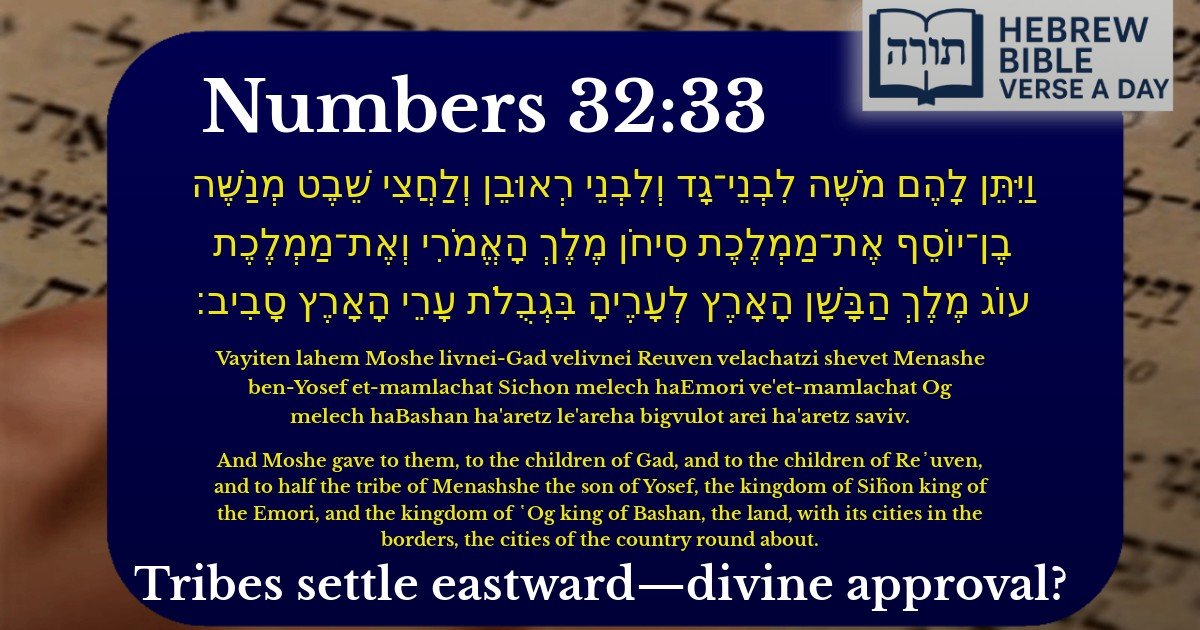
וַיִּתֵּן לָהֶם מֹשֶׁה לִבְנֵי־גָד וְלִבְנֵי רְאוּבֵן וְלַחֲצִי שֵׁבֶט מְנַשֶּׁה בֶן־יוֹסֵף אֶת־מַמְלֶכֶת סִיחֹן מֶלֶךְ הָאֱמֹרִי וְאֶת־מַמְלֶכֶת עוֹג מֶלֶךְ הַבָּשָׁן הָאָרֶץ לְעָרֶיהָ בִּגְבֻלֹת עָרֵי הָאָרֶץ סָבִיב׃
English Translation
And Moshe gave to them, to the children of Gad, and to the children of Re᾽uven, and to half the tribe of Menashshe the son of Yosef, the kingdom of Siĥon king of the Emori, and the kingdom of ῾Og king of Bashan, the land, with its cities in the borders, the cities of the country round about.
Transliteration
Vayiten lahem Moshe livnei-Gad velivnei Reuven velachatzi shevet Menashe ben-Yosef et-mamlachat Sichon melech haEmori ve'et-mamlachat Og melech haBashan ha'aretz le'areha bigvulot arei ha'aretz saviv.
Hebrew Leining Text
וַיִּתֵּ֣ן לָהֶ֣ם ׀ מֹשֶׁ֡ה לִבְנֵי־גָד֩ וְלִבְנֵ֨י רְאוּבֵ֜ן וְלַחֲצִ֣י ׀ שֵׁ֣בֶט ׀ מְנַשֶּׁ֣ה בֶן־יוֹסֵ֗ף אֶת־מַמְלֶ֙כֶת֙ סִיחֹן֙ מֶ֣לֶךְ הָֽאֱמֹרִ֔י וְאֶ֨ת־מַמְלֶ֔כֶת ע֖וֹג מֶ֣לֶךְ הַבָּשָׁ֑ן הָאָ֗רֶץ לְעָרֶ֙יהָ֙ בִּגְבֻלֹ֔ת עָרֵ֥י הָאָ֖רֶץ סָבִֽיב׃
🎵 Listen to leining
Parasha Commentary
📚 Talmud Citations
This verse is not quoted in the Talmud.
Allocation of Transjordanian Lands
The verse describes Moshe's distribution of the conquered lands east of the Jordan River to the tribes of Reuven, Gad, and half of Menashe. This allocation was granted after these tribes requested it, provided they would assist in conquering Eretz Yisrael proper (Bamidbar 32). Rashi (on Bamidbar 32:33) explains that Moshe gave these lands specifically to these tribes because they were suited for grazing livestock, which these tribes possessed in abundance.
Significance of the Conquered Kingdoms
The territories mentioned—the kingdom of Sichon and the kingdom of Og—were formidable enemies defeated by Israel through divine intervention. The Midrash (Bamidbar Rabbah 19:32) highlights that Og was a remnant of the Rephaim and possessed supernatural strength, making his defeat a clear demonstration of Hashem's power. Ramban (on Bamidbar 21:34) notes that these victories were crucial in establishing Israel's presence in the region before entering Canaan.
Half-Tribe of Menashe
The inclusion of half of Menashe is noteworthy. The Talmud (Bava Batra 121b) explains that this tribe was split because they were descendants of Yosef, who had been separated from his brothers. Thus, their division symbolizes both unity (as part of Yisrael) and distinction (as inheritors of Yosef's legacy). Additionally, the Kli Yakar (on Bamidbar 32:33) suggests that Menashe was given a portion here to strengthen the spiritual connection between the eastern and western tribes.
Geographical Boundaries
The verse emphasizes that the land was given "with its cities in the borders." The Ibn Ezra explains that this phrasing indicates the completeness of the inheritance—not just the cities but their surrounding territories and agricultural lands. This ensured that the tribes would have self-sufficient settlements, as required by halachic principles of land allocation (see Rambam, Hilchot Shemitah v'Yovel 12:1-2).