Frequently Asked Questions
Q: What does Numbers 32:37 mean when it says the children of Reuven built these cities?
A: The verse describes how the tribe of Reuven, one of the twelve tribes of Israel, built or fortified the cities of Cheshbon, El'ale, and Kiryatayim after conquering them from the Amorites (see Rashi on Numbers 32:37). This was part of their inheritance in the Transjordan region before entering the Land of Israel.
Q: Why is it important that the tribe of Reuven built these cities?
A: This shows how the tribes of Reuven and Gad (mentioned in surrounding verses) fulfilled their promise to Moshe (Moses) to help conquer the land west of the Jordan before settling in the Transjordan (see Ramban on Numbers 32). It demonstrates their commitment to the entire nation's mission of settling Eretz Yisrael.
Q: What can we learn from Numbers 32:37 about Jewish settlement in biblical times?
A: We learn that settling the Land of Israel was done in an organized manner, with different tribes receiving specific portions (see Sifrei on Numbers). The building of cities shows they established permanent settlements, not just temporary camps, fulfilling the mitzvah of living in Eretz Yisrael.
Q: How does the building of these cities apply to Jewish life today?
A: Just as our ancestors built up the land physically, we have a similar responsibility today to build up Jewish communities - both physically and spiritually (based on the concept of 'yishuv ha'aretz' in Talmud Ketubot 110b). The verse reminds us of our historical connection to all parts of Eretz Yisrael.
Q: Why are the names of these cities mentioned specifically in the Torah?
A: The Torah mentions these names to document the historical fulfillment of God's promise to give the land to Avraham's descendants (Genesis 15). Additionally, the Talmud (Megillah 13a) teaches that every place name in Torah has significance, often hinting at future events or spiritual lessons.

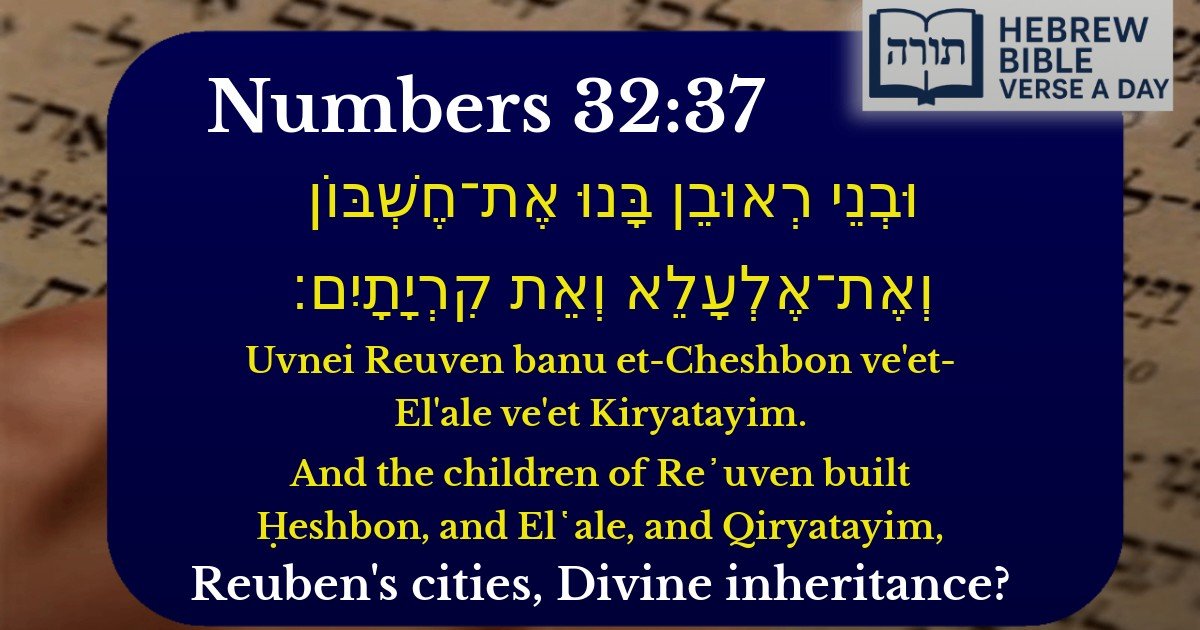

Overview of the Verse
The verse (Numbers 32:37) describes how the tribe of Reuven rebuilt the cities of Cheshbon, El'ale, and Kiryatayim after conquering them from the Amorites. This event took place as part of the Israelites' settlement in the Transjordan region before entering Eretz Yisrael.
Rashi's Commentary
Rashi explains that the term "built" (בָּנוּ) here does not mean they constructed these cities from scratch, but rather that they fortified and repaired them after capturing them from Sichon, king of the Amorites (Rashi on Numbers 32:37). This aligns with the earlier narrative (Numbers 21:25-26), where these cities were originally Amorite strongholds.
Ramban's Insight
Ramban (Nachmanides) adds that the rebuilding of these cities demonstrated the tribe of Reuven's commitment to settling the land permanently, fulfilling their promise to Moshe (Numbers 32:16-19). He emphasizes that this was not merely a military conquest but an act of establishing a lasting Jewish presence in the region.
Midrashic Interpretation
The Midrash (Bamidbar Rabbah 22:7) connects these cities to the tribe of Reuven's ancestral legacy. Cheshbon (חֶשְׁבּוֹן) is interpreted as related to the word חֶשְׁבּוֹן נֶפֶשׁ ("accounting of the soul"), alluding to Reuven's repentance for his earlier misdeeds (Genesis 35:22). The rebuilding of these cities symbolizes spiritual renewal.
Historical Context from the Talmud
The Talmud (Gittin 38a) mentions that these cities were part of the "cities of Sichon" and discusses their legal status regarding the laws of conquest and property rights. The Gemara clarifies that since these lands were captured before the main entry into Eretz Yisrael, they had a unique halachic status concerning mitzvot tied to the land.
Significance of the Cities