

Join Our Newsletter To Be Informed When New Videos Are Posted
Hebrew Text
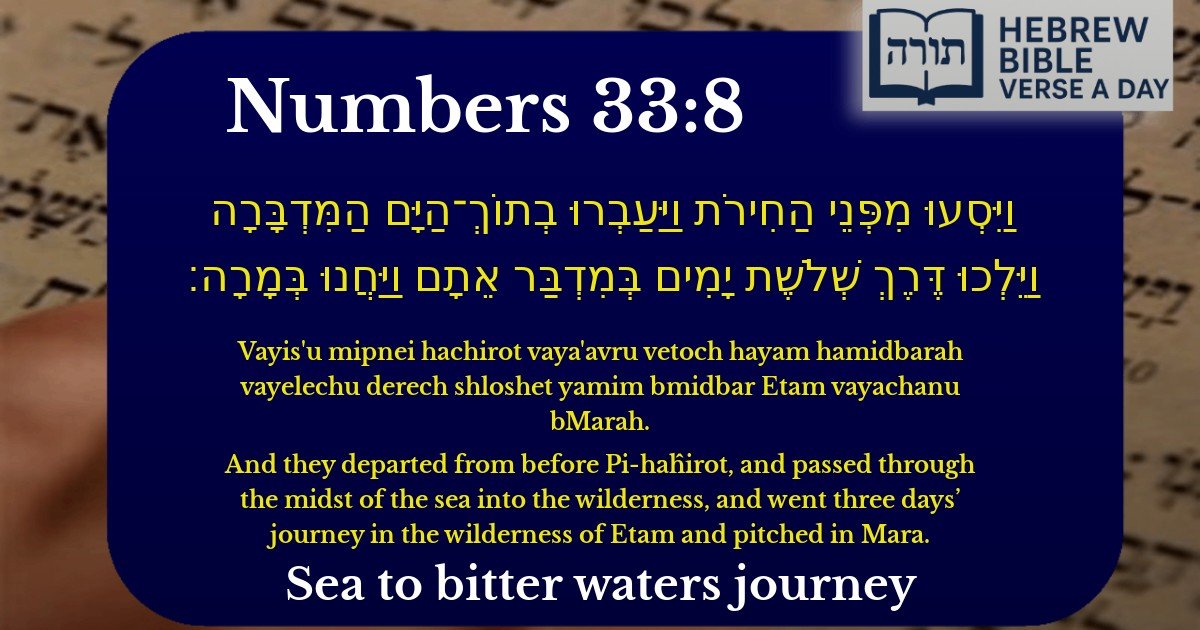
וַיִּסְעוּ מִפְּנֵי הַחִירֹת וַיַּעַבְרוּ בְתוֹךְ־הַיָּם הַמִּדְבָּרָה וַיֵּלְכוּ דֶּרֶךְ שְׁלֹשֶׁת יָמִים בְּמִדְבַּר אֵתָם וַיַּחֲנוּ בְּמָרָה׃
English Translation
And they departed from before Pi-haĥirot, and passed through the midst of the sea into the wilderness, and went three days’ journey in the wilderness of Etam and pitched in Mara.
Transliteration
Vayis'u mipnei hachirot vaya'avru vetoch hayam hamidbarah vayelechu derech shloshet yamim bmidbar Etam vayachanu bMarah.
Hebrew Leining Text
וַיִּסְעוּ֙ מִפְּנֵ֣י הַֽחִירֹ֔ת וַיַּֽעַבְר֥וּ בְתוֹךְ־הַיָּ֖ם הַמִּדְבָּ֑רָה וַיֵּ֨לְכ֜וּ דֶּ֣רֶךְ שְׁלֹ֤שֶׁת יָמִים֙ בְּמִדְבַּ֣ר אֵתָ֔ם וַֽיַּחֲנ֖וּ בְּמָרָֽה׃
🎵 Listen to leining
Parasha Commentary
📚 Talmud Citations
This verse is not quoted in the Talmud.
Journey from Pi-haĥirot to Mara
The verse describes Bnei Yisrael's departure from Pi-haĥirot after the miraculous splitting of the Yam Suf (Red Sea) and their subsequent three-day journey into the wilderness of Etam before encamping at Mara. Rashi (Shemot 15:22) explains that the phrase "וַיִּסְעוּ מִפְּנֵי הַחִירֹת" ("they departed from before Pi-haĥirot") indicates they left the area where they had been trapped between the sea and Pharaoh's army, now moving forward into the wilderness.
The Three-Day Journey
The "דֶּרֶךְ שְׁלֹשֶׁת יָמִים" ("three days' journey") holds significance in Jewish tradition. The Midrash (Mechilta Beshalach 1) notes that the Torah emphasizes this duration because Bnei Yisrael traveled without finding water, leading to their distress at Mara. Rambam (Moreh Nevuchim 3:50) suggests that this period tested their emunah (faith) after witnessing the great miracles at the Yam Suf.
Encampment at Mara
The name "מָרָה" ("Mara") means "bitterness," alluding to the bitter waters found there (Shemot 15:23). The Talmud (Sanhedrin 56a) teaches that at Mara, Hashem gave Bnei Yisrael some mitzvot, including Shabbat and honoring parents, to prepare them for Matan Torah (the giving of the Torah). Rashi (Shemot 15:25) explains that the bitter waters were sweetened through a miracle involving a piece of wood thrown into them, symbolizing that hardships can be transformed through divine intervention and obedience to mitzvot.