

Join Our Newsletter To Be Informed When New Videos Are Posted
Hebrew Text
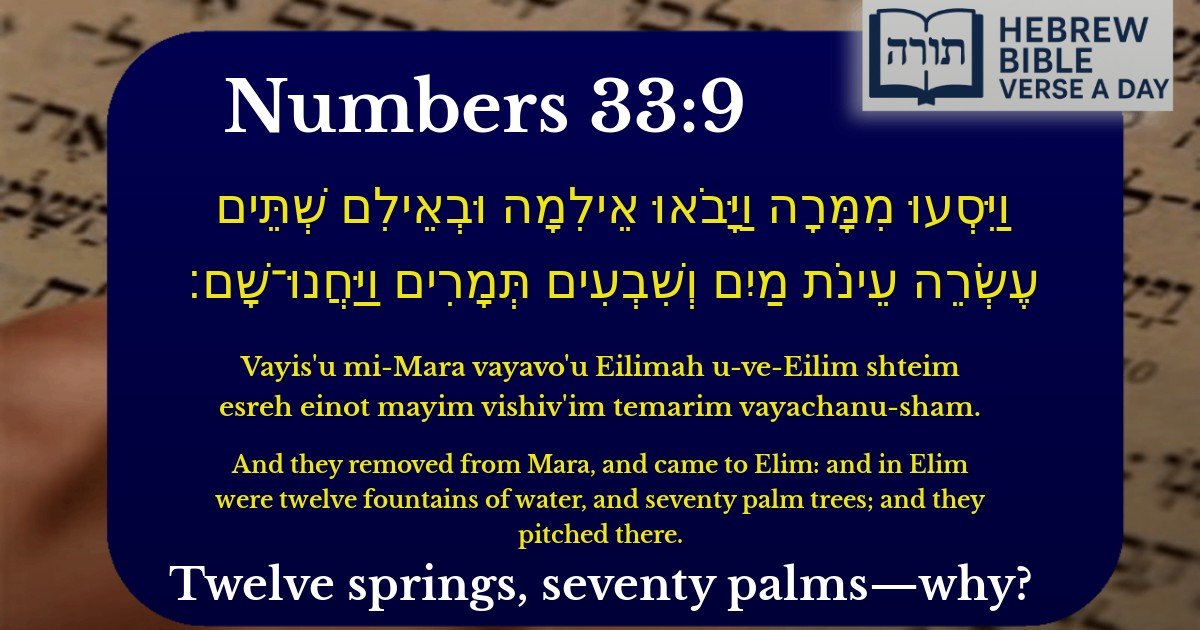
וַיִּסְעוּ מִמָּרָה וַיָּבֹאוּ אֵילִמָה וּבְאֵילִם שְׁתֵּים עֶשְׂרֵה עֵינֹת מַיִם וְשִׁבְעִים תְּמָרִים וַיַּחֲנוּ־שָׁם׃
English Translation
And they removed from Mara, and came to Elim: and in Elim were twelve fountains of water, and seventy palm trees; and they pitched there.
Transliteration
Vayis'u mi-Mara vayavo'u Eilimah u-ve-Eilim shteim esreh einot mayim vishiv'im temarim vayachanu-sham.
Hebrew Leining Text
וַיִּסְעוּ֙ מִמָּרָ֔ה וַיָּבֹ֖אוּ אֵילִ֑מָה וּ֠בְאֵילִ֠ם שְׁתֵּ֣ים עֶשְׂרֵ֞ה עֵינֹ֥ת מַ֛יִם וְשִׁבְעִ֥ים תְּמָרִ֖ים וַיַּחֲנוּ־שָֽׁם׃
🎵 Listen to leining
Parasha Commentary
📚 Talmud Citations
This verse is not quoted in the Talmud.
Location and Significance of Elim
The verse describes Bnei Yisrael's journey from Marah to Elim, where they encountered twelve springs of water and seventy palm trees. Rashi (Shemot 15:27) explains that Elim was a place of respite and comfort after the bitterness of Marah (where the waters were undrinkable). The Midrash Tanchuma (Beshalach 24) further elaborates that Elim was a place of spiritual and physical rejuvenation, symbolizing Hashem's kindness in providing for His people in the wilderness.
Symbolism of the Twelve Springs and Seventy Palm Trees
The twelve springs correspond to the twelve tribes of Israel, as noted by the Baal HaTurim (Shemot 15:27). Each tribe had its own unique spiritual path, and the separate springs represent Divine providence tailored to each tribe's needs. The seventy palm trees, according to the Midrash (Bamidbar Rabbah 1:3), allude to the seventy elders who would later assist Moshe in leading the nation, as well as the seventy nations of the world. The palm tree, a symbol of righteousness (Tehillim 92:13), hints at the spiritual elevation of Israel among the nations.
Lessons in Divine Providence
Rambam (Moreh Nevuchim 3:24) discusses how the miracles in the wilderness, including the provision of water at Elim, were designed to instill faith in Hashem's constant care. The orderly arrangement of the springs and palm trees reflects the precision of Divine providence—neither too little nor too much, but exactly what was needed for the nation's sustenance. The Sforno (Shemot 15:27) adds that this was a lesson in gratitude, teaching Bnei Yisrael to recognize and appreciate Hashem's blessings even in the desert.
Connection to Future Generations
The Zohar (Shemot 63a) interprets Elim as a foreshadowing of the future redemption, where the righteous will enjoy spiritual abundance. The twelve springs and seventy palm trees also hint at the Torah's completeness—twelve tribes receiving the Torah and seventy facets of Torah wisdom (Bamidbar Rabbah 13:15). This teaches that just as Hashem provided for Israel in the wilderness, He will sustain them through Torah in every generation.