
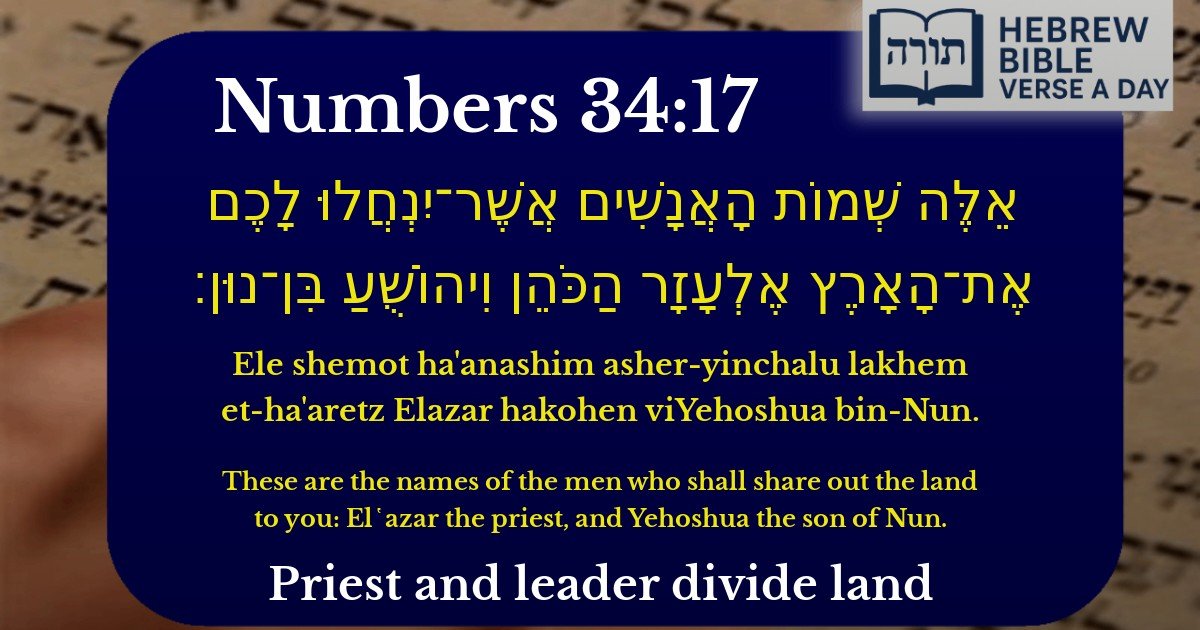

Numbers 34:17 - Priest and leader divide land

Numbers 34:17 - במדבר 34:17

Hebrew Text

אֵלֶּה שְׁמוֹת הָאֲנָשִׁים אֲשֶׁר־יִנְחֲלוּ לָכֶם אֶת־הָאָרֶץ אֶלְעָזָר הַכֹּהֵן וִיהוֹשֻׁעַ בִּן־נוּן׃

English Translation

These are the names of the men who shall share out the land to you: El῾azar the priest, and Yehoshua the son of Nun.

Transliteration

Ele shemot ha'anashim asher-yinchalu lakhem et-ha'aretz Elazar hakohen viYehoshua bin-Nun.

Hebrew Leining Text

אֵ֚לֶּה שְׁמ֣וֹת הָֽאֲנָשִׁ֔ים אֲשֶׁר־יִנְחֲל֥וּ לָכֶ֖ם אֶת־הָאָ֑רֶץ אֶלְעָזָר֙ הַכֹּהֵ֔ן וִיהוֹשֻׁ֖עַ בִּן־נֽוּן׃

🎵 Listen to leining

Parasha Commentary

Context in Sefer Bamidbar

The verse (Bamidbar 34:17) appears in the context of delineating the borders of Eretz Yisrael and assigning the leaders who would oversee the division of the land among the tribes. This follows Hashem's commandment to Moshe regarding the apportionment of the Land.

Roles of Elazar and Yehoshua

Rashi explains that Elazar the Kohen Gadol and Yehoshua bin Nun were chosen for this sacred task because of their unique spiritual and leadership roles:

  • Elazar the Kohen: Represented the divine presence (Shechinah) in the process, ensuring the division was done with kedushah (holiness) and according to Hashem's will (Rashi, Bamidbar 34:17).
  • Yehoshua bin Nun: As Moshe's successor, he embodied the leadership necessary to guide Bnei Yisrael in both military and spiritual matters (Rambam, Hilchot Melachim 1:7).

Symbolism of Their Partnership

The Midrash Tanchuma (Pinchas 11) highlights that the pairing of Elazar and Yehoshua signifies the balance between:

  • Torah (Elazar): The Kohen Gadol represents the spiritual and halachic authority.
  • Leadership (Yehoshua): The political and military leader ensures practical implementation.

This duality teaches that the inheritance of Eretz Yisrael requires both spiritual guidance and effective governance.

The Significance of "These Are the Names"

The phrase "אֵלֶּה שְׁמוֹת" echoes the opening of Sefer Shemot, emphasizing that just as names define identity, the leaders' roles were integral to the nation's destiny. The Sforno notes that their names were specified to underscore their divinely appointed mission.

Lessons for Leadership

The Talmud (Bava Batra 122a) derives from this verse that the distribution of the Land required leaders of the highest integrity, free from personal bias. Elazar and Yehoshua were chosen because:

  • They had no tribal affiliation that could influence fairness (Yehoshua was from Ephraim, but his role transcended tribal interests).
  • They were trusted by both Hashem and the people (Malbim, Bamidbar 34:17).

📚 Talmud Citations

This verse is not quoted in the Talmud.

Frequently Asked Questions

Q: Who were Elazar and Yehoshua in Numbers 34:17?
A: Elazar was the Kohen Gadol (High Priest), the son of Aharon, and Yehoshua (Joshua) was Moshe's devoted student who later became the leader of Bnei Yisrael. They were appointed to oversee the division of the Land of Israel among the tribes (Rashi on Numbers 34:17).
Q: Why were Elazar and Yehoshua chosen to divide the land?
A: Elazar represented the spiritual leadership (as Kohen Gadol), and Yehoshua represented the political/military leadership (as Moshe's successor). Their joint appointment ensured the division would be both halachically correct (through Elazar's Urim v'Tumim) and practically fair (through Yehoshua's knowledge of the tribes' needs) (Ramban on Numbers 34:17).
Q: What can we learn from Elazar and Yehoshua working together in this verse?
A: This teaches the importance of collaboration between spiritual and communal leadership. The land division required both Torah wisdom (Elazar) and practical leadership (Yehoshua), showing that ideal Jewish governance needs both elements working in harmony (Sifrei Bamidbar 34:17).
Q: Why does the Torah specify 'these are the names' in this verse?
A: The emphasis on names teaches that these leaders were personally reliable and trustworthy. In Jewish tradition, a person's name reflects their essence - here it underscores that Elazar and Yehoshua were uniquely qualified for this sacred task of land distribution (Midrash Tanchuma, Massei 8).
Q: How does the appointment in Numbers 34:17 connect to Yehoshua becoming leader?
A: This was part of Yehoshua's transition into leadership. While Moshe was still alive, Yehoshua began taking on responsibilities (like land division) to prepare for his future role. The Talmud notes that true leaders are gradually given responsibilities to prove their capability (Sanhedrin 8a).