
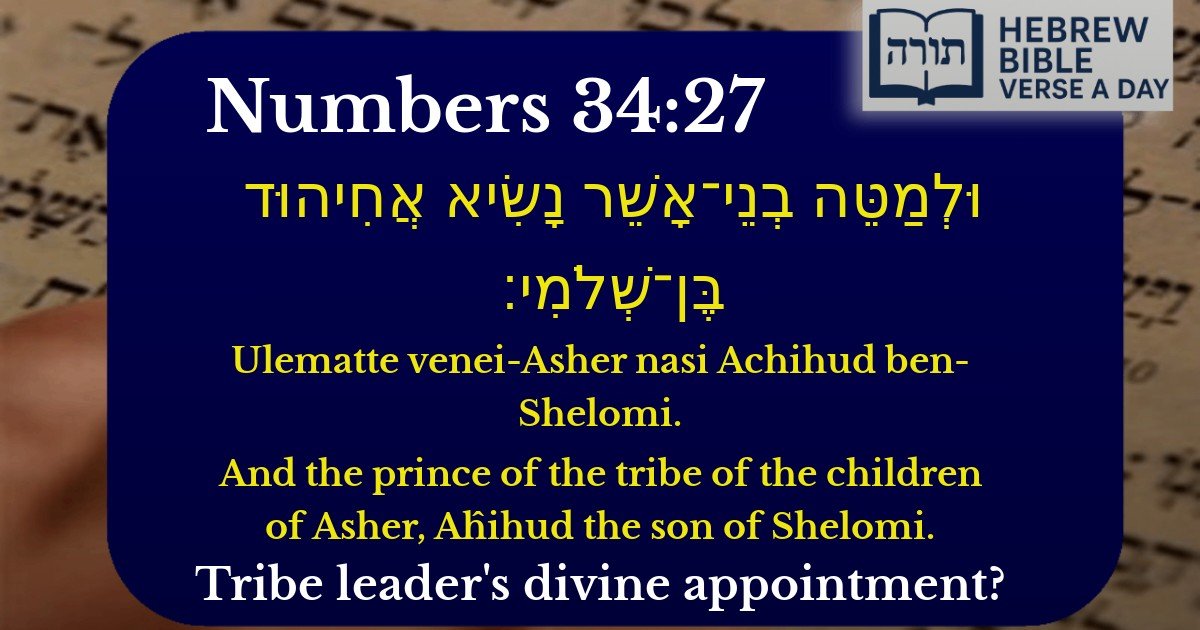

Numbers 34:27 - Tribe leader's divine appointment?

Numbers 34:27 - במדבר 34:27

Hebrew Text

וּלְמַטֵּה בְנֵי־אָשֵׁר נָשִׂיא אֲחִיהוּד בֶּן־שְׁלֹמִי׃

English Translation

And the prince of the tribe of the children of Asher, Aĥihud the son of Shelomi.

Transliteration

Ulematte venei-Asher nasi Achihud ben-Shelomi.

Hebrew Leining Text

וּלְמַטֵּ֥ה בְנֵי־אָשֵׁ֖ר נָשִׂ֑יא אֲחִיה֖וּד בֶּן־שְׁלֹמִֽי׃

🎵 Listen to leining

Parasha Commentary

Introduction to the Verse

The verse (Numbers 34:27) lists Aĥihud ben Shelomi as the prince (נָשִׂיא) representing the tribe of Asher during the division of the Land of Israel. This appointment reflects the Torah's emphasis on orderly leadership and tribal representation in sacred matters.

Meaning of the Names

  • Aĥihud (אֲחִיהוּד): Rashi explains that the name means "brother of glory," symbolizing unity and honor among the tribes. The Midrash (Bamidbar Rabbah 13:15) connects this to Asher's role in producing olive oil for the Menorah, representing spiritual light.
  • Shelomi (שְׁלֹמִי): Derived from "shalom" (peace), the name reflects the tribe of Asher's blessing (Deuteronomy 33:24) to be "favored among brothers" and dwell in tranquility.

The Role of Tribal Princes

Rambam (Hilchot Sanhedrin 1:3) teaches that tribal princes were chosen for their wisdom and righteousness, tasked with guiding their tribes in both civil and spiritual matters. The Talmud (Horayot 10a) emphasizes that these leaders were integral to maintaining unity during the land allocation.

Asher's Unique Representation

The Midrash Tanchuma (Pinchas 10) notes that Asher's prince was selected to highlight the tribe's material and spiritual blessings—particularly their fertile land (Genesis 49:20) and contribution to the Mishkan's oil. Aĥihud's leadership thus embodied the balance of earthly prosperity and divine service.

📚 Talmud Citations

This verse is not quoted in the Talmud.

Frequently Asked Questions

Q: Who was Aĥihud ben Shelomi mentioned in Numbers 34:27?
A: Aĥihud ben Shelomi was the appointed leader (nasi) of the tribe of Asher during the division of the Land of Israel. The Torah lists him among the tribal representatives who helped allocate portions of the land under the guidance of Elazar the Kohen and Yehoshua (Joshua). Rashi explains that these leaders were chosen for their wisdom and righteousness to ensure a fair distribution.
Q: Why does the Torah list the names of tribal leaders like Aĥihud?
A: The Torah emphasizes these names to show the importance of proper leadership in sacred tasks. Rambam (Hilchot Sanhedrin) teaches that leaders must be wise, humble, and dedicated to justice. Listing them also preserves their merit for future generations, as the Midrash (Bamidbar Rabbah) states that honorable deeds in the Torah are eternally remembered.
Q: What can we learn from the tribe of Asher having a representative in Numbers 34?
A: This teaches that every tribe—and by extension, every individual—has a unique role in fulfilling G-d's plan. Asher was known for prosperity (Genesis 49:20), yet their leader still participated in the collective mission. The Talmud (Sotah 13a) highlights that unity among diverse tribes was essential for inheriting the Land.
Q: How does the selection of tribal leaders apply to leadership today?
A: Just as Aĥihud was chosen for his integrity, Jewish tradition (Pirkei Avot 2:2) teaches that leaders must prioritize the community's welfare. The Talmud (Horayot 10a) adds that true leadership requires humility and Torah knowledge, values that remain timeless for Jewish communities in every generation.