

Join Our Newsletter To Be Informed When New Videos Are Posted
Hebrew Text
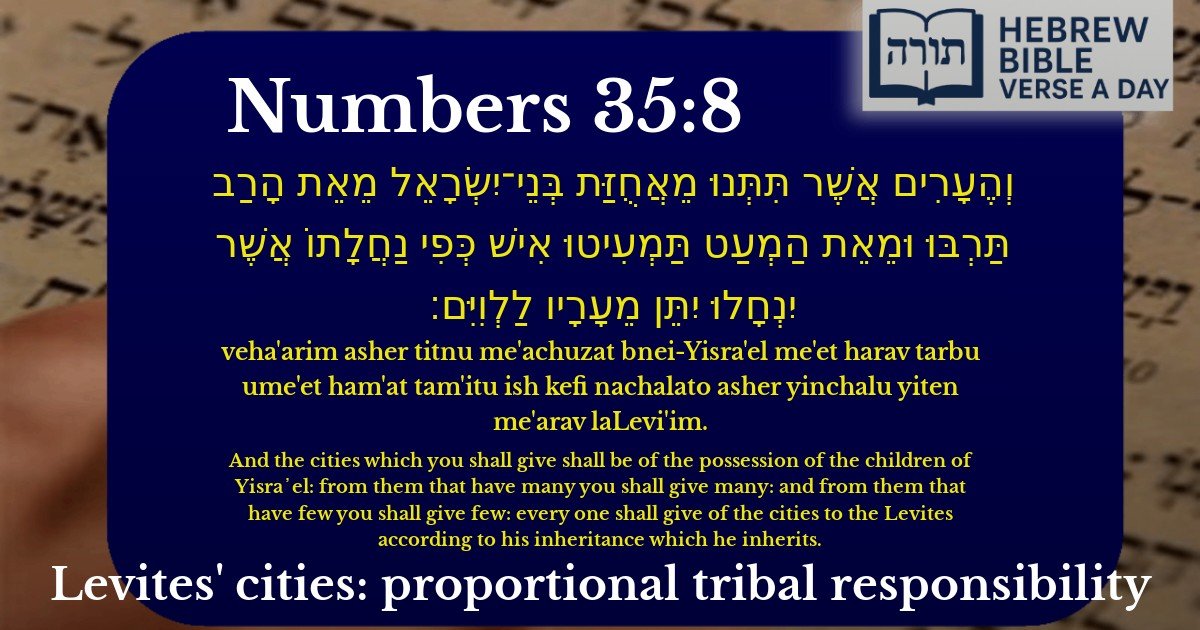
וְהֶעָרִים אֲשֶׁר תִּתְּנוּ מֵאֲחֻזַּת בְּנֵי־יִשְׂרָאֵל מֵאֵת הָרַב תַּרְבּוּ וּמֵאֵת הַמְעַט תַּמְעִיטוּ אִישׁ כְּפִי נַחֲלָתוֹ אֲשֶׁר יִנְחָלוּ יִתֵּן מֵעָרָיו לַלְוִיִּם׃
English Translation
And the cities which you shall give shall be of the possession of the children of Yisra᾽el: from them that have many you shall give many: and from them that have few you shall give few: every one shall give of the cities to the Levites according to his inheritance which he inherits.
Transliteration
Veha'arim asher titnu me'achuzat bnei-Yisra'el me'et harav tarbu ume'et ham'at tam'itu ish kefi nachalato asher yinchalu yiten me'arav laLevi'im.
Hebrew Leining Text
וְהֶֽעָרִ֗ים אֲשֶׁ֤ר תִּתְּנוּ֙ מֵאֲחֻזַּ֣ת בְּנֵי־יִשְׂרָאֵ֔ל מֵאֵ֤ת הָרַב֙ תַּרְבּ֔וּ וּמֵאֵ֥ת הַמְעַ֖ט תַּמְעִ֑יטוּ אִ֗ישׁ כְּפִ֤י נַחֲלָתוֹ֙ אֲשֶׁ֣ר יִנְחָ֔לוּ יִתֵּ֥ן מֵעָרָ֖יו לַלְוִיִּֽם׃ {פ}
🎵 Listen to leining
Parasha Commentary
📚 Talmud Citations
This verse is quoted in the Talmud.
📖 Arakhin 33b
The verse is referenced in a discussion about the allocation of cities to the Levites, emphasizing the proportional distribution based on the size of each tribe's inheritance.
Allocation of Cities to the Levites
The verse (Bamidbar 35:8) outlines the commandment to allocate cities to the Levites from the territories of the other tribes of Israel. This distribution was proportional—tribes with larger land holdings gave more cities, while those with smaller territories gave fewer.
Proportional Giving Based on Inheritance
Rashi explains that the phrase "מֵאֵת הָרַב תַּרְבּוּ וּמֵאֵת הַמְעַט תַּמְעִיטוּ" ("from them that have many you shall give many, and from them that have few you shall give few") emphasizes fairness in the allocation. The larger tribes (like Yehudah) had more land and thus contributed more Levitical cities, while smaller tribes (like Binyamin) contributed fewer.
Levitical Cities as a Divine Command
The Rambam (Hilchot Shemittah v'Yovel 13:2) teaches that these cities were not merely a human arrangement but a mitzvah d'oraita (Torah commandment). The Levites, who had no territorial inheritance (Bamidbar 18:20), were to receive these cities as their dwelling places, ensuring their role in teaching Torah and serving in the Mishkan (and later the Beit HaMikdash).
Midrashic Insight on Fairness
The Midrash Tanchuma (Bamidbar 12) highlights that this system prevented resentment—since each tribe gave according to its means, no tribe could claim unfair treatment. This principle of proportional giving is echoed in later halachic discussions about tzedakah (charity).
Practical Implications
The Talmud (Arachin 33b) elaborates on the details: