Frequently Asked Questions
Q: What are the 'cities of refuge' mentioned in Numbers 35:13?
A: The 'cities of refuge' (ערי מקלט) were six designated cities in the Land of Israel where someone who accidentally killed another person could flee for protection from avengers. This is based on the Torah's system of justice, as explained in the Talmud (Makkot 9b-10a) and by Rashi on this verse.
Q: Why were there exactly six cities of refuge?
A: The number six corresponds to the six directions one might flee (north, south, east, west, up, down), symbolizing that refuge is available from all directions (Midrash Tanchuma, Mas'ei 8). Rambam (Hilchos Rotzeach 8:4) also explains this was a practical number to ensure accessibility throughout the Land.
Q: Do the cities of refuge have any relevance today?
A: While we don't have functioning cities of refuge today without the Temple, the concept teaches important lessons about repentance, justice, and the value of human life. The Talmud (Makkot 10a) discusses how the death of the Kohen Gadol served as atonement, showing how leadership is connected to communal responsibility.
Q: Who was allowed to stay in a city of refuge?
A: Only someone who killed accidentally (shogeg) could find protection there, as explained in Numbers 35:15 and discussed in Talmud Makkot. An intentional murderer (meizid) could not claim refuge there (Rambam, Hilchos Rotzeach 5:1). The cities provided both physical safety and spiritual rehabilitation.
Q: How long did someone stay in a city of refuge?
A: According to Numbers 35:25 and Talmud Makkot 11b, the accidental killer had to remain there until the death of the current Kohen Gadol (High Priest). This period served as both protection and a form of exile to atone for the accidental taking of life.

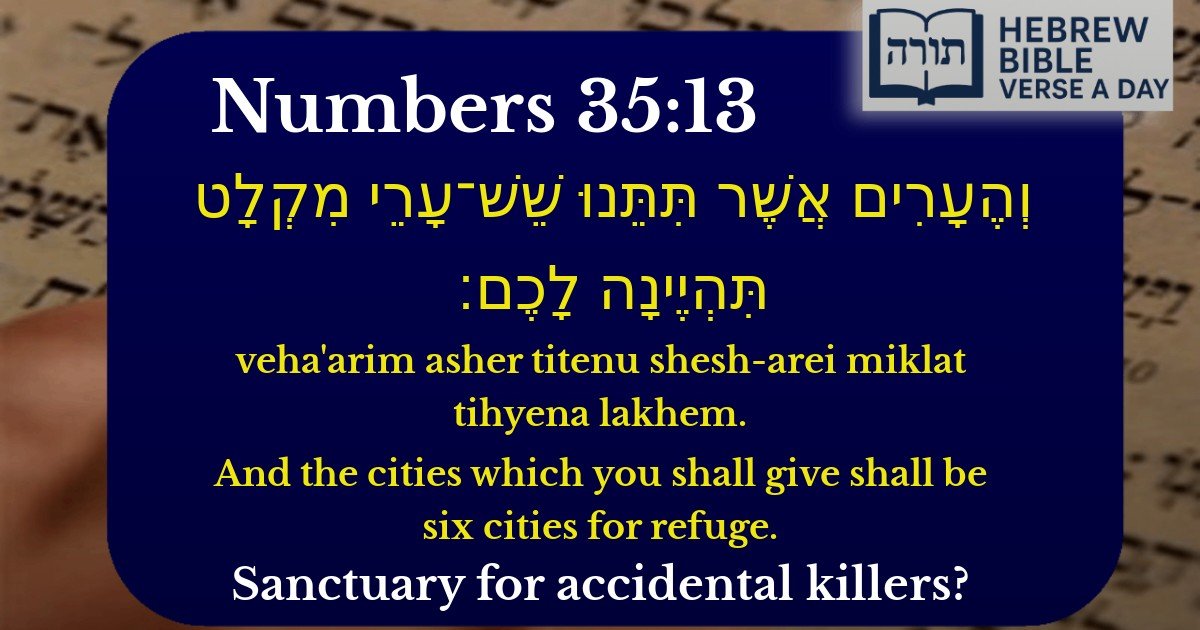

The Cities of Refuge in Torah Law
The verse (Bamidbar 35:6) establishes the mitzvah of arei miklat (cities of refuge) for accidental killers. Rashi explains that these six cities were strategically placed throughout Eretz Yisrael—three on each side of the Jordan River—to ensure accessibility for those needing protection from blood avengers (go'alei hadam).
Purpose and Spiritual Significance
The Rambam (Hilchos Rotzeach 8:9) teaches that these cities served not only as physical protection but also as places of repentance. The accidental killer was required to dwell there until the death of the Kohen Gadol, which the Talmud (Makkos 11a) interprets as a period of atonement. The Midrash Tanchuma (Masei 10) further connects this to the idea that the Kohen Gadol's prayers should have prevented such tragedies.
Legal Requirements and Symbolism
Contemporary Lessons
The Chofetz Chaim (in Ahavas Chesed) derives from this mitzvah the importance of creating societal structures that protect the vulnerable. Just as the Torah mandated accessible refuge cities, we must ensure our communities provide spiritual and physical safe spaces for those in need.