

Join Our Newsletter To Be Informed When New Videos Are Posted
Hebrew Text
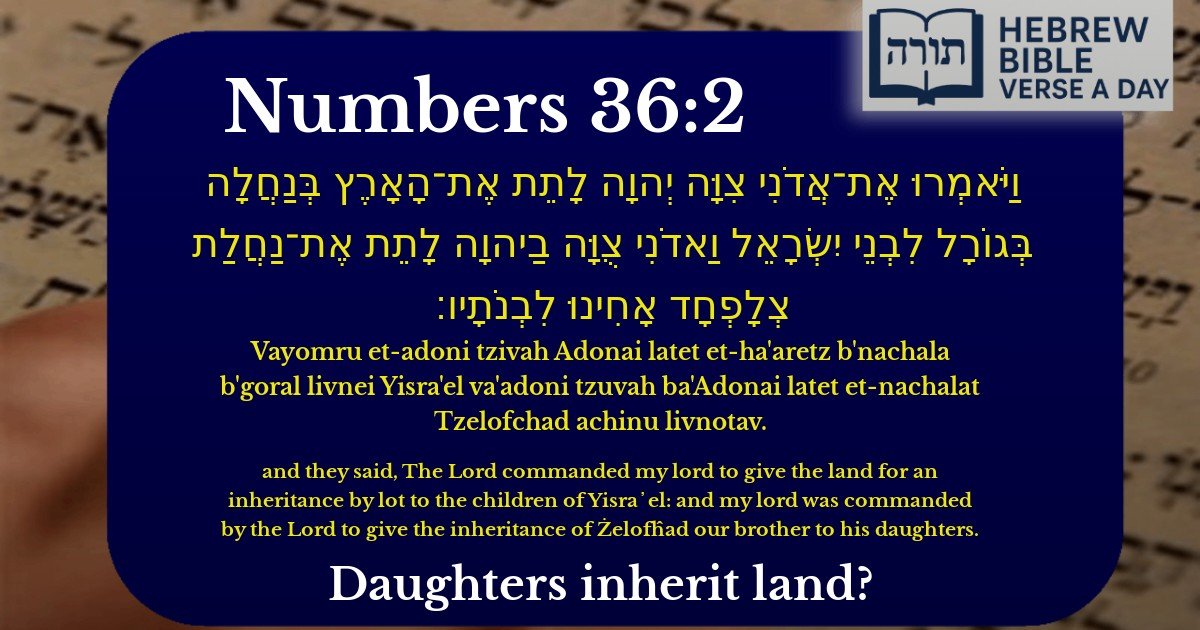
וַיֹּאמְרוּ אֶת־אֲדֹנִי צִוָּה יְהוָה לָתֵת אֶת־הָאָרֶץ בְּנַחֲלָה בְּגוֹרָל לִבְנֵי יִשְׂרָאֵל וַאדֹנִי צֻוָּה בַיהוָה לָתֵת אֶת־נַחֲלַת צְלָפְחָד אָחִינוּ לִבְנֹתָיו׃
English Translation
and they said, The Lord commanded my lord to give the land for an inheritance by lot to the children of Yisra᾽el: and my lord was commanded by the Lord to give the inheritance of Żelofĥad our brother to his daughters.
Transliteration
Vayomru et-adoni tzivah Adonai latet et-ha'aretz b'nachala b'goral livnei Yisra'el va'adoni tzuvah ba'Adonai latet et-nachalat Tzelofchad achinu livnotav.
Hebrew Leining Text
וַיֹּאמְר֗וּ אֶת־אֲדֹנִי֙ צִוָּ֣ה יְהֹוָ֔ה לָתֵ֨ת אֶת־הָאָ֧רֶץ בְּנַחֲלָ֛ה בְּגוֹרָ֖ל לִבְנֵ֣י יִשְׂרָאֵ֑ל וַֽאדֹנִי֙ צֻוָּ֣ה בַֽיהֹוָ֔ה לָתֵ֗ת אֶֽת־נַחֲלַ֛ת צְלׇפְחָ֥ד אָחִ֖ינוּ לִבְנֹתָֽיו׃
🎵 Listen to leining
Parasha Commentary
📚 Talmud Citations
This verse is quoted in the Talmud.
📖 Bava Batra 119b
The verse is discussed in the context of the inheritance rights of Zelophehad's daughters, illustrating the principle that daughters can inherit when there are no sons.
Context of the Verse
This verse appears in Bamidbar (Numbers) 36:2, where the leaders of the tribe of Menashe approach Moshe with a concern regarding the inheritance of Tzelofchad's daughters. Earlier, in Bamidbar 27:1-11, the daughters of Tzelofchad successfully petitioned Moshe to receive their father's portion in Eretz Yisrael since he had no sons. Now, the tribal leaders raise a new halachic issue: if these women marry men from other tribes, their inherited land would transfer to those tribes during the Yovel (Jubilee) year.
Rashi's Explanation
Rashi (Bamidbar 36:2) explains that the tribal leaders were emphasizing two points:
They were concerned that the latter could disrupt the former if the daughters married outside their tribe.
Halachic Implications
The Talmud (Bava Basra 120a) discusses this case extensively, noting that the inheritance laws were divinely ordained to maintain tribal boundaries. The resolution, as commanded by Hashem (Bamidbar 36:6-9), was that Tzelofchad’s daughters must marry within their father’s tribe (Menashe) to preserve the tribal allotments.
Midrashic Insights
The Midrash Tanchuma (Pinchas 9) highlights the righteousness of Tzelofchad’s daughters, who not only sought their rightful inheritance but also accepted the subsequent restriction to marry within their tribe. This demonstrates their commitment to both personal justice and national unity.
Rambam’s Perspective
Rambam (Hilchos Nachalos 6:1) codifies this ruling, stating that daughters who inherit land must marry within their tribe to prevent land from transferring to another tribe during Yovel. This ensures the fulfillment of Bamidbar 36:7: "No inheritance shall pass from one tribe to another."