

Join Our Newsletter To Be Informed When New Videos Are Posted
Hebrew Text
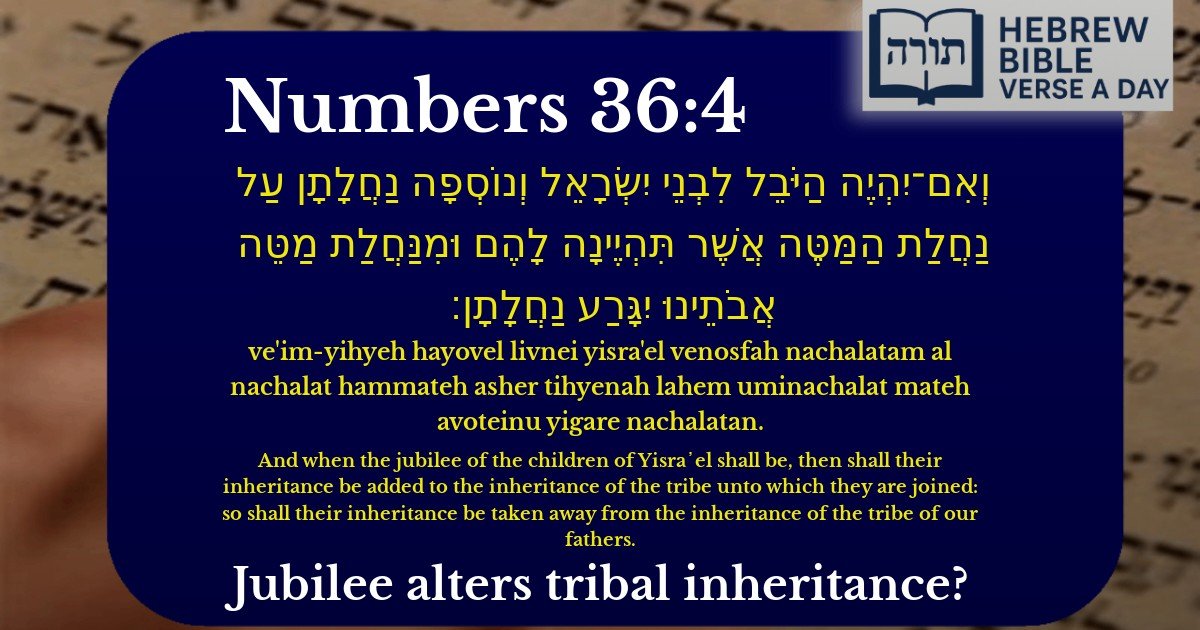
וְאִם־יִהְיֶה הַיֹּבֵל לִבְנֵי יִשְׂרָאֵל וְנוֹסְפָה נַחֲלָתָן עַל נַחֲלַת הַמַּטֶּה אֲשֶׁר תִּהְיֶינָה לָהֶם וּמִנַּחֲלַת מַטֵּה אֲבֹתֵינוּ יִגָּרַע נַחֲלָתָן׃
English Translation
And when the jubilee of the children of Yisra᾽el shall be, then shall their inheritance be added to the inheritance of the tribe unto which they are joined: so shall their inheritance be taken away from the inheritance of the tribe of our fathers.
Transliteration
Ve'im-yihyeh hayovel livnei yisra'el venosfah nachalatam al nachalat hammateh asher tihyenah lahem uminachalat mateh avoteinu yigare nachalatan.
Hebrew Leining Text
וְאִם־יִהְיֶ֣ה הַיֹּבֵל֮ לִבְנֵ֣י יִשְׂרָאֵל֒ וְנֽוֹסְפָה֙ נַחֲלָתָ֔ן עַ֚ל נַחֲלַ֣ת הַמַּטֶּ֔ה אֲשֶׁ֥ר תִּהְיֶ֖ינָה לָהֶ֑ם וּמִֽנַּחֲלַת֙ מַטֵּ֣ה אֲבֹתֵ֔ינוּ יִגָּרַ֖ע נַחֲלָתָֽן׃
🎵 Listen to leining
Parasha Commentary
📚 Talmud Citations
This verse is quoted in the Talmud.
📖 Bava Batra 120a
The verse is discussed in the context of the laws of inheritance and the jubilee year, particularly regarding the inheritance rights of daughters when there are no sons.
Context in Sefer Bamidbar
The verse (Bamidbar 36:4) discusses the laws of inheritance pertaining to the daughters of Tzelofchad and the broader implications for tribal land allocation during the Yovel (Jubilee) year. This arises from the concern raised by the leaders of Menasheh's tribe regarding potential loss of tribal land if daughters marry outside their tribe.
Rashi's Explanation
Rashi (Bamidbar 36:4) clarifies that when the Yovel year arrives, the inherited land of these women would permanently attach to the tribe of their husbands. This is derived from the phrase "וְנוֹסְפָה נַחֲלָתָן" ("their inheritance shall be added"), meaning the land becomes an inseparable part of the husband's tribe's territory. Conversely, "יִגָּרַע נַחֲלָתָן" ("their inheritance shall be taken away") teaches that the original tribe (Menasheh, in this case) permanently loses that portion of land.
Rambam's Halachic Perspective
In Hilchos Shemitah v'Yovel (10:8), the Rambam rules that this transfer of inheritance at Yovel applies specifically when the daughters inherit land due to lacking brothers. The Yovel's return of land to its original owners (Vayikra 25:10) does not apply here—instead, the land remains with the husband's tribe, demonstrating the Torah's balance between tribal integrity and individual inheritance rights.
Midrashic Insight
The Sifrei (Bamidbar 157) links this law to the broader principle of לא תסוב נחלה ממטה למטה אחר ("the inheritance shall not rotate from tribe to tribe"—Bamidbar 36:9). The Midrash emphasizes that while the Torah permits daughters to inherit, it establishes safeguards to prevent tribal boundaries from being erased, reflecting the Divine wisdom in maintaining both individual justice and national structure.
Key Halachic Implications