

Join Our Newsletter To Be Informed When New Videos Are Posted
Hebrew Text
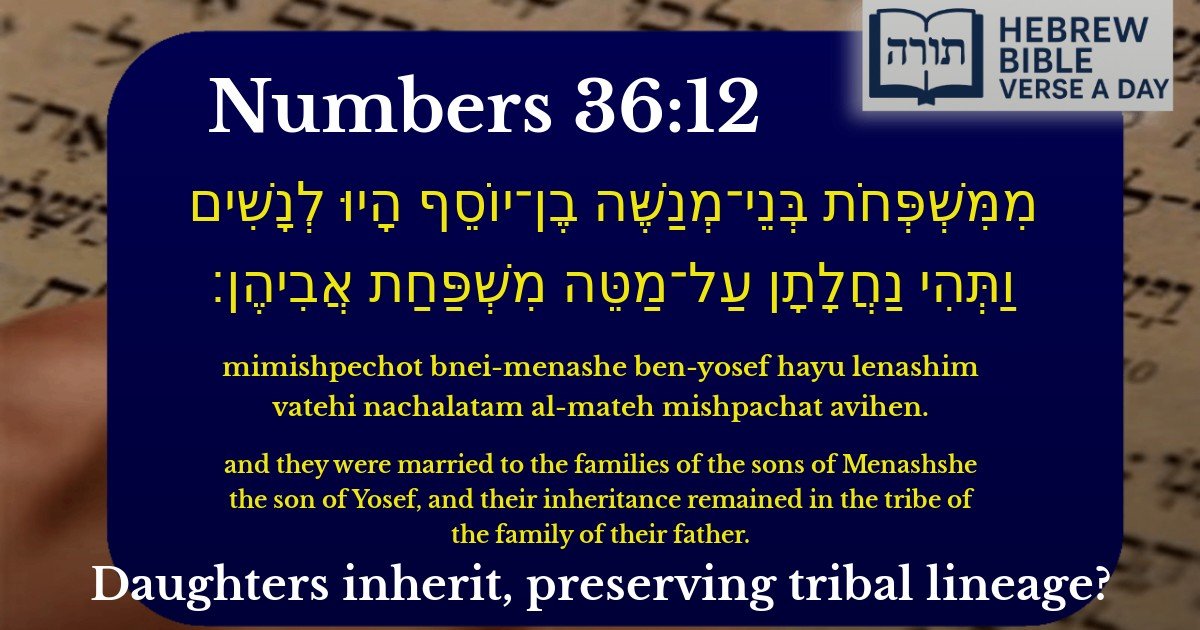
מִמִּשְׁפְּחֹת בְּנֵי־מְנַשֶּׁה בֶן־יוֹסֵף הָיוּ לְנָשִׁים וַתְּהִי נַחֲלָתָן עַל־מַטֵּה מִשְׁפַּחַת אֲבִיהֶן׃
English Translation
and they were married to the families of the sons of Menashshe the son of Yosef, and their inheritance remained in the tribe of the family of their father.
Transliteration
Mimishpechot bnei-menashe ben-yosef hayu lenashim vatehi nachalatam al-mateh mishpachat avihen.
Hebrew Leining Text
מִֽמִּשְׁפְּחֹ֛ת בְּנֵֽי־מְנַשֶּׁ֥ה בֶן־יוֹסֵ֖ף הָי֣וּ לְנָשִׁ֑ים וַתְּהִי֙ נַחֲלָתָ֔ן עַל־מַטֵּ֖ה מִשְׁפַּ֥חַת אֲבִיהֶֽן׃
🎵 Listen to leining
Parasha Commentary
📚 Talmud Citations
This verse is not quoted in the Talmud.
Context of the Verse
This verse (Bamidbar 36:12) concludes the narrative of the daughters of Tzelafchad, who petitioned Moshe for the right to inherit their father's portion in Eretz Yisrael since he had no sons. The verse describes how these daughters married within their own tribe, Bnei Menashe, ensuring their inheritance remained within their father's tribal lineage.
Rashi's Explanation
Rashi (Bamidbar 36:12) emphasizes that the daughters of Tzelafchad acted l'shem shamayim (for the sake of Heaven) by marrying within their tribe. Initially, they could have married anyone, but they chose to uphold the divine decree that inheritances should not transfer between tribes (Bamidbar 36:6-9). Rashi notes that this demonstrates their righteousness and commitment to preserving tribal boundaries as commanded by Hashem.
Halachic Implications (Rambam)
Rambam (Hilchos Nachalos 6:1) derives from this episode that the prohibition against transferring inheritances between tribes through marriage applies only to the generation entering Eretz Yisrael. However, the daughters of Tzelafchad set a precedent for voluntary adherence to this ideal even when not strictly required. This reflects the principle of lifnim mishuras hadin (going beyond the letter of the law) in matters of tribal unity and inheritance.
Midrashic Insights
Tribal Inheritance Principles
The Talmud (Bava Basra 120a) discusses how this incident established that daughters who inherit land must marry within their tribe to maintain tribal allotments. This became a foundational case for the laws of nachalas avos (paternal inheritance) in Jewish jurisprudence. The Sages derive from here that maintaining tribal boundaries in Eretz Yisrael is not merely a legal technicality but a spiritual imperative tied to the sanctity of the land.