
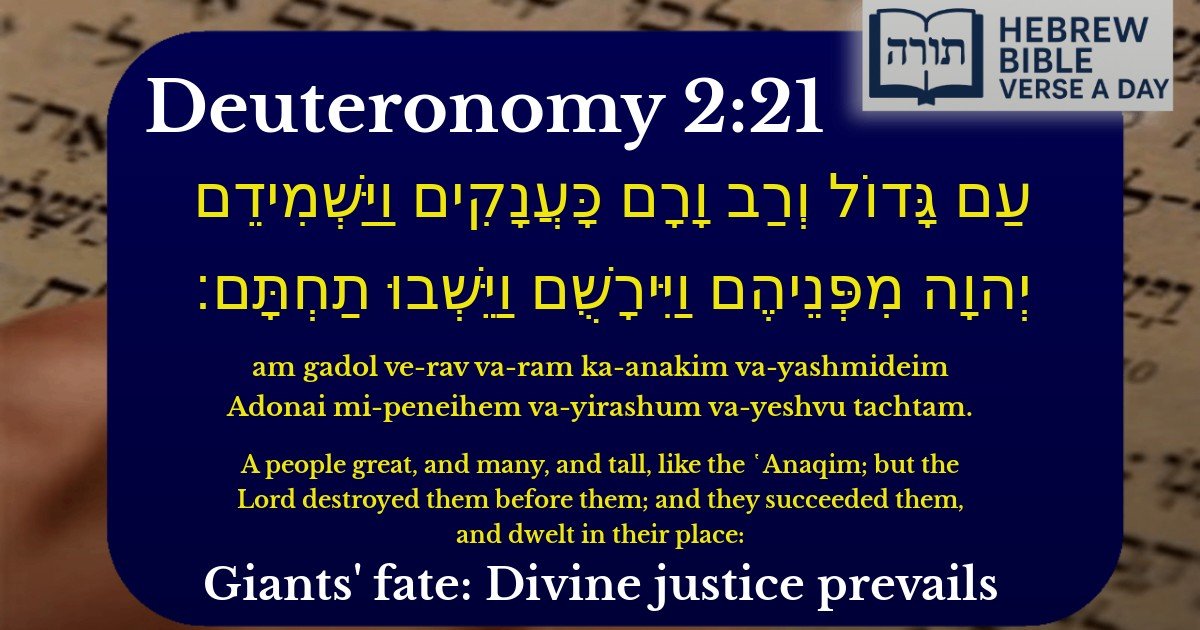

Deuteronomy 2:21 - Giants' fate: Divine justice prevails

Deuteronomy 2:21 - דברים 2:21

Hebrew Text

עַם גָּדוֹל וְרַב וָרָם כָּעֲנָקִים וַיַּשְׁמִידֵם יְהוָה מִפְּנֵיהֶם וַיִּירָשֻׁם וַיֵּשְׁבוּ תַחְתָּם׃

English Translation

A people great, and many, and tall, like the ῾Anaqim; but the Lord destroyed them before them; and they succeeded them, and dwelt in their place:

Transliteration

Am gadol ve-rav va-ram ka-anakim va-yashmideim Adonai mi-peneihem va-yirashum va-yeshvu tachtam.

Hebrew Leining Text

עַ֣ם גָּד֥וֹל וְרַ֛ב וָרָ֖ם כָּעֲנָקִ֑ים וַיַּשְׁמִידֵ֤ם יְהֹוָה֙ מִפְּנֵיהֶ֔ם וַיִּירָשֻׁ֖ם וַיֵּשְׁב֥וּ תַחְתָּֽם׃

🎵 Listen to leining

Parasha Commentary

Context of the Verse

This verse appears in Devarim (Deuteronomy) 2:21, where Moshe recounts the journey of Bnei Yisrael through the wilderness and their encounters with various nations. The verse describes the Emim, a people who were once mighty like the Anaqim (giants), but were ultimately destroyed by Hashem to make way for Bnei Yisrael.

Explanation of Key Phrases

  • "A people great, and many, and tall, like the Anaqim" – Rashi explains that the Anaqim were renowned for their immense size and strength, symbolizing seemingly insurmountable obstacles. The Emim were comparable to them in stature and power.
  • "But the Lord destroyed them before them" – The Ramban emphasizes that this demonstrates Hashem’s intervention on behalf of Bnei Yisrael, ensuring their victory over formidable enemies.
  • "They succeeded them and dwelt in their place" – The Sforno notes that this fulfills the divine promise of Eretz Yisrael being given to Bnei Yisrael, as the previous inhabitants were removed by Hashem’s decree.

Midrashic Insights

The Midrash Tanchuma connects this verse to the broader theme of divine providence. It teaches that even the mightiest nations cannot stand against Hashem’s will when He determines that Bnei Yisrael should inherit their land. The destruction of the Emim serves as a lesson in bitachon (trust in Hashem), showing that no obstacle is too great when aligned with divine purpose.

Halachic and Moral Implications

The Rambam (Hilchot Melachim 5:1) derives from this verse that conquest of the land was not merely through human strength but by divine mandate. This reinforces the principle that settling Eretz Yisrael is a mitzvah tied to Hashem’s direct involvement in Jewish history.

📚 Talmud Citations

This verse is not quoted in the Talmud.

Frequently Asked Questions

Q: Who were the 'Anaqim mentioned in Deuteronomy 2:21?
A: The 'Anaqim (עֲנָקִים) were a race of giants who lived in the land of Canaan. According to Rashi and the Talmud (Chullin 60a), they were descendants of the Nephilim and were known for their great size and strength. The Torah mentions them to emphasize the miraculous nature of the Israelites' conquest of the land, as humanly speaking, they seemed invincible.
Q: Why did Hashem destroy the 'Anaqim before the Israelites?
A: Hashem destroyed the 'Anaqim to fulfill His promise to give the land of Canaan to the Israelites (Deuteronomy 1:8). The Rambam explains in Moreh Nevuchim that this demonstrates Divine providence—Hashem clears obstacles for His people when they follow His will. The Midrash (Devarim Rabbah) also teaches that their destruction was due to their wickedness, similar to the fate of the generation of the Flood.
Q: What lesson can we learn from the Israelites inheriting the land of the 'Anaqim?
A: This teaches us that no obstacle is too great when we trust in Hashem's help. The Talmud (Sotah 34b) recounts how the spies feared the 'Anaqim, but Joshua and Caleb had faith. The verse reminds us that success comes from Divine assistance, not human strength alone. Today, this applies to overcoming personal or spiritual challenges with emunah (faith).
Q: How does this verse connect to the broader theme of Sefer Devarim (Deuteronomy)?
A: Deuteronomy repeatedly emphasizes Hashem's role in guiding the Israelites to victory (e.g., Deuteronomy 7:1-2). This verse reinforces that theme by showing that even formidable enemies like the 'Anaqim were defeated through Divine intervention. Rashi notes that Moshe mentions this to remind the people of their dependence on Hashem as they prepare to enter Canaan.