

Join Our Newsletter To Be Informed When New Videos Are Posted
Hebrew Text
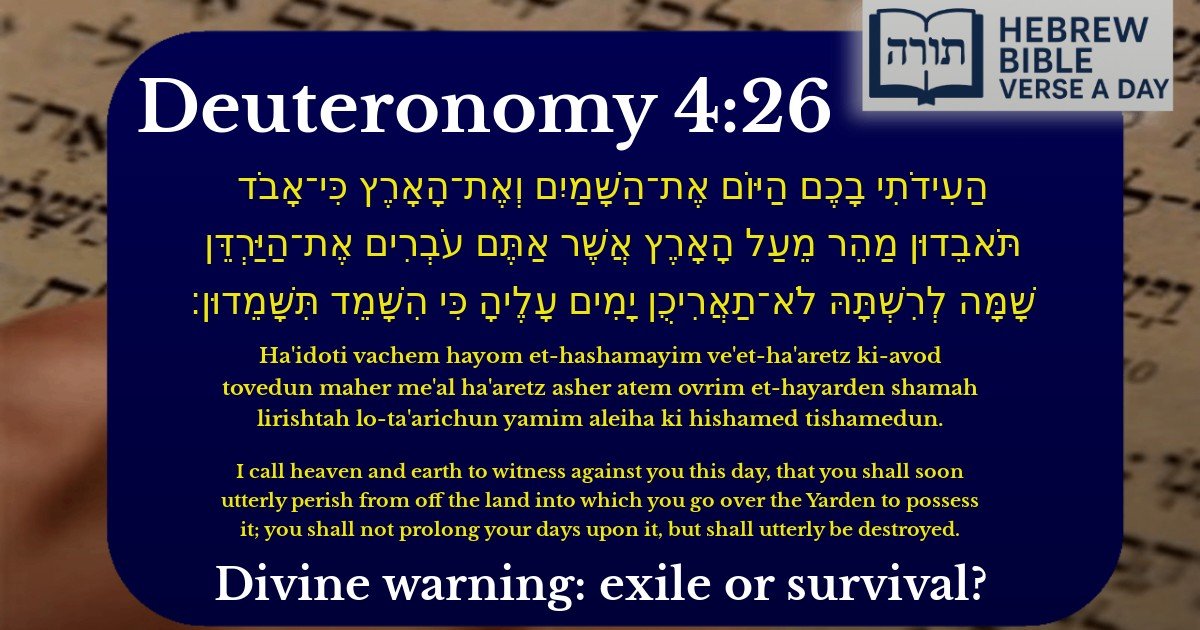
הַעִידֹתִי בָכֶם הַיּוֹם אֶת־הַשָּׁמַיִם וְאֶת־הָאָרֶץ כִּי־אָבֹד תֹּאבֵדוּן מַהֵר מֵעַל הָאָרֶץ אֲשֶׁר אַתֶּם עֹבְרִים אֶת־הַיַּרְדֵּן שָׁמָּה לְרִשְׁתָּהּ לֹא־תַאֲרִיכֻן יָמִים עָלֶיהָ כִּי הִשָּׁמֵד תִּשָּׁמֵדוּן׃
English Translation
I call heaven and earth to witness against you this day, that you shall soon utterly perish from off the land into which you go over the Yarden to possess it; you shall not prolong your days upon it, but shall utterly be destroyed.
Transliteration
Ha'idoti vachem hayom et-hashamayim ve'et-ha'aretz ki-avod tovedun maher me'al ha'aretz asher atem ovrim et-hayarden shamah lirishtah lo-ta'arichun yamim aleiha ki hishamed tishamedun.
Hebrew Leining Text
הַעִידֹ֩תִי֩ בָכֶ֨ם הַיּ֜וֹם אֶת־הַשָּׁמַ֣יִם וְאֶת־הָאָ֗רֶץ כִּֽי־אָבֹ֣ד תֹּאבֵדוּן֮ מַהֵר֒ מֵעַ֣ל הָאָ֔רֶץ אֲשֶׁ֨ר אַתֶּ֜ם עֹבְרִ֧ים אֶת־הַיַּרְדֵּ֛ן שָׁ֖מָּה לְרִשְׁתָּ֑הּ לֹֽא־תַאֲרִיכֻ֤ן יָמִים֙ עָלֶ֔יהָ כִּ֥י הִשָּׁמֵ֖ד תִּשָּׁמֵדֽוּן׃
🎵 Listen to leining
Parasha Commentary
📚 Talmud Citations
This verse is quoted in the Talmud.
📖 Sotah 37a
The verse is cited in the context of discussing the covenant between God and Israel, emphasizing the consequences of disobedience.
📖 Sanhedrin 90b
The verse is referenced in a discussion about the resurrection of the dead, illustrating the severity of divine judgment.
The Witness of Heaven and Earth
This verse from Devarim (Deuteronomy) 30:19 employs the imagery of heaven and earth as witnesses to the covenant between Hashem and the Jewish people. Rashi explains that heaven and earth are eternal witnesses because they endure forever, unlike human witnesses who pass away. The Sifrei (Devarim 306) elaborates that these elements were chosen because they provide constant benefits to humanity (rain from heaven, produce from earth), symbolizing that Torah and mitzvot sustain the world.
The Warning of Destruction
The phrase "כִּי־אָבֹד תֹּאבֵדוּן" ("you shall soon utterly perish") is a severe warning about the consequences of abandoning the Torah. Ramban (Nachmanides) notes the double language of "אָבֹד תֹּאבֵדוּן" emphasizes the certainty and totality of destruction if Bnei Yisrael forsake their covenant. The Talmud (Sanhedrin 97a) connects this to the eventual exile, teaching that prolonged dwelling in Eretz Yisrael is contingent upon Torah observance.
The Conditional Nature of Inheritance
The verse states "לֹא־תַאֲרִיכֻן יָמִים עָלֶיהָ" ("you shall not prolong your days upon it"), which the Rambam (Hilchot Teshuva 7:5) interprets as a fundamental principle: dwelling securely in the Land depends entirely on mitzvah observance. The Midrash Tanchuma (Re'eh 8) adds that this warning was given specifically as Bnei Yisrael prepared to enter the Land, underscoring that their tenure there is not automatic but conditional.
The Role of the Yarden (Jordan River)
Mentioning "הָאָרֶץ אֲשֶׁר אַתֶּם עֹבְרִים אֶת־הַיַּרְדֵּן" highlights the transition into Eretz Yisrael. The Kli Yakar (Devarim 30:19) explains that crossing the Yarden symbolizes leaving behind the spiritual wilderness and entering a land where Torah must be lived fully. The river serves as both a physical and spiritual boundary—failure to uphold Torah after crossing would lead to expulsion, as warned in this verse.