

Join Our Newsletter To Be Informed When New Videos Are Posted
Hebrew Text
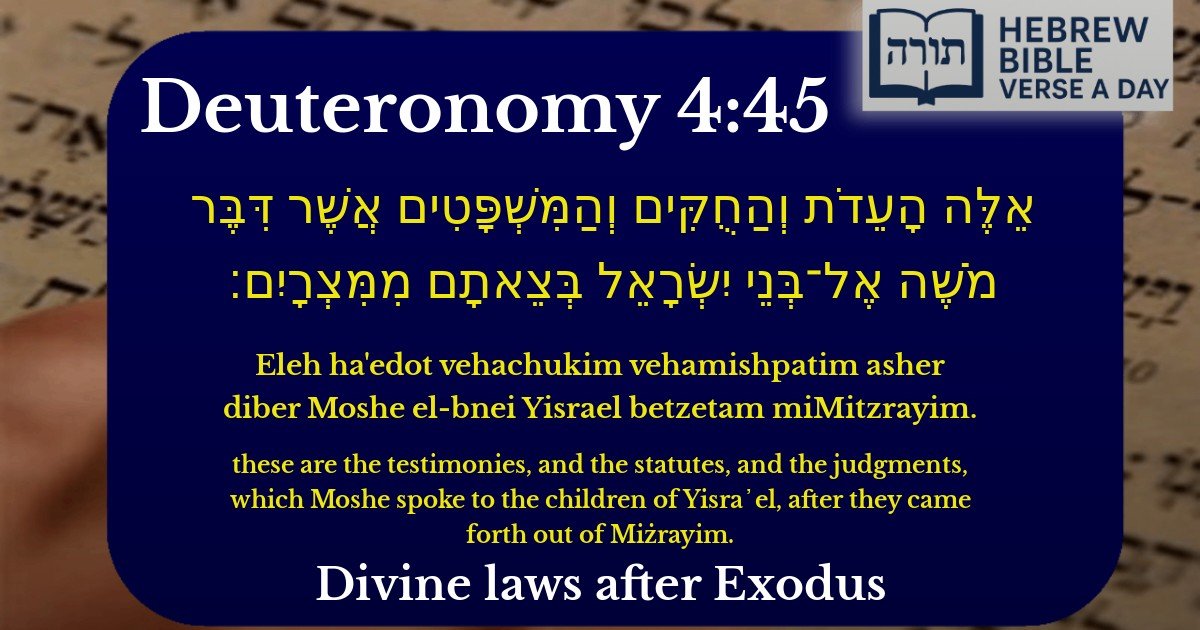
אֵלֶּה הָעֵדֹת וְהַחֻקִּים וְהַמִּשְׁפָּטִים אֲשֶׁר דִּבֶּר מֹשֶׁה אֶל־בְּנֵי יִשְׂרָאֵל בְּצֵאתָם מִמִּצְרָיִם׃
English Translation
these are the testimonies, and the statutes, and the judgments, which Moshe spoke to the children of Yisra᾽el, after they came forth out of Miżrayim.
Transliteration
Eleh ha'edot vehachukim vehamishpatim asher diber Moshe el-bnei Yisrael betzetam miMitzrayim.
Hebrew Leining Text
אֵ֚לֶּה הָֽעֵדֹ֔ת וְהַֽחֻקִּ֖ים וְהַמִּשְׁפָּטִ֑ים אֲשֶׁ֨ר דִּבֶּ֤ר מֹשֶׁה֙ אֶל־בְּנֵ֣י יִשְׂרָאֵ֔ל בְּצֵאתָ֖ם מִמִּצְרָֽיִם׃
🎵 Listen to leining
Parasha Commentary
📚 Talmud Citations
This verse is quoted in the Talmud.
📖 Megillah 32a
The verse is referenced in the context of discussing the reading of the Torah and the importance of the commandments given to the children of Israel.
📖 Sotah 37b
The verse is cited in a discussion about the transmission of the Torah and the role of Moses in delivering the commandments to the Israelites.
Overview of the Verse
The verse (Devarim 4:45) introduces the legal and ethical teachings that Moshe conveyed to Bnei Yisrael after their exodus from Mitzrayim. It emphasizes three categories of divine commandments: eidot (testimonies), chukim (statutes), and mishpatim (judgments). These terms reflect different aspects of Torah law, each with its own significance in Jewish tradition.
Explanation of the Three Categories
Context of the Exodus
The verse specifies that these laws were given "after they came forth out of Mitzrayim." The Sforno explains that the experience of slavery and redemption shaped Bnei Yisrael's ability to accept divine commandments. Only after achieving physical freedom could they fully embrace spiritual obligations. The Midrash (Shemot Rabbah 30:9) further teaches that the Exodus was a prerequisite for Matan Torah, as true service of Hashem requires liberation from human oppression.
Moshe's Role as Teacher
The verse highlights that Moshe "spoke" these laws to the people. The Ramban emphasizes that Moshe did not merely transmit the commandments but explained them thoroughly, ensuring comprehension. This aligns with the Talmudic principle (Eruvin 54b) that Torah must be taught with clarity and patience, as Moshe modeled for all future generations of Torah educators.