

Join Our Newsletter To Be Informed When New Videos Are Posted
Hebrew Text
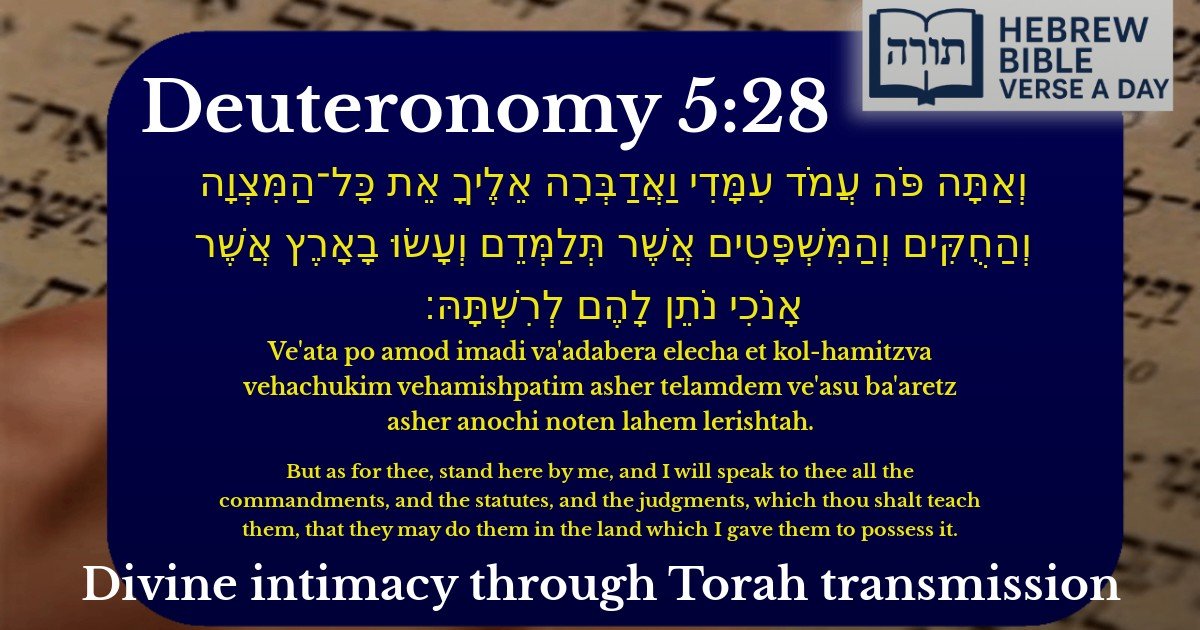
וְאַתָּה פֹּה עֲמֹד עִמָּדִי וַאֲדַבְּרָה אֵלֶיךָ אֵת כָּל־הַמִּצְוָה וְהַחֻקִּים וְהַמִּשְׁפָּטִים אֲשֶׁר תְּלַמְּדֵם וְעָשׂוּ בָאָרֶץ אֲשֶׁר אָנֹכִי נֹתֵן לָהֶם לְרִשְׁתָּהּ׃
English Translation
But as for thee, stand here by me, and I will speak to thee all the commandments, and the statutes, and the judgments, which thou shalt teach them, that they may do them in the land which I gave them to possess it.
Transliteration
Ve'ata po amod imadi va'adabera elecha et kol-hamitzva vehachukim vehamishpatim asher telamdem ve'asu ba'aretz asher anochi noten lahem lerishtah.
Hebrew Leining Text
וְאַתָּ֗ה פֹּה֮ עֲמֹ֣ד עִמָּדִי֒ וַאֲדַבְּרָ֣ה אֵלֶ֗יךָ אֵ֧ת כׇּל־הַמִּצְוָ֛ה וְהַחֻקִּ֥ים וְהַמִּשְׁפָּטִ֖ים אֲשֶׁ֣ר תְּלַמְּדֵ֑ם וְעָשׂ֣וּ בָאָ֔רֶץ אֲשֶׁ֧ר אָנֹכִ֛י נֹתֵ֥ן לָהֶ֖ם לְרִשְׁתָּֽהּ׃
🎵 Listen to leining
Parasha Commentary
📚 Talmud Citations
This verse is quoted in the Talmud.
The verse is referenced in the context of discussing the importance of standing during prayer, drawing a parallel to Moses standing before God to receive the commandments.
📖 Megillah 21a
The verse is cited in a discussion about the proper posture for teaching Torah, emphasizing the significance of standing when receiving divine instruction.
Context of the Verse
This verse (Devarim 5:28) appears in the context of Moshe Rabbeinu recounting the revelation at Har Sinai to Bnei Yisrael. Hashem instructs Moshe to stand near Him to receive the mitzvot, chukim, and mishpatim that he must then teach to the people. The verse emphasizes Moshe's unique role as the intermediary through whom the Torah is transmitted to Klal Yisrael.
Three Categories of Commandments
The verse mentions three types of commandments:
Moshe's Unique Role
The Ramban explains that "stand here by me" indicates Moshe's unparalleled closeness to Hashem during the giving of the Torah. Unlike the prophets who received visions, Moshe heard Hashem's words directly (Bamidbar 12:6-8). The Talmud (Makot 23b) derives from this verse that all 613 mitzvot were given through Moshe at Sinai, establishing the principle of Torah MiSinai.
Connection to Eretz Yisrael
The concluding phrase "that they may do them in the land" teaches that the mitzvot are intrinsically connected to Eretz Yisrael. The Sforno notes that while some mitzvot apply everywhere, many (particularly agricultural and Temple-related laws) can only be fully observed in the Land. This reinforces the Torah's vision of creating a holy society in our ancestral homeland.
Pedagogical Approach
The instruction "which thou shalt teach them" establishes the model for Torah transmission. The Talmud (Kiddushin 30a) derives from here that a teacher must ensure students understand the material thoroughly. Rashi emphasizes the word "תְּלַמְּדֵם" (you shall teach them) implies repetitive instruction until mastery is achieved, as the Torah must be taught with clarity and patience.