

Join Our Newsletter To Be Informed When New Videos Are Posted
Hebrew Text
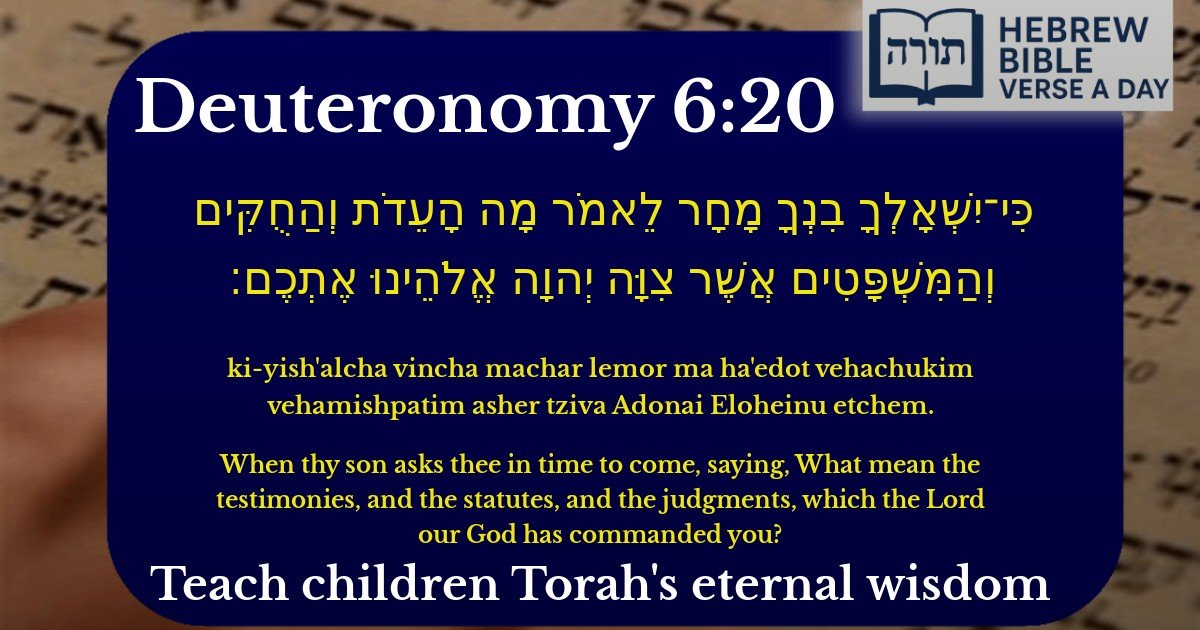
כִּי־יִשְׁאָלְךָ בִנְךָ מָחָר לֵאמֹר מָה הָעֵדֹת וְהַחֻקִּים וְהַמִּשְׁפָּטִים אֲשֶׁר צִוָּה יְהוָה אֱלֹהֵינוּ אֶתְכֶם׃
English Translation
When thy son asks thee in time to come, saying, What mean the testimonies, and the statutes, and the judgments, which the Lord our God has commanded you?
Transliteration
Ki-yish'alcha vincha machar lemor ma ha'edot vehachukim vehamishpatim asher tziva Adonai Eloheinu etchem.
Hebrew Leining Text
כִּֽי־יִשְׁאָלְךָ֥ בִנְךָ֛ מָחָ֖ר לֵאמֹ֑ר מָ֣ה הָעֵדֹ֗ת וְהַֽחֻקִּים֙ וְהַמִּשְׁפָּטִ֔ים אֲשֶׁ֥ר צִוָּ֛ה יְהֹוָ֥ה אֱלֹהֵ֖ינוּ אֶתְכֶֽם׃
🎵 Listen to leining
Parasha Commentary
📚 Talmud Citations
This verse is quoted in the Talmud.
📖 Pesachim 116a
The verse is referenced in the context of the Passover Haggadah, where it is part of the 'Four Questions' or 'Mah Nishtanah' section, illustrating the importance of teaching children about the commandments.
📖 Chagigah 3a
The verse is discussed in relation to the obligation of teaching Torah to one's children and the broader context of transmitting Jewish law and tradition.
Context in the Torah
The verse appears in Devarim (Deuteronomy) 6:20, within the broader context of the Shema and the mitzvah to teach Torah to one's children. This passage is part of Moshe's address to Bnei Yisrael before entering Eretz Yisrael, emphasizing the transmission of Torah to future generations.
Rashi's Explanation
Rashi explains that this verse refers to the ben chacham (wise son) mentioned in the Haggadah of Pesach. The son asks about the deeper meaning behind the mitzvot, not merely their practical observance. Rashi notes that the phrase "מָחָר" (tomorrow) implies a future time when the child will reflect on the purpose of the commandments.
Categories of Mitzvot
The verse lists three types of commandments:
Educational Approach
The Sifrei (a halachic midrash) derives from this verse that a parent must respond to a child's question with patience and depth, tailoring the answer to the child's level of understanding. The Rambam (Hilchot Chametz u'Matzah 7:2) applies this principle to the mitzvah of telling the story of Yetziat Mitzrayim on Pesach.
Theological Implication
The Ibn Ezra notes that the phrase "אֱלֹהֵינוּ" (our God) emphasizes the personal and communal relationship with Hashem. The mitzvot are not arbitrary but are given by the God who took us out of Egypt and established a covenant with us.
Practical Lesson
The Sefer HaChinuch (Mitzvah 21) explains that this verse teaches the obligation of chinuch (education) - to instill in children an appreciation for mitzvot as divine commandments, not merely cultural practices. The question "מָה הָעֵדֹת" invites dialogue about the purpose and wisdom behind Torah observance.